
Utrecht Marathon
Utrecht is a city that makes sense from the water. Its canals run on two levels, with wharves and cellars below street level, and the old harbour walls give the centre a shape you can read while…
By Global Marathon Routes editorial team · Last reviewed 27 October 2026
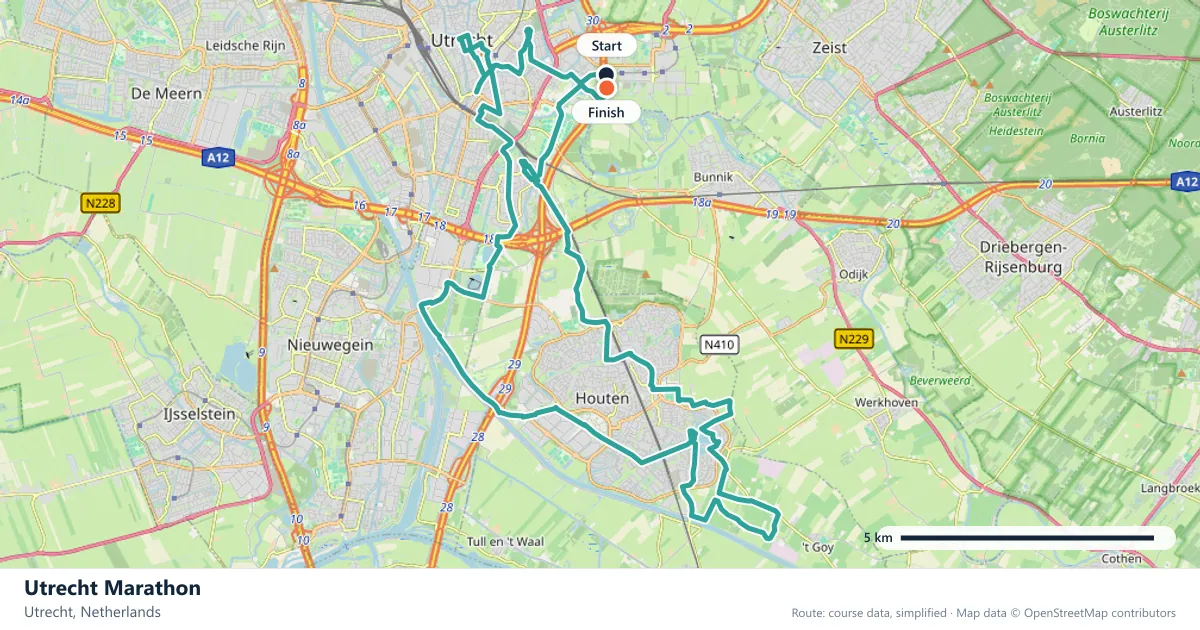
Where does the Utrecht Marathon run?
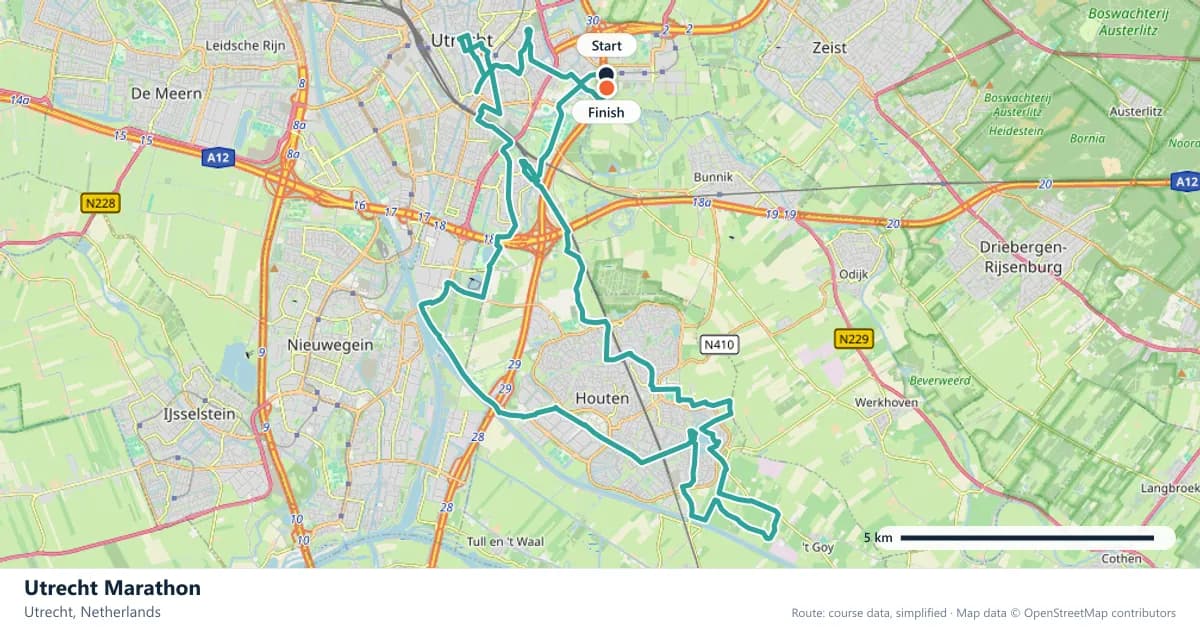
Interactive map
The trace follows the organizer's published course, simplified for the screen: the orange dot is the start, the dark dot the finish. Scroll to zoom, drag to pan.
What is the Utrecht Marathon course like?
A flat spring marathon out of the Dom city, looping along the canals and through the surrounding polders. Small, quick and easy to get to from Amsterdam.
- Next edition
- May 2027 (expected)
- Elevation gain
- 40 m
- Profile
- Flat
- First run
- —
Course guide
Utrecht is a city that makes sense from the water. Its canals run on two levels, with wharves and cellars below street level, and the old harbour walls give the centre a shape you can read while walking. The marathon starts from that Dom city and loops along the canals before heading into the polders. The next edition is expected in May 2027.
The course climbs about 40 metres in total, and the race is small. That combination is unusual in spring: most flat courses are big-city events, while Utrecht offers a calmer version of the same idea. It can carry a personal-best attempt or a debut.
The flat profile is the attraction. The canals give the race character, the polders give it space, and the small field means a pacing plan matters more than it would in a larger event.
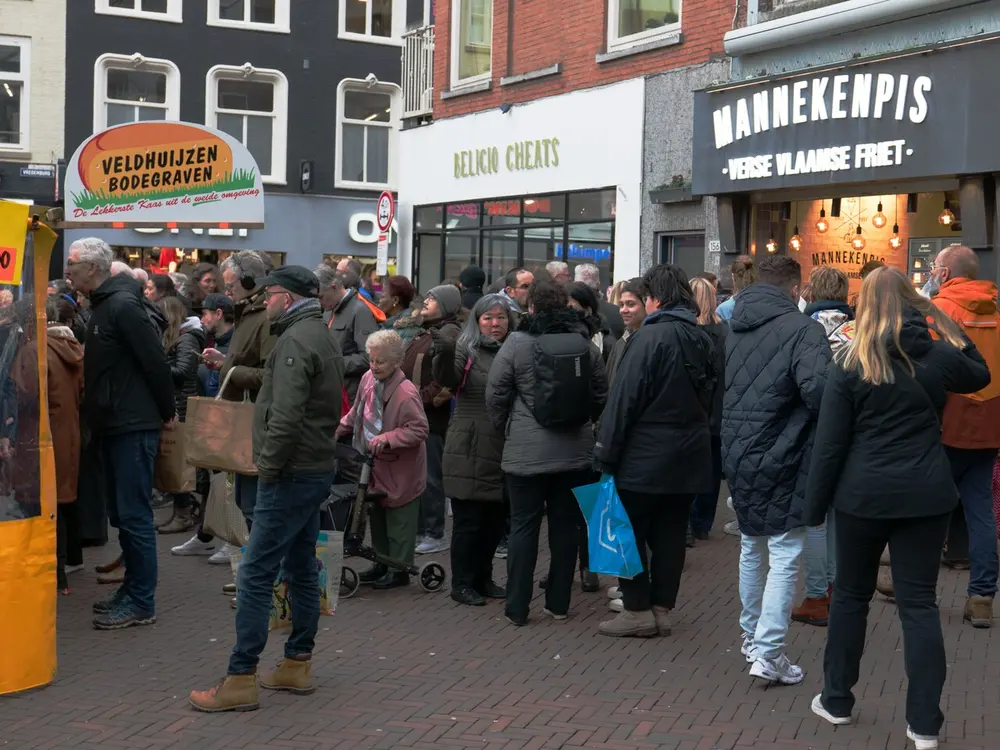
2024 - free download photo Utrecht; city people in two rows on the street market Vredenburg, waiting. Photo: Fons Heijnsbroek / Wikimedia Commons, CC0.
The course
The race begins in the historic centre, follows the canals and then leaves the city for the polders. The Dom Tower is the city's signature landmark, and the canal ring is the part that feels most like Utrecht. After that the landscape opens and the running becomes quieter.
With 40 metres of climbing, the course offers almost no resistance. The demands are the canal turns and the need to hold pace on the open polder roads. Those roads are level but exposed, and a small field means fewer runners to share the work.
The transition from city to polder defines the race. The streets narrow, the buildings fall away, and the horizon widens. That change can feel refreshing or lonely, depending on the first half. It is where the race stops being a tour and becomes a time trial.
Canals, wharves and polders
Utrecht's canals are among the most distinctive in the Netherlands. The wharves below street level once handled goods and now hold cafés and walkways. The canal ring gives the early kilometres a density the polders cannot match.
The polders are the opposite: flat, drained land with long views and few landmarks. For a runner, that is both gift and challenge. There is nothing to climb, but nowhere to hide either.
A small race with a quick profile
Small races have a different atmosphere. The start is less crowded, and the field spreads out quickly. Utrecht feels local without feeling minor.
The lack of company is the practical consequence. In a big marathon you can tuck into a group; in Utrecht you may spend long stretches alone. The course is fast, but it will not pace itself for you.
Spring in the polders
May is a good month for racing here. The days are long, the light is generous, and the polders are at their greenest. The air is usually mild, though early mornings can be cool, and the open ground means wind is always a factor.
The date fits a spring build. A May race leaves time after a winter base to add endurance, and avoids the worst of the summer heat. Confirm the expected date before booking, but the season is right for fast running.
Getting there and the weekend
Utrecht is easy to reach from Amsterdam and well connected by rail. The centre is compact and the canal ring makes a natural base. You can arrive, collect your bib, eat well and be at the start without a long transfer.
The city rewards a day of wandering. The Dom Tower, the wharves and the Vredenburg market give the centre life, and the polders are close enough to visit before race day.
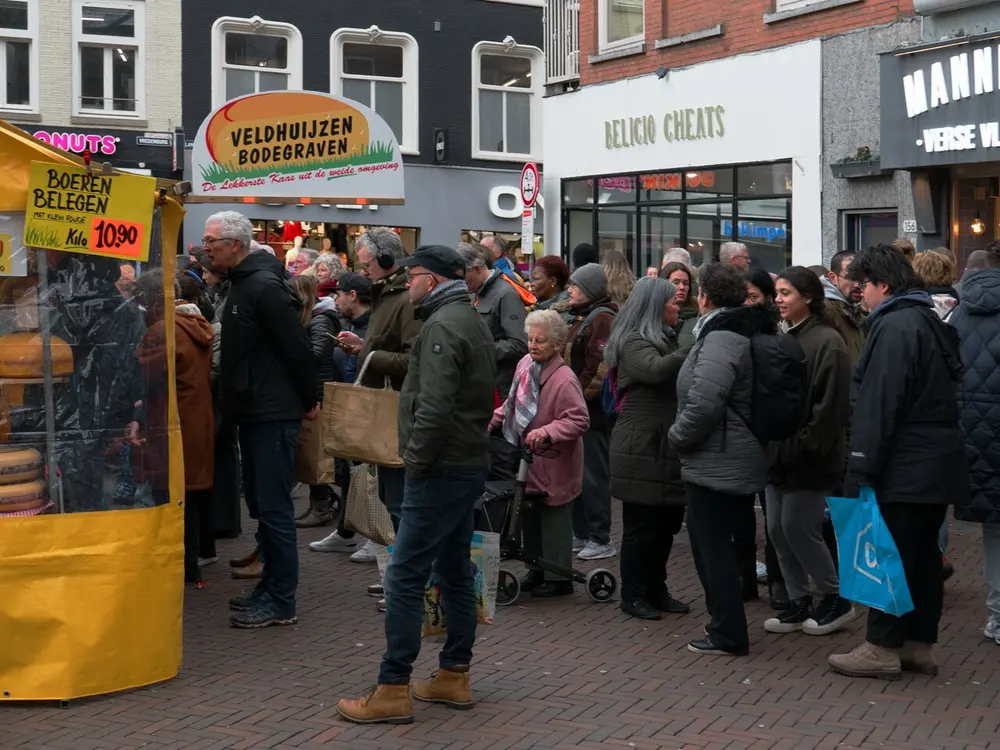
2024 - free download photo Utrecht; local city people are waiting in a row in front of a mobile chee. Photo: Fons Heijnsbroek / Wikimedia Commons, CC0.
The first marathon or the time
For a first marathon, the flat course and compact city are approachable. The small field reduces start stress, and the route stays within the city and its immediate surroundings. The caveat is the loneliness of the polder: plan for quiet stretches.
For a personal best, Utrecht is a legitimate target. The profile is almost level, the small field avoids congestion, and spring usually brings reasonable conditions. The polders are the variable: on a windy day the flat landscape makes the wind feel heavier than the elevation suggests.
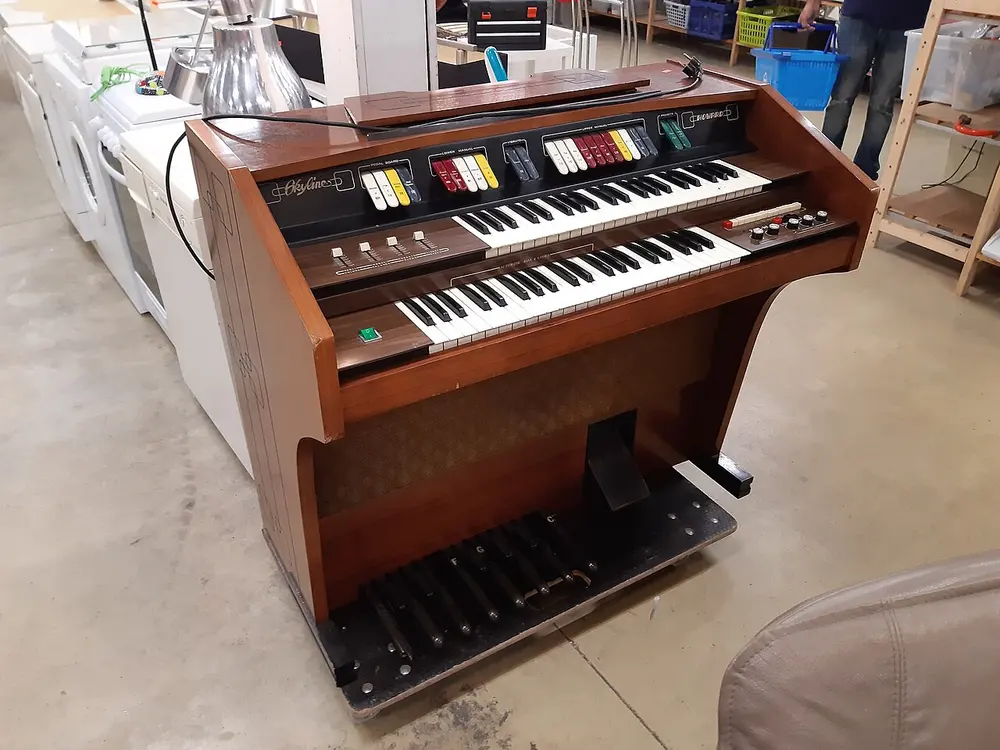
Howard Skyline electric organ at second hand store Utrecht. Photo: Brbbl / Wikimedia Commons, CC BY-SA 4.0.
Frequently asked questions
Answers to the questions runners ask before entering, drawn from this race's course guide and the directory's own data — the sources behind them are listed below.
When is the Utrecht Marathon in 2027?
The next edition is expected in May 2027. The exact date has not been confirmed, so check the organiser's schedule before booking travel.
Is the Utrecht Marathon flat?
Yes. It climbs only about 40 metres across the full distance, with no real hills. The course follows the canals and then the surrounding polders, so the main changes are turns and open stretches rather than gradient.
Is the Utrecht Marathon good for a personal best or a first marathon?
Yes, on both counts. The flat profile and usually mild spring weather favour fast times, while the compact city and small field make it approachable for a first marathon. The lack of company in the polders is the main thing to plan for.
Where is the Utrecht Marathon run?
It starts from the Dom city and loops along Utrecht's canals before heading into the surrounding polders. The route stays in and around the city.
How do I get to the Utrecht Marathon?
Utrecht is easy to get to from Amsterdam and is well connected by rail. The city centre is compact and walkable, which makes it a convenient base.
Is the field large?
No. It is a small race, which means a calmer start and less crowding, but also fewer runners to pace with in the later stages.
More marathons in Netherlands
More marathons in Europe
Sources for this page
What each source below is used for on this page, and where to check this race yourself.
- World Athletics — the label calendar and the road-race regulations. Used to check whether the race holds a World Athletics label, and its elite competition details.
- AIMS — the international course-measurement standard behind the 42.195 km distance, and the AIMS race calendar.
- The organizer's own publications — course maps, race handbooks and published results. The date, course character and climbing on this page are compiled from them and re-checked each season.
Where do these facts come from?
Dates, course type, climbing and time limits are compiled from the organizer's publications and re-checked each season; elevation is an estimate of total climbing rather than a survey figure. Always confirm race-day details with the organizer before making plans.
Last reviewed 27 October 2026