
Linz Marathon
Linz is the Austrian city that refuses to sit still. The old town presses against the south bank of the Danube, the steelworks mark the horizon, and the Ars Electronica Centre gives the waterfront a…
By Global Marathon Routes editorial team · Last reviewed 27 October 2026
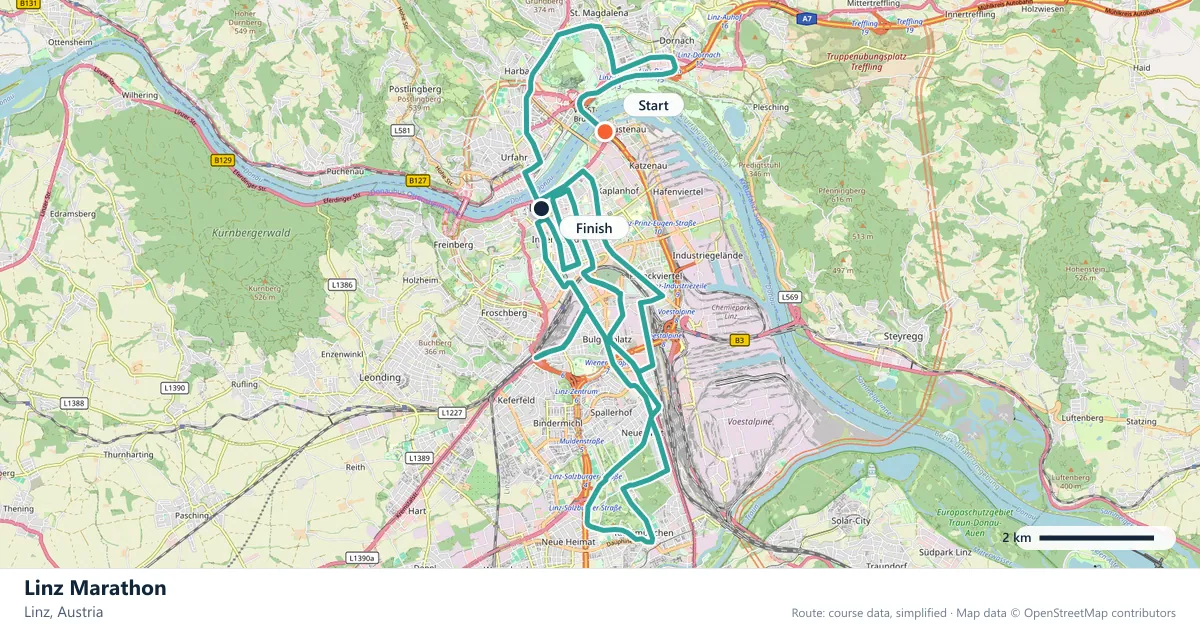
Where does the Linz Marathon run?
Interactive map
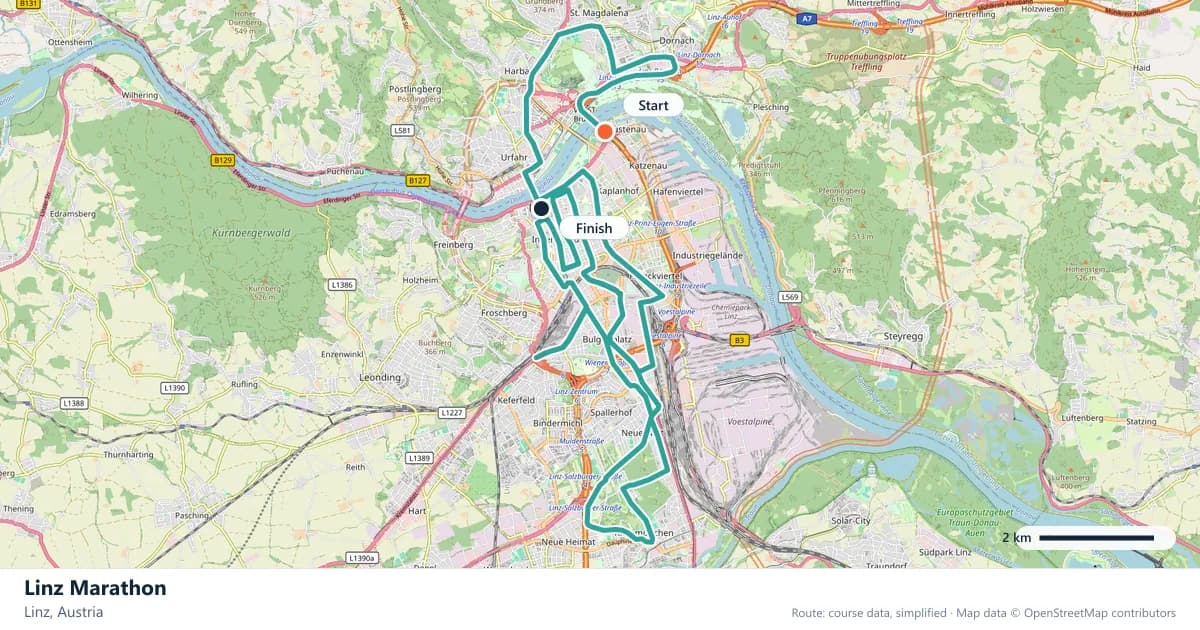
The trace follows the organizer's published course, simplified for the screen: the orange dot is the start, the dark dot the finish. Scroll to zoom, drag to pan.
What is the Linz Marathon course like?
A flat spring race on the Danube, crossing between the two banks and looping through Linz. Quick roads and an Austrian record history.
- Next edition
- April 2027 (expected)
- Elevation gain
- 85 m
- Profile
- Flat
- First run
- —
Course guide
Linz is the Austrian city that refuses to sit still. The old town presses against the south bank of the Danube, the steelworks mark the horizon, and the Ars Electronica Centre gives the waterfront a futuristic edge. The marathon borrows that restlessness: it is flat, quick and never far from the river, with the next edition expected in April 2027.
The race crosses the Danube and uses both banks, looping through the city before returning. Only about 85 metres of climbing interrupt the route, so the course is flat by any standard. What makes it interesting is not the elevation but the way the river divides the morning into distinct halves: dense city streets on one side, broader views across the water on the other.
Linz also has a history of Austrian record performances, which is why the race carries a fast reputation despite its modest size. Quick roads, a low total climb and a spring date make it a natural place to chase a time, and a forgiving place to run a first marathon.
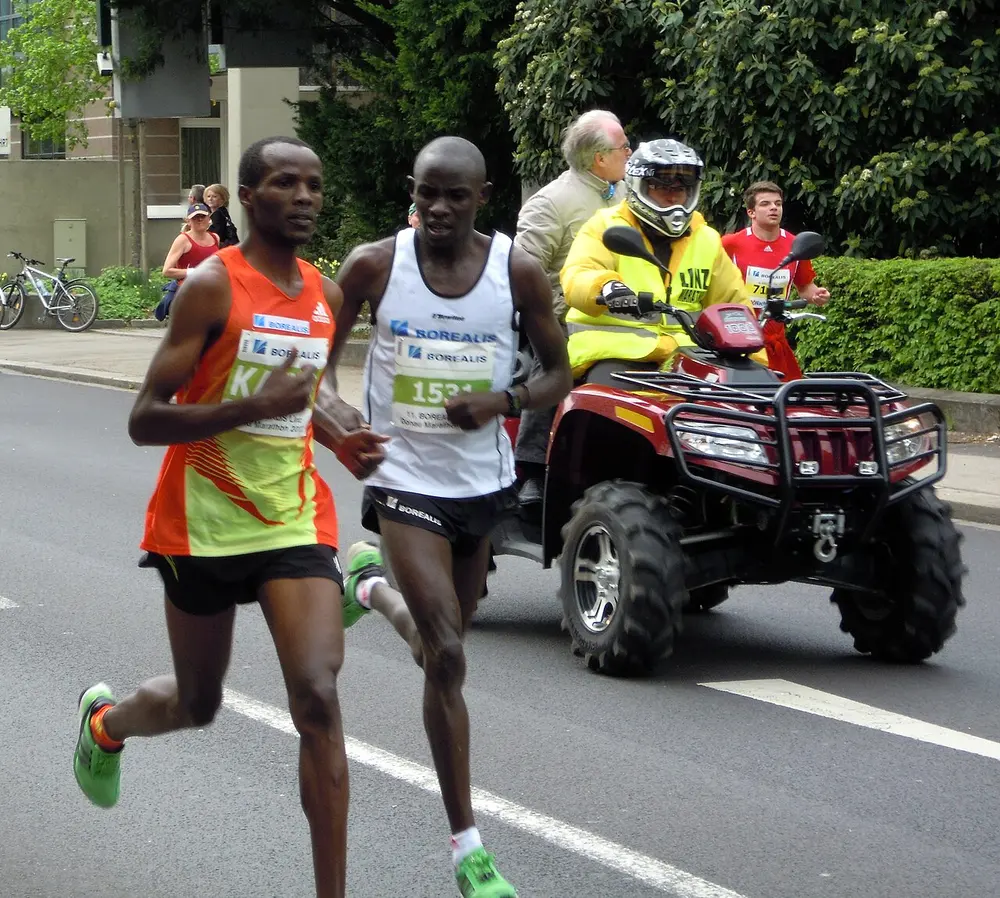
20120422-linz-marathon-josphat-keiyo-roland-kipchumba. Photo: BikeMike / Wikimedia Commons, CC0.
The course
The route is a compact loop rather than a point-to-point tour, which keeps the start and finish practical and lets spectators see the race more than once. It begins among city streets, crosses to the northern bank and returns over the Danube. The Pöstlingberg, the hill that supplies Linz's postcard view, stays in the background; the race's climbing is spread across bridge approaches and the gentle rises between neighbourhoods.
Because the loop is contained, the course has a rhythm that is easy to learn. The opening kilometres are the busiest, with turns taking the edge off the pace before the field has spread out. Once the route reaches the river, the running opens up. The second half brings the city back into view and asks for whatever patience you have left.
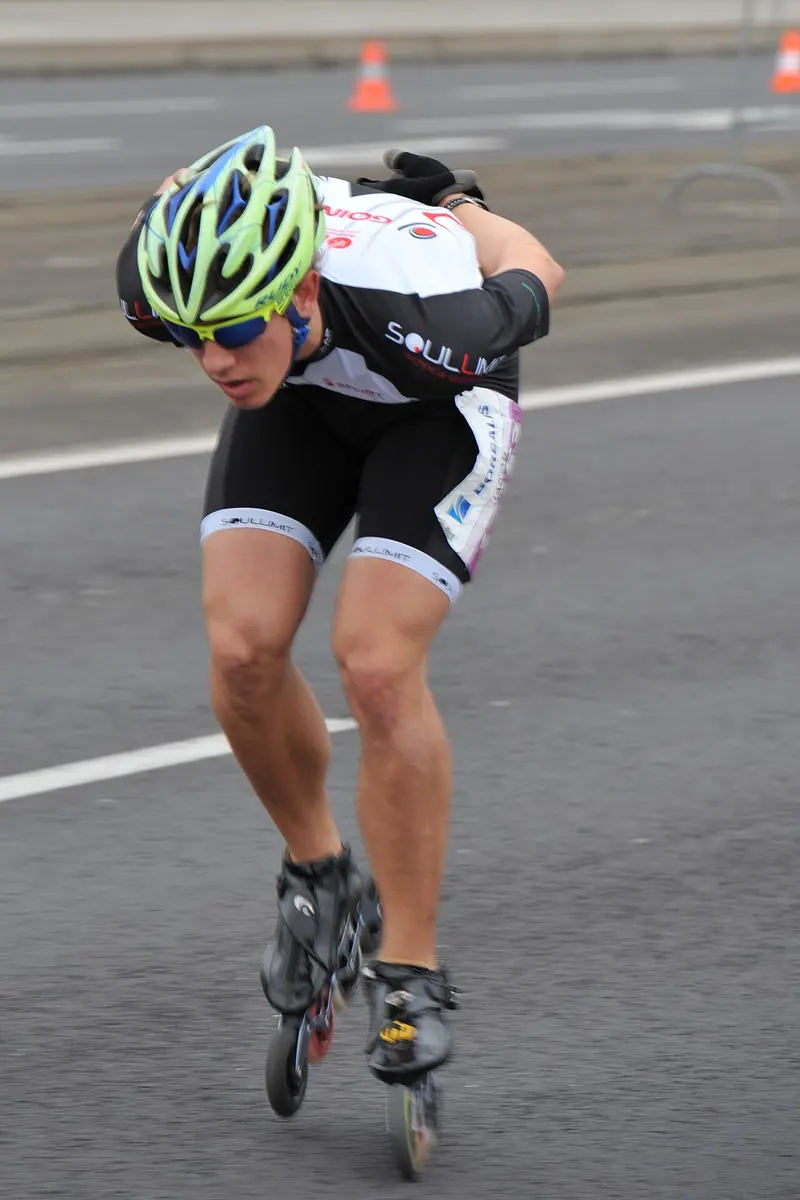
Linz Marathon Inlineskating Jakob Ulreich km 8. Photo: Ailura / Wikimedia Commons, CC BY-SA 3.0.
Both banks of the Danube
Linz grew on the south bank, with the Hauptplatz and the old town forming its historic core, while Urfahr spread across the water to the north. The marathon makes that geography part of the race. Each crossing is a short, deliberate change of scene: the towers of the old town recede, the northern suburbs arrive, then the river returns.
Those crossings also break the running. Bridge ramps are the only real changes of grade, and they arrive when your rhythm is set. Treat them as brief interruptions rather than chances to surge. The flat kilometres between them are where the race is actually run.
Why Linz has a fast name
Austrian marathon running has often passed through Linz, and the race's record history is part of its identity. A flat loop helps, but so does the date. April usually offers temperate racing weather without the heat of high summer, and the course's low climbing means there is no single ascent to break concentration.
That reputation can work against a runner. A course described as quick invites a first half that feels effortless and a second half that does not. The 85 metres are spread thinly enough that you may never notice them, which is exactly why an even, unspectacular pace is the fastest way round.
A spring weekend in the city
Linz is easy to reach by rail and compact enough to walk between the river, the old town and the start area. The Hauptplatz, the Lentos Art Museum and the riverside promenade give a race weekend a shape beyond the marathon itself. The expected April date is not yet a fixed appointment, so keep travel plans flexible until the organiser confirms the schedule.
Because the course loops through the city, supporters can move between viewpoints without covering the whole route. The old town side and the river bank are the obvious places to watch. After the race, the Danube paths are a good place to walk out tired legs.
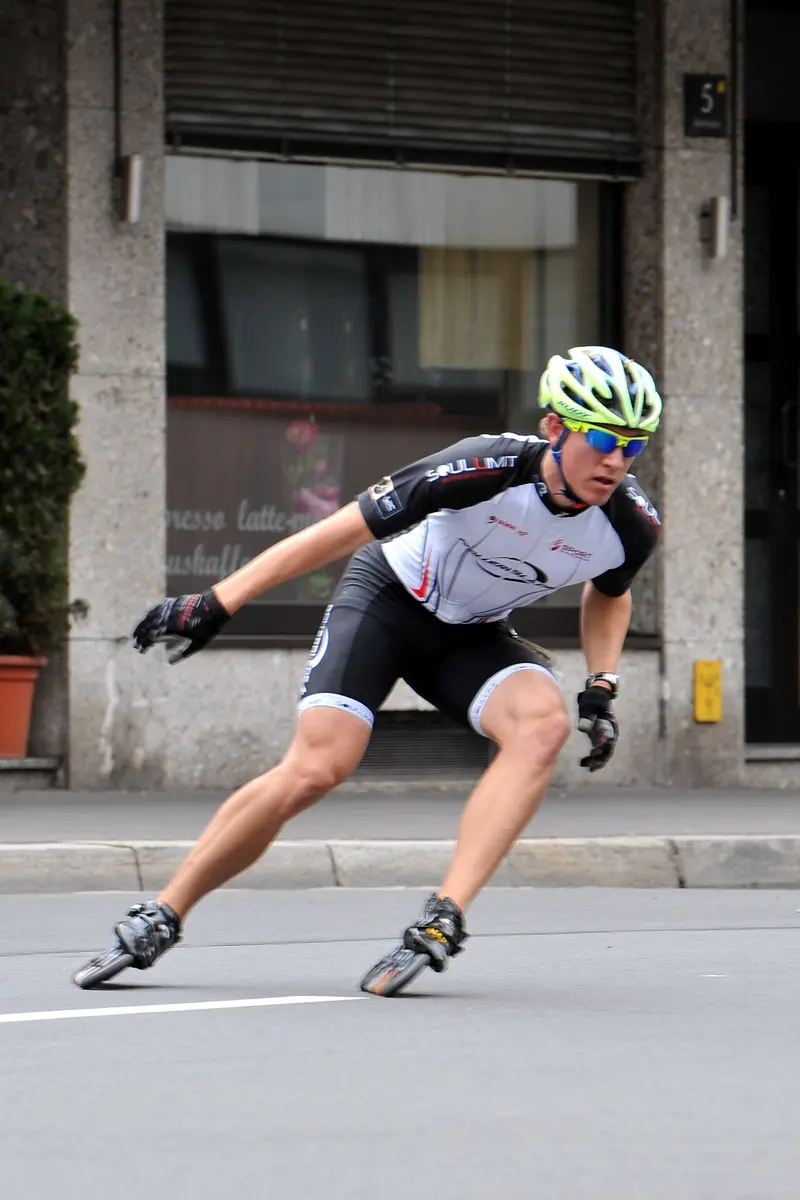
Linz Marathon Inlineskating Jakob Ulreich km 18. Photo: Ailura / Wikimedia Commons, CC BY-SA 3.0.
Pacing notes for a flat day
The first ten kilometres should feel almost too controlled. With so little climbing, there is nothing to check your effort except your own discipline, and the bridge ramps can tempt you to make up time. Hold back on the opening city streets, settle on the river, and let the second crossing bring you home.
The final part of the loop rewards runners who still have something in reserve. The course does not hand out a dramatic climb or a famous finish; it hands out a fast time to those who respect the distance. Finish with the knowledge that the next edition's date may still move, but the profile will not.
Frequently asked questions
Answers to the questions runners ask before entering, drawn from this race's course guide and the directory's own data — the sources behind them are listed below.
When is the Linz Marathon?
The next edition is expected in April 2027. The month is known, but the exact date is not confirmed, so check the organiser's announcement before booking fixed travel.
Is the Linz Marathon a flat course?
Yes. It climbs about 85 metres in total, with the bridge approaches providing most of the changes in grade. There is no sustained ascent, and the loop through the city stays close to the river.
Does the course cross the Danube?
Yes. The race uses both banks, crossing the river and running on the northern side before returning to the city.
Is Linz a good first marathon?
The flat profile, modest climbing and compact loop make it a sensible debut. The main risk is not the terrain but the temptation to start quickly because the course feels easy.
Is the Linz Marathon a personal-best course?
It can be. The low climbing and quick roads are well suited to fast times, and the race has a history of Austrian record performances. A personal best still depends on the day, the field and your own pacing.
Why does Linz have a fast reputation?
The combination of a flat loop, about 85 metres of climbing and a spring date has produced quick running over the years. The race's Austrian record history has reinforced that reputation.
More marathons in Austria
More marathons in Europe
Sources for this page
What each source below is used for on this page, and where to check this race yourself.
- World Athletics — the label calendar and the road-race regulations. Used to check whether the race holds a World Athletics label, and its elite competition details.
- AIMS — the international course-measurement standard behind the 42.195 km distance, and the AIMS race calendar.
- The organizer's own publications — course maps, race handbooks and published results. The date, course character and climbing on this page are compiled from them and re-checked each season.
Where do these facts come from?
Dates, course type, climbing and time limits are compiled from the organizer's publications and re-checked each season; elevation is an estimate of total climbing rather than a survey figure. Always confirm race-day details with the organizer before making plans.
Last reviewed 27 October 2026