
Montevideo Marathon
Montevideo's marathon belongs to the southern autumn. The date is May 2027 (expected), when the Uruguayan capital is mild and the rambla gives the race a long, open stage along the Rio de la Plata.
By Global Marathon Routes editorial team · Last reviewed 27 October 2026
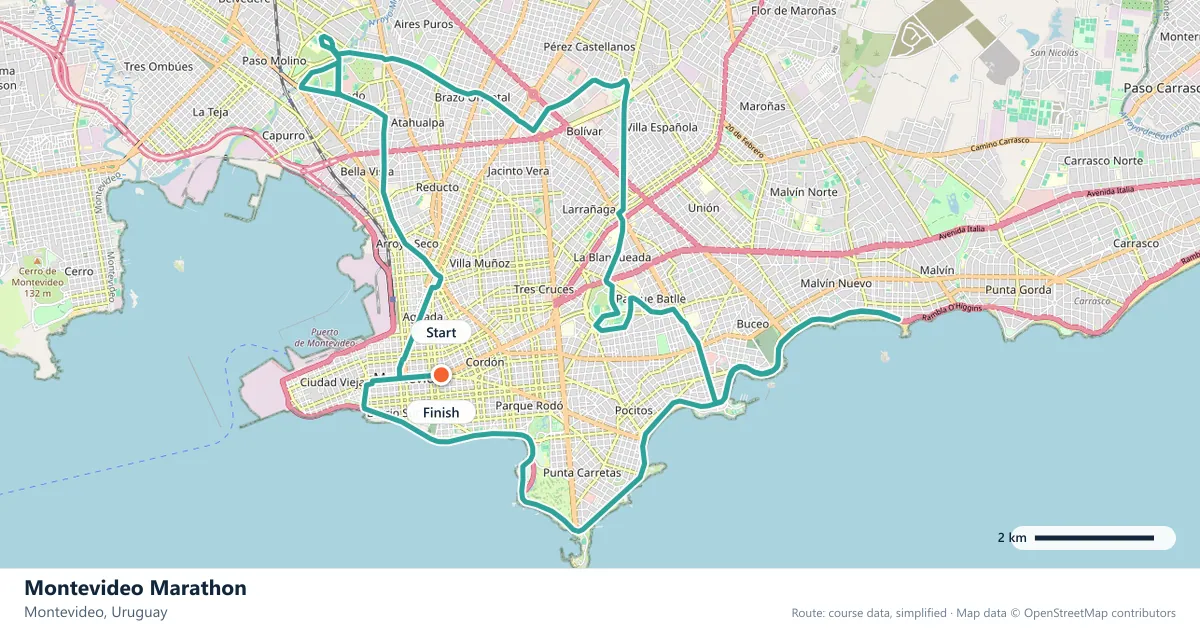
Where does the Montevideo Marathon run?
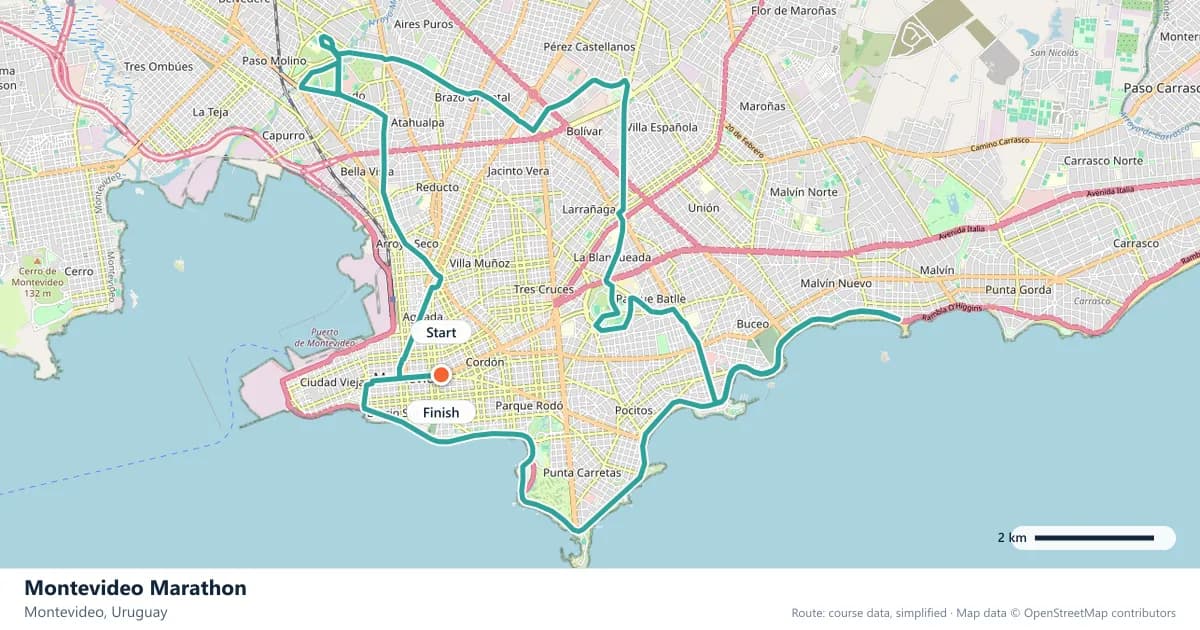
Interactive map
The trace follows the organizer's published course, simplified for the screen: the orange dot is the start, the dark dot the finish. Scroll to zoom, drag to pan.
What is the Montevideo Marathon course like?
A late-autumn (southern hemisphere) marathon along Montevideo's rambla and through the city. Rolling, breezy and mild, with the Rio de la Plata never far away.
- Next edition
- May 2027 (expected)
- Elevation gain
- 246 m
- Profile
- Undulating
- First run
- —
Course guide
Montevideo's marathon belongs to the southern autumn. The date is May 2027 (expected), when the Uruguayan capital is mild and the rambla gives the race a long, open stage along the Rio de la Plata.
The course is undulating, with about 246 metres of climbing, and it mixes waterfront running with city streets. It is breezy rather than flat, and the wind off the river can make a stretch that looks easy on paper feel considerably harder.
The race is a personal-best option — the mild conditions and sea-level setting help — but it is not a debut course by default. The rolling profile and the wind ask for pacing discipline, and the expected date means travel plans should wait for confirmation.
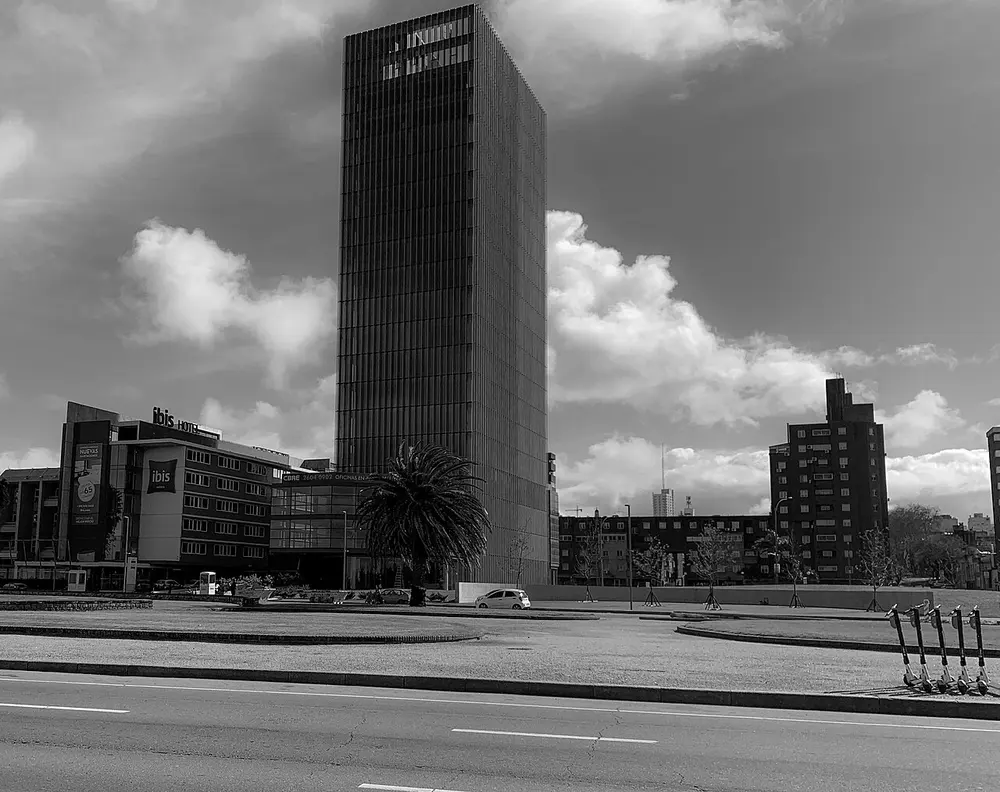
Edificio Plaza Alemania - Half Marathon Montevideo 190818-3144-jikatu. Photo: Jimmy Baikovicius from Montevideo, Uruguay / Wikimedia Commons, CC BY-SA 2.0.
The course
The route is built around Montevideo's waterfront. The rambla gives the race its long, open character, with the river alongside for much of the way, and the city sections take the race through the capital. The profile is undulating: about 246 metres of gain over 42.195 km, with short rises that come and go.
The climbs are not long enough to demand a specialised hill block, but they are frequent enough that flat-course splits will not tell the whole story. Pacing by effort is more useful than forcing a fixed pace through every rise, especially when the waterfront wind picks up.
The rambla
Montevideo's rambla is one of the city's defining features: a long promenade that follows the coast for kilometres, passing beaches, parks and neighbourhoods on the way. The marathon uses it as the spine of the race, and the result is a course that feels open and connected to the river rather than enclosed by streets.
The rambla is also where the race is most exposed. The wide horizon and the lack of shelter are part of its appeal, but they mean the wind can reach you for long stretches. On a calm day those kilometres are fast; on a breezy one they become a test of patience.
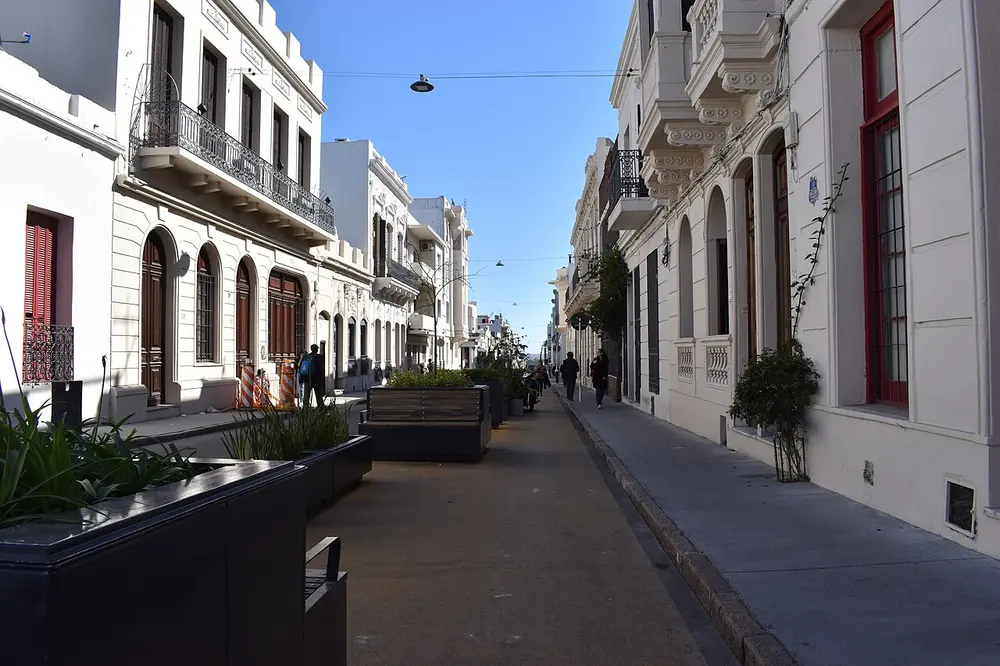
Calle Washington en Ciudad Vieja, Montevideo, Uruguay. Photo: Intendencia de Montevideo / Wikimedia Commons, CC BY-SA 4.0.
Wind off the river
The Rio de la Plata is wide enough to look like a sea, and the breeze that comes off it is part of Montevideo's daily life. For runners, that means the course can change character from one kilometre to the next. A headwind stretch can feel like a climb; a tailwind can make the pace feel effortless.
The response is not to fight the wind but to share it. Sit behind another runner when you can, keep your effort steady and accept that some miles will be slower than others. Saving energy in the exposed sections is worth more than trying to hold a fixed pace through them.
A May race in the southern autumn
May is late autumn in Uruguay, and the race is built for the milder conditions of that season. The summer heat is gone, the city is settling into winter and the race falls at a quieter time of year. That is a large part of the race's appeal.
The date is expected rather than confirmed, so treat May 2027 as the target month rather than a fixed fixture. Wait for the organiser's confirmation before booking travel, and check the final date before making plans around it.
The city beyond the waterfront
The course also runs through Montevideo proper, and those sections give the race a different flavour. The city has a strong identity: the old town, the port, the cafés and the long tradition of public life along the rambla. The marathon moves between the river and the streets, and that contrast is part of its character.
Ciudad Vieja, the old town at the western end of the centre, is full of low-rise buildings, squares and a working port atmosphere. Those streets give the later miles a denser, more urban feel after the open rambla.
The city sections are also where the course rolls most. They demand a change of rhythm after the open waterfront, and they reward runners who can adapt rather than those who try to hold one pace all day.
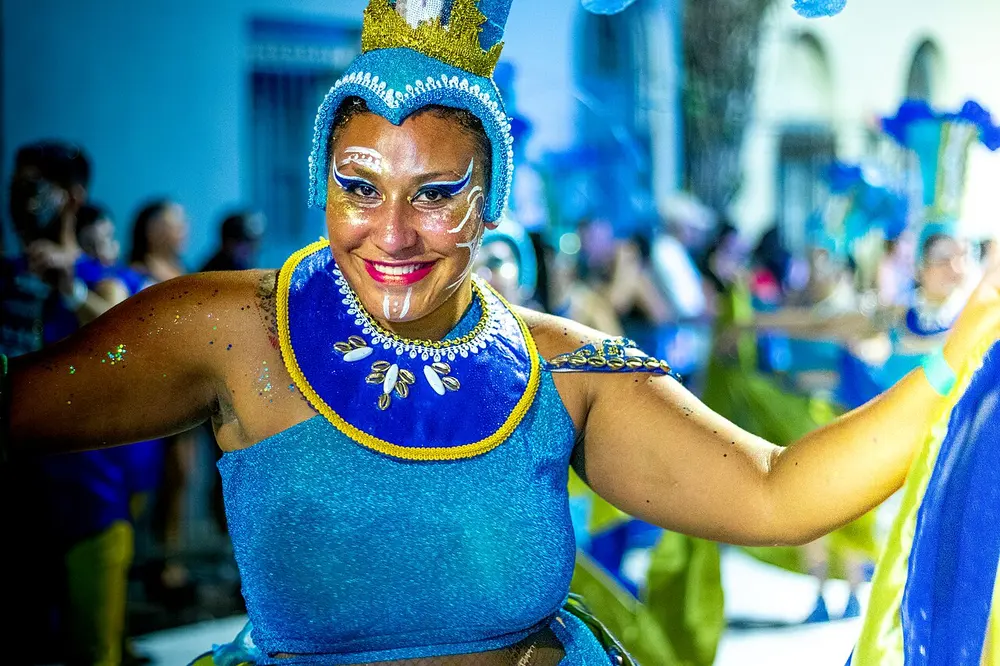
Desfile de Llamadas en Montevideo - Carnaval de Uruguay 2024 - Berna Gaitán Otarán 17. Photo: Berna Gaitán Otarán / Wikimedia Commons, CC BY-SA 4.0.
Frequently asked questions
Answers to the questions runners ask before entering, drawn from this race's course guide and the directory's own data — the sources behind them are listed below.
When is the Montevideo Marathon?
The edition covered here is expected in May 2027, in the southern-hemisphere autumn. The month is anticipated rather than confirmed, so check the exact date before arranging travel.
Is the Montevideo Marathon flat or hilly?
It is undulating. The course climbs about 246 metres in total, with short rises rather than a sustained climb. It is not a mountain course, but the breeze can make it feel harder than the numbers suggest.
Is the Montevideo Marathon good for a personal best or a first marathon?
It is a personal-best option, helped by mild autumn weather and the waterfront setting. It is not specifically a first-marathon race, so first-timers should weigh the rolling profile and the wind before choosing it.
Where is the Montevideo Marathon run?
It is run in Montevideo, Uruguay, along the rambla and through the city. The Rio de la Plata stays close for much of the race, giving the course its open, breezy character.
How much does the wind affect the race?
The race is exposed along the waterfront, and the wind off the Rio de la Plata can be a real factor. Pace by feel, share the work with other runners and do not fight the gusts.
Why is the race expected in May?
May is late autumn in Uruguay, with milder conditions than the summer months. That makes it a suitable season for a marathon, though the exact date is still to be confirmed.
More marathons in Uruguay
More marathons in Americas
Sources for this page
What each source below is used for on this page, and where to check this race yourself.
- World Athletics — the label calendar and the road-race regulations. Used to check whether the race holds a World Athletics label, and its elite competition details.
- AIMS — the international course-measurement standard behind the 42.195 km distance, and the AIMS race calendar.
- The organizer's own publications — course maps, race handbooks and published results. The date, course character and climbing on this page are compiled from them and re-checked each season.
Where do these facts come from?
Dates, course type, climbing and time limits are compiled from the organizer's publications and re-checked each season; elevation is an estimate of total climbing rather than a survey figure. Always confirm race-day details with the organizer before making plans.
Last reviewed 27 October 2026