
Dubai Marathon
Eleven metres. That is the entire climbing on the Dubai Marathon course, spread across 42.195 kilometres of Jumeirah beachfront roads.
By Global Marathon Routes editorial team · Last reviewed 27 October 2026
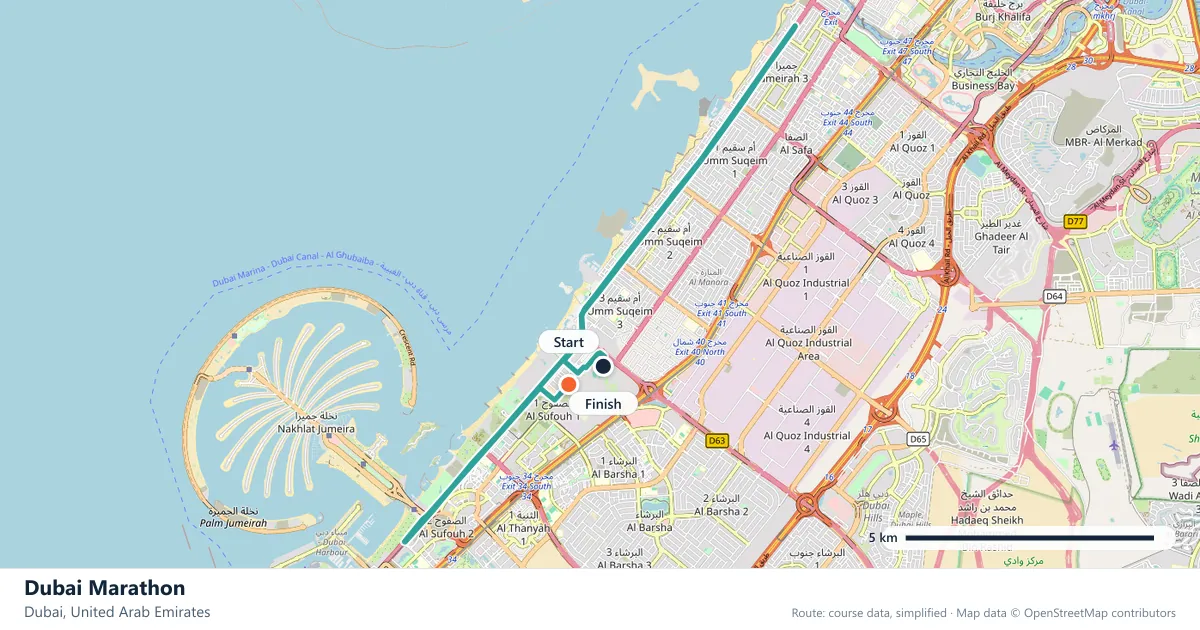
Where does the Dubai Marathon run?
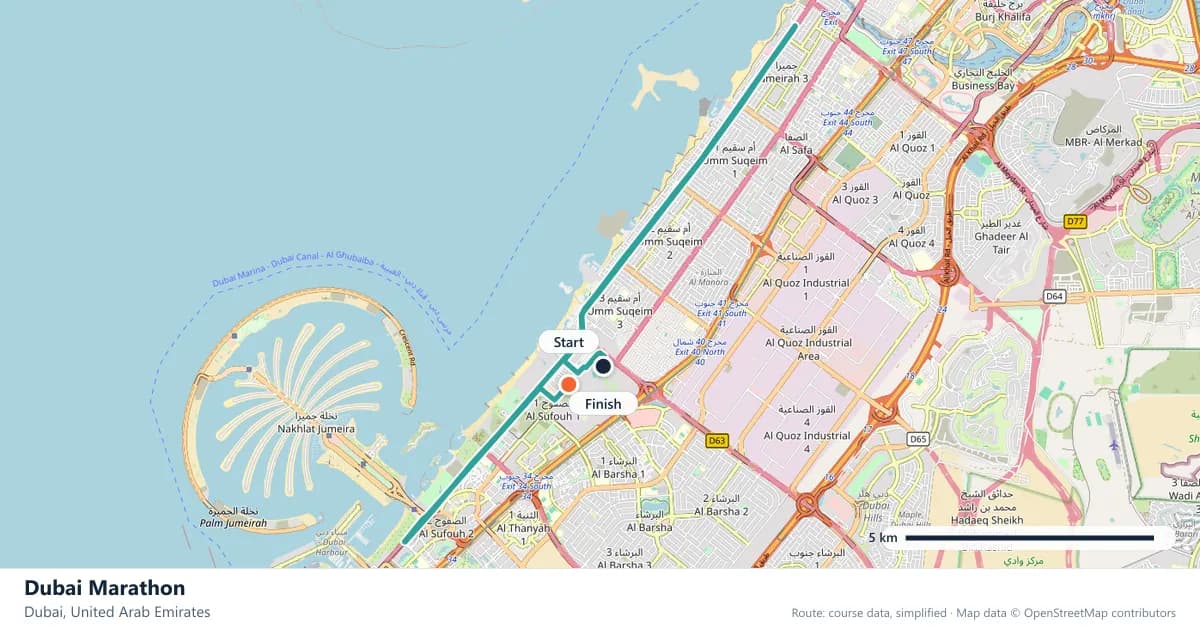
Interactive map
The trace follows the organizer's published course, simplified for the screen: the orange dot is the start, the dark dot the finish. Scroll to zoom, drag to pan.
What is the Dubai Marathon course like?
One of the flattest marathon courses anywhere, run in January on the Jumeirah beachfront roads. Eleven metres of climbing in total, and prize money that draws a deep elite field.
- Next edition
- 17 January 2027
- Elevation gain
- 11 m
- Profile
- Flat
- First run
- —
Course guide
Eleven metres. That is the entire climbing on the Dubai Marathon course, spread across 42.195 kilometres of Jumeirah beachfront roads. The 2027 edition is on 17 January, and the race is one of the flattest marathons anywhere: a course that removes the hills, removes the altitude and leaves the runner with almost nothing but pace to manage.
Dubai's marathon is also a serious sporting event. Prize money draws a deep elite field, the city's skyline provides the backdrop, and the January date sits in the comfortable part of the Gulf winter. It holds a World Athletics Label, and the near-perfectly flat course is a fair venue for a personal best or a debut.
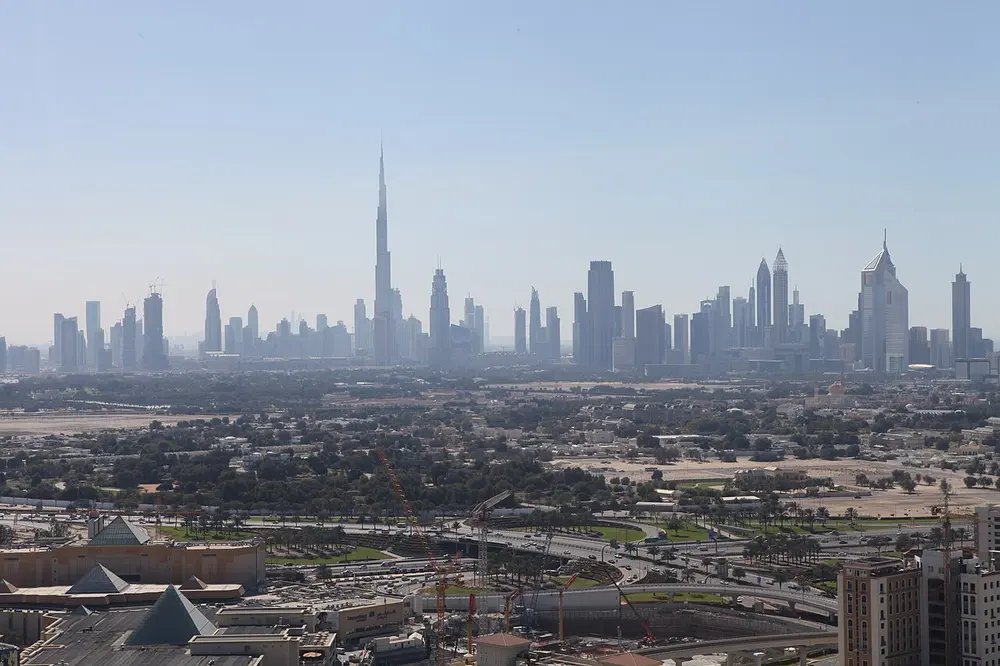
Dubai Skyline 2016. Photo: Tonenight / Wikimedia Commons, CC BY-SA 4.0.
The course
The race is run on the Jumeirah beachfront roads, with the Gulf coast as the backdrop. The course climbs about 11 metres in total, as close to perfectly flat as a marathon gets. There are no hills to break the effort and no descents to recover on.
The beachfront setting gives the course an open, modern character. With a deep elite field chasing the prize money, there is a serious race at the front, while the flat roads give everyone else a fair chance at a fast time. The absence of climbing means the first 10 km can feel too easy; the final 10 km will expose any early impatience.
| Race fact | Detail |
|---|---|
| Date | 17 January 2027 |
| Profile | Flat |
| Elevation gain | About 11 m |
| Label | World Athletics Label |
| Setting | Jumeirah beachfront roads |
Eleven metres
It is worth pausing on the number. Eleven metres is less than the rise of a single city block, and on a marathon course it is almost nothing. There is no climb long enough to change the stride, no descent that offers free speed, and no point where the course asks a different kind of effort. The race is flat in the most literal sense.
That flatness is the attraction and the trap. Without hills, there is no natural brake on an ambitious opening, and no landmark that forces a change of rhythm. The runner has to supply the discipline. A pace that feels conservative in the first hour is usually the right one; a pace that feels exciting is usually the one that collapses after 30 kilometres.
The elite race
The prize money makes Dubai one of the more competitive marathon fields in the region. A deep elite pack means there is a real race at the front, with fast times and tactical decisions rather than a procession. For spectators, it gives the event a seriousness that a flat beachfront course might otherwise lack.
For ordinary runners, the elite presence is a spectacle rather than a guide. The leaders are running a different race, at a different pace, and chasing them is never the plan. The deep field adds atmosphere and standard, not a target to follow.
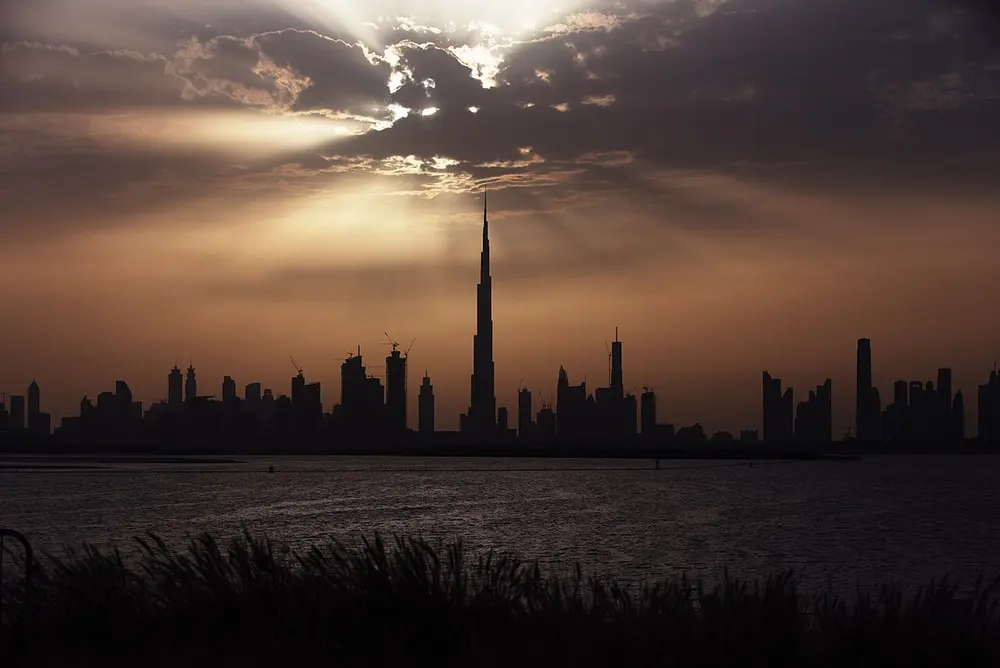
Burj Khalifa (worlds tallest building) and the Dubai skyline. Photo: imran shahabuddin / Wikimedia Commons, CC BY 2.0.
A beachfront marathon
The Jumeirah beachfront gives the race its setting and its exposure. The route runs along the coast, with the Gulf on one side and the city's skyline on the other. It is a modern, open landscape with long sightlines that make a flat course feel even flatter.
The beachfront is also where the race can feel most featureless. There are few turns to break the rhythm and few changes of surface or scenery, so the kilometres can blur together. A mental plan, with the race divided into fixed segments and splits checked at regular points, matters as much as physical preparation.
Flat pacing and the debut
Dubai is a good first marathon because there is nothing in the terrain to fight. The course is flat, the roads are wide and the January date avoids the worst of the Gulf heat. A debutant can focus on pacing, fuelling and finishing rather than on surviving a climb or a technical descent.
It is equally attractive for a personal-best attempt. The course offers no excuse and no obstacle, which means the result depends almost entirely on preparation, conditions and discipline. That is a fair test, but it is also an unforgiving one: on a course this flat, a poorly paced race has nowhere to hide.
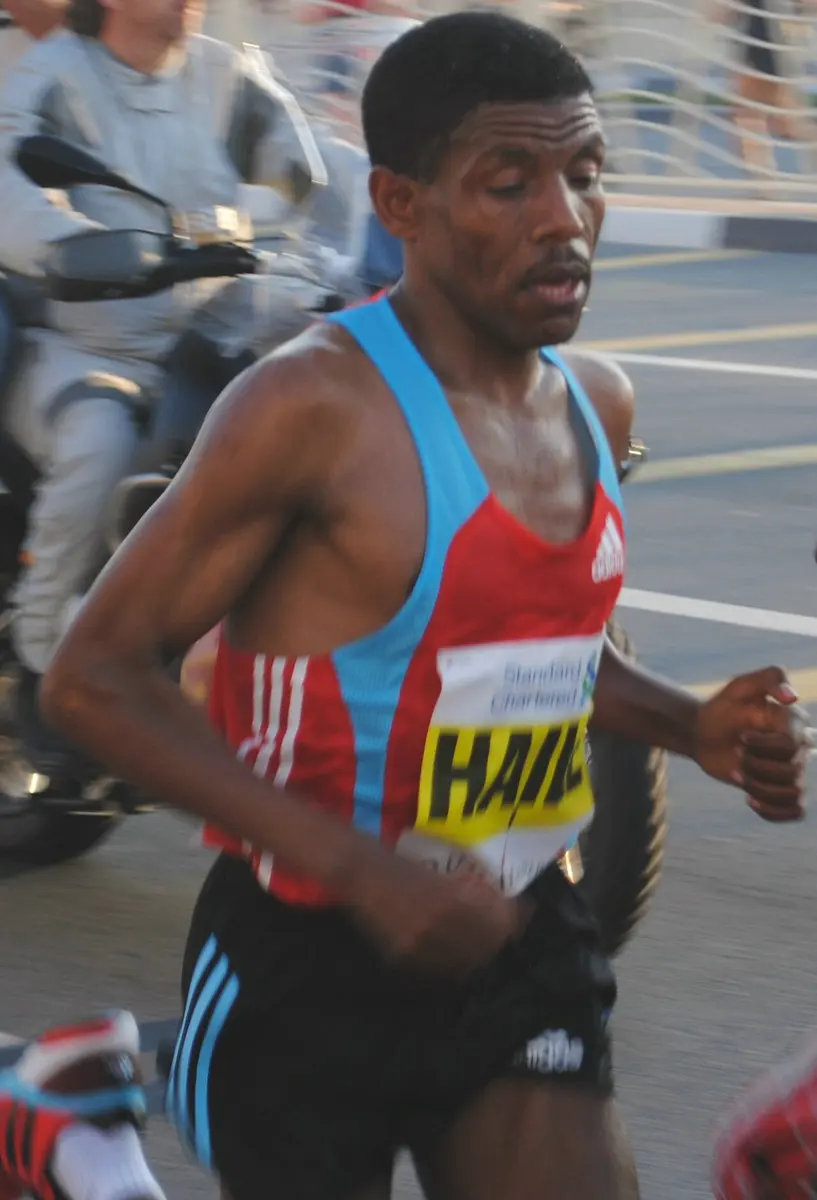
Haile Gebrselassie Dubai 2010. Photo: Anto1210 / Wikimedia Commons, Public domain.
Where the race is decided
- Almost no climbing. Eleven metres is negligible. There is no hill to reset the rhythm, so hold back early.
- The elite field. Prize money draws a deep elite field. Do not be drawn into chasing athletes whose race is not yours.
- A featureless effort. With 11 metres of climbing and a beachfront layout, there is little to break the race up mentally. Stay focused on your own splits.
- Personal-best pressure. A flat course invites ambitious targets. Choose a pace you can hold after 30 km.
- Beachfront exposure. The route is open to the sun and the coastal wind. Prepare for the conditions rather than assuming the winter date solves them.
Frequently asked questions
Answers to the questions runners ask before entering, drawn from this race's course guide and the directory's own data — the sources behind them are listed below.
When is the Dubai Marathon in 2027?
The next edition is on 17 January 2027. It is a mid-January race on the Jumeirah beachfront roads.
Is the Dubai Marathon a flat course?
It is one of the flattest courses anywhere, with about 11 metres of climbing in total. There is no meaningful rise on the route.
Is the Dubai Marathon good for a personal best?
Yes. The course is almost perfectly flat, the roads are wide and the January date sits in the comfortable Gulf winter. The lack of hills means the result depends on pacing and preparation rather than on terrain.
Is the Dubai Marathon suitable for a first marathon?
Yes. The flat profile and the absence of climbing make it a forgiving course for a debut. The main risks are starting too fast on the featureless beachfront and underestimating the exposure.
Where is the Dubai Marathon run?
It is run in Dubai, United Arab Emirates, on the Jumeirah beachfront roads. The course follows the Gulf coast.
Why does Dubai attract a strong elite field?
The prize money draws a deep elite field. That creates a competitive race at the front and gives the event a seriousness beyond its flat, beachfront setting.
What label does the Dubai Marathon hold?
It holds a World Athletics Label.
More marathons in Asia
Sources for this page
What each source below is used for on this page, and where to check this race yourself.
- World Athletics — the label calendar and the road-race regulations. Used to check whether the race holds a World Athletics label, and its elite competition details.
- AIMS — the international course-measurement standard behind the 42.195 km distance, and the AIMS race calendar.
- The organizer's own publications — course maps, race handbooks and published results. The date, course character and climbing on this page are compiled from them and re-checked each season.
“A World Athletics Label denotes a full application of the Competition and Technical Rules in, at a minimum, the elite component of the competition. Labels also denote superior standards in event organisation, safety and runner experience, support from public authorities to the event and a financial commitment to anti-doping.”
Where do these facts come from?
Dates, course type, climbing and time limits are compiled from the organizer's publications and re-checked each season; elevation is an estimate of total climbing rather than a survey figure. Always confirm race-day details with the organizer before making plans.
Last reviewed 27 October 2026