
Kyiv Marathon
The Kyiv Marathon is an October race that uses the Dnipro as its organising line. The 2026 edition was held on 11 October, on a course that crosses both banks of the river and keeps the running flat…
By Global Marathon Routes editorial team · Last reviewed 27 October 2026
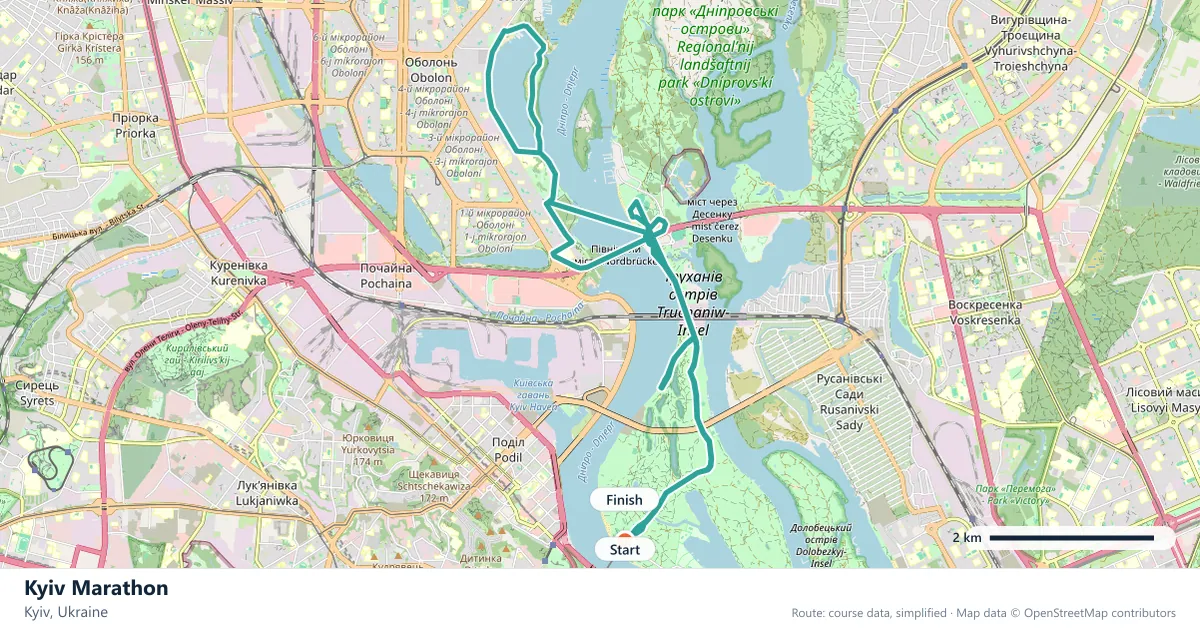
Where does the Kyiv Marathon run?
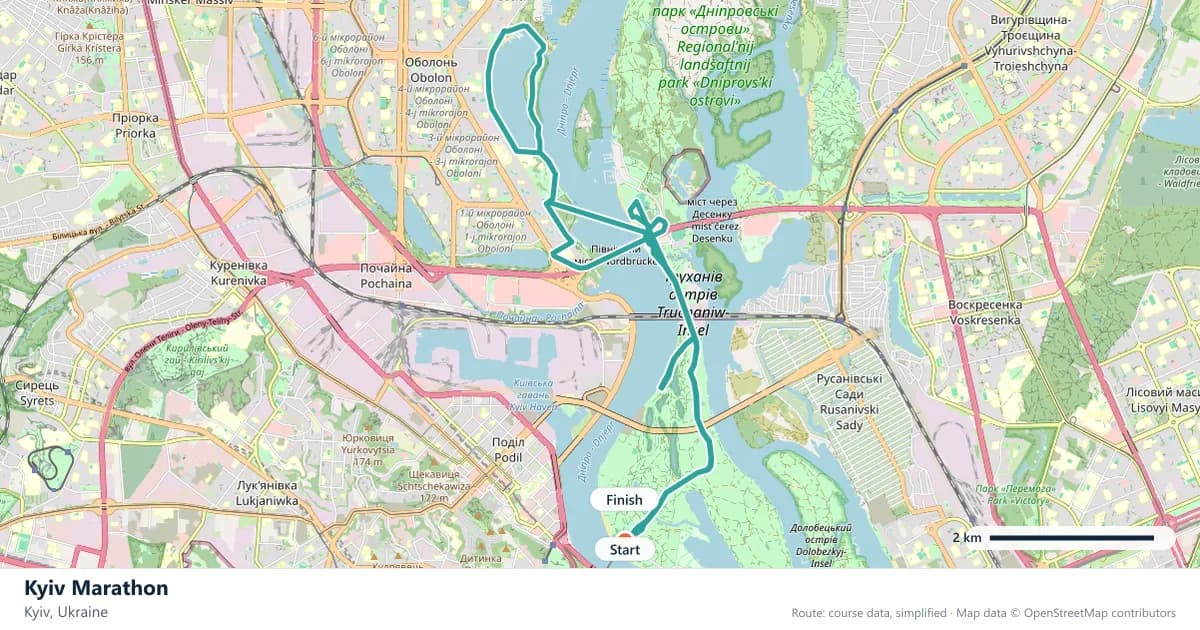
Interactive map
The trace follows the organizer's published course, simplified for the screen: the orange dot is the start, the dark dot the finish. Scroll to zoom, drag to pan.
What is the Kyiv Marathon course like?
A flat city course on both banks of the Dnipro, passing the chestnut-lined boulevards and the city's hillside viewpoints. Held in October, and quick when the weather is kind.
- Next edition
- October 2027 (expected)
- Elevation gain
- 71 m
- Profile
- Flat
- First run
- —
Course guide
The Kyiv Marathon is an October race that uses the Dnipro as its organising line. The 2026 edition was held on 11 October, on a course that crosses both banks of the river and keeps the running flat even while the city rises around it. The gain is about 71 metres across 42.195 km.
Kyiv is a city of levels: broad chestnut-lined boulevards on the higher ground, the river below, and hillside viewpoints that open over the water. The marathon stays on the level, but it does not hide the city's shape. The skyline and the river do the work that hills would do elsewhere.
The profile is flat by any standard, and the race is quick when the weather is kind. It is a course for rhythm, not for climbing, and the challenge is to keep the effort honest while the kilometres pass without much resistance.

Kyivska Sotka 2024 start area. Photo: Олександр Редько / Wikimedia Commons, CC0.
The course
The route stays inside Kyiv and uses both banks of the Dnipro. It passes the chestnut-lined boulevards and the hillside viewpoints, but the running itself is flat: about 71 metres of climbing over the full distance, with no sustained ascent. The river crossings link the two halves of the course, and the character changes with the bank.
The course is a city race, with the river as its edge. The boulevards give it long, straight running; the viewpoints give it moments to look up. There is no single landmark that defines the race, but the Dnipro does: it is visible, crossable and impossible to ignore.
Both banks of the Dnipro
Kyiv faces its river from high ground on the right bank and low, wide plains on the left. The marathon uses both. Crossing the Dnipro changes the light, the skyline and the sense of scale: from the left bank the city rises in layers, with churches and apartment blocks stacked above the trees; from the right bank the water opens out.
The two-bank layout is also a pacing device. Each crossing is a natural checkpoint, a place to reset and take stock before the next section. The Dnipro is wide here, and the bridges are long enough that a crossing feels like a section of its own. The course does not climb, but the bridges and the change of scene keep the mind occupied.

2019-07-23 Raisy Okipnoi Street, Kyiv 2. Photo: Maksym Kozlenko / Wikimedia Commons, CC BY-SA 4.0.
A flat route in a hilly city
Kyiv's right bank is genuinely hilly; the city's famous viewpoints sit above the river. The marathon avoids those slopes. That makes the flat profile a deliberate choice rather than an accident of geography, and it puts the emphasis on pace rather than gradient.
On a level course it is easy to run too fast. The 71 metres are spread so thinly that you will not notice them. Use the boulevards to settle, the crossings to reset, and the final kilometres to spend what you saved.
The chestnut season
Kyiv's chestnut-lined boulevards are one of the city's signatures, and the October date places the race in the middle of the city's autumn. The trees, the river and the wide streets give the course a colour that a purpose-built loop cannot match.
Autumn is also a season of change in the city, with the light softer and the parks quieter than in summer. The race uses that atmosphere without making it the centre of the day. The running is still the point.
The 2026 edition
The edition covered here was held on 11 October 2026. It sat in the first half of October, late enough for autumn to have arrived and early enough to avoid the approach of winter.
Because the race has already taken place, this is a description of the course as it was run rather than a preview of a future edition. The flat profile and the both-bank route are the enduring features; any future date will be published by the organiser.
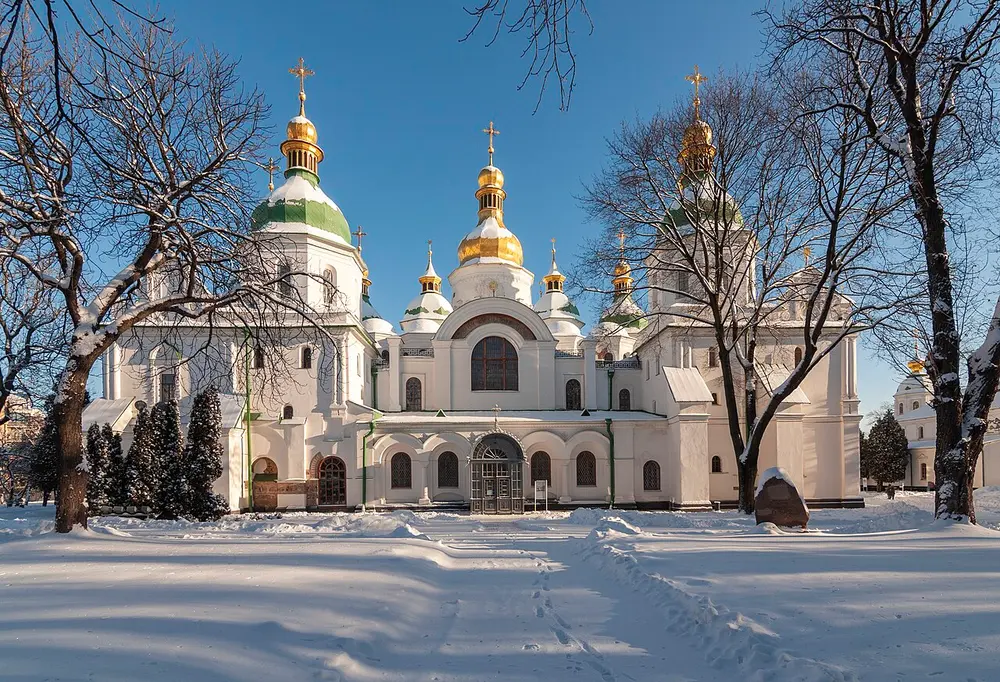
80-391-9014 Kyiv Sofia 2 RB 24. Photo: Rbrechko / Wikimedia Commons, CC BY-SA 4.0.
Frequently asked questions
Answers to the questions runners ask before entering, drawn from this race's course guide and the directory's own data — the sources behind them are listed below.
When was the Kyiv Marathon held?
The 2026 edition was held on 11 October 2026. That is the edition covered here.
Is the Kyiv Marathon a flat course?
Yes. It climbs only about 71 metres across the full distance, with no sustained ascent. The course is flat and, when the weather is kind, quick.
Is the Kyiv Marathon a fast course?
The profile supports fast running, and the race is quick when conditions allow. The flat course and the October date are the main reasons; the weather on the day remains the wildcard.
Does the route use both banks of the Dnipro?
Yes. The route crosses the river and runs on both banks, which gives the course its two-sided character and its views back across the water.
Where is the race run?
It is run in Kyiv, using both banks of the Dnipro. The route passes the chestnut-lined boulevards and the city's hillside viewpoints, while staying flat throughout.
What does the course feel like?
It alternates between wide, chestnut-lined boulevards, river crossings and the open skyline above the water. The running stays level, but the setting changes from bank to bank.
More marathons in Europe
Sources for this page
What each source below is used for on this page, and where to check this race yourself.
- World Athletics — the label calendar and the road-race regulations. Used to check whether the race holds a World Athletics label, and its elite competition details.
- AIMS — the international course-measurement standard behind the 42.195 km distance, and the AIMS race calendar.
- The organizer's own publications — course maps, race handbooks and published results. The date, course character and climbing on this page are compiled from them and re-checked each season.
Where do these facts come from?
Dates, course type, climbing and time limits are compiled from the organizer's publications and re-checked each season; elevation is an estimate of total climbing rather than a survey figure. Always confirm race-day details with the organizer before making plans.
Last reviewed 27 October 2026