
Taipei Marathon
Taipei in December is a different city from the humid summer version, and the Taipei Marathon is built around that window.
By Global Marathon Routes editorial team · Last reviewed 27 October 2026
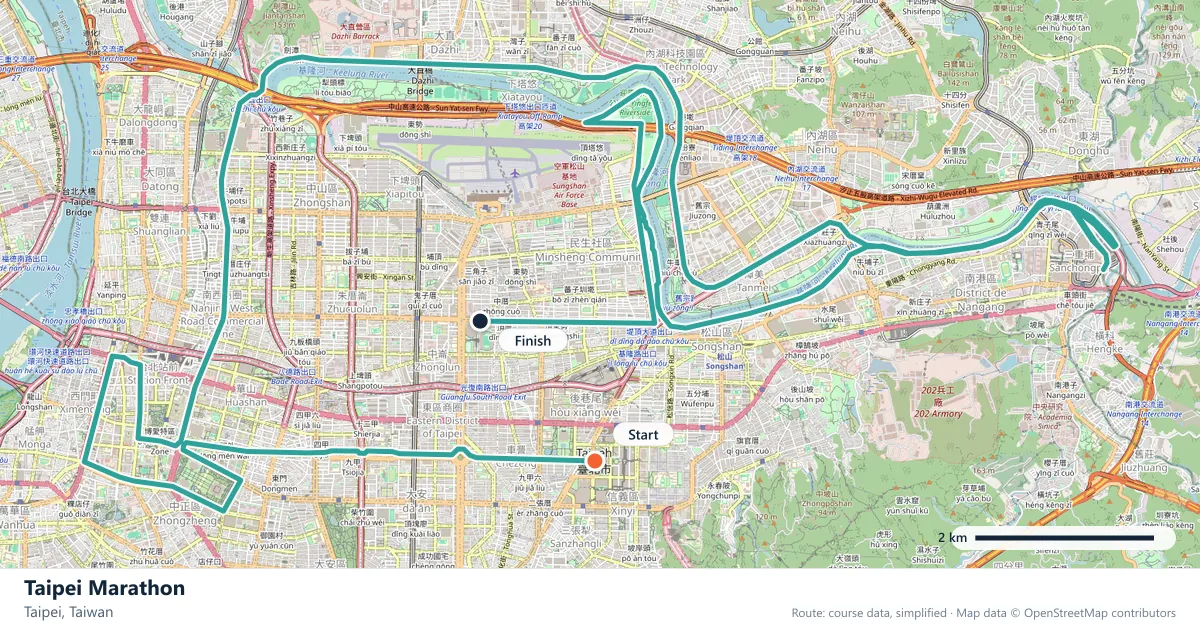
Where does the Taipei Marathon run?
Interactive map
The trace follows the organizer's published course, simplified for the screen: the orange dot is the start, the dark dot the finish. Scroll to zoom, drag to pan.
What is the Taipei Marathon course like?
A December city marathon running out from the government district along the Keelung river and back. Flat, fast and cool by Taiwanese standards.
- Next edition
- 20 December 2026
- Elevation gain
- 94 m
- Profile
- Flat
- First run
- —
Course guide
Taipei in December is a different city from the humid summer version, and the Taipei Marathon is built around that window. The 2026 edition is on 20 December, starting in the government district and following the Keelung river before returning to the city. It holds a World Athletics Gold Label, and the course climbs only about 94 metres over its full length.
The race is a straightforward city marathon rather than a scenic tour. The government district gives it a formal, built-up start, the river corridor gives it a long, flat spine, and the return gives it a shape that runners can understand before the gun. It is fast, cool by Taiwanese standards and straightforward enough for a first marathon, with enough flat running to chase a personal best.
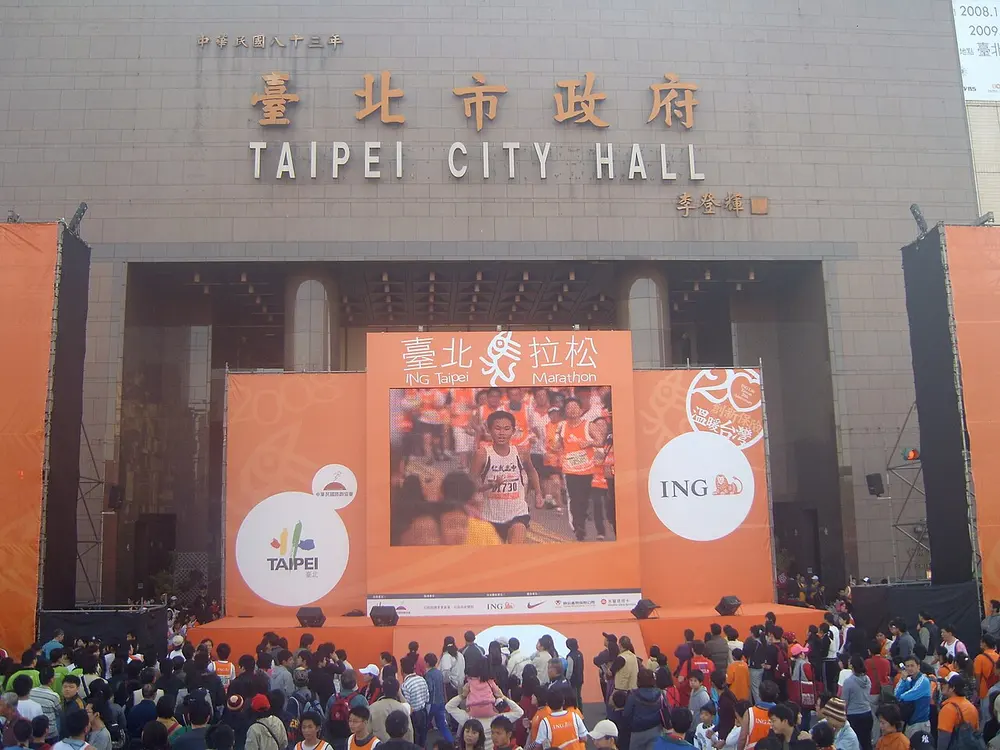
2008 ING Taipei Marathon Main Stage with the title of Taipei City Hall. Photo: Rico Shen / Wikimedia Commons, CC BY-SA 4.0.
The course
The route leaves the government district and follows the Keelung river before turning back. The river corridor gives the race its long, flat spine, and the government district gives it a formal, built-up start. The course is urban throughout, with the river providing the main open space and the clearest sense of direction.
The profile is flat and climbs roughly 94 metres in total. There is no sustained ascent, and the riverbank roads are consistent enough to allow a steady rhythm. The out-and-back structure means you see the course twice, and the return leg can feel different once the field has spread. The main skill is pacing, because a flat out-and-back rewards patience more than a fast opening.
| Race fact | Detail |
|---|---|
| Date | 20 December 2026 |
| Profile | Flat |
| Elevation gain | About 94 m |
| Label | World Athletics Gold Label |
| Layout | Government district to the Keelung river and back |
The Keelung river corridor
The Keelung river is the race's defining geography. Once the course reaches the river, the city opens up, the road flattens, and the marathon settles into a long, rhythmic stretch. The water and the riverside paths give the route a linear shape that is easy to follow and easy to pace.
The corridor is also repetitive. The scenery changes slowly, the turns are few, and the kilometres can blur together if you are relying on landmarks to break them up. That is where a mental plan matters. Dividing the race into river sections, checking splits at fixed points and using the opposite stream of runners on the return can all make the corridor feel shorter than it is.
The out-and-back shape
The out-and-back layout gives the Taipei Marathon a particular character. On the way out, the field is still dense and the city is fresh; on the way back, the course is quieter, the runners are more spread out, and the finish begins to feel real. The return also means you can see the race unfolding ahead of you, which is useful on a flat course where the pace can drift.
The shape demands discipline. It is easy to go out too quickly while the field is around you, and it is easy to misjudge the return because the course looks familiar. The best approach is to run the first half conservatively, treat the turnaround as the start of the real race, and use the return to hold form rather than to make up time.
A fast December race
December is cool by Taiwanese standards, which makes the race a much more comfortable proposition than the summer months. The flat profile and the river corridor give fast runners a fair chance, and the Gold Label reflects the event's standing. The course is not a mountain test; it is a pacing test in cooler conditions.
For a first marathon, the same features are helpful. There are no hills to break the rhythm, the route is easy to understand, and the out-and-back layout means you are never far from other runners. The main risks are starting too fast and underestimating how repetitive the river kilometres can feel.
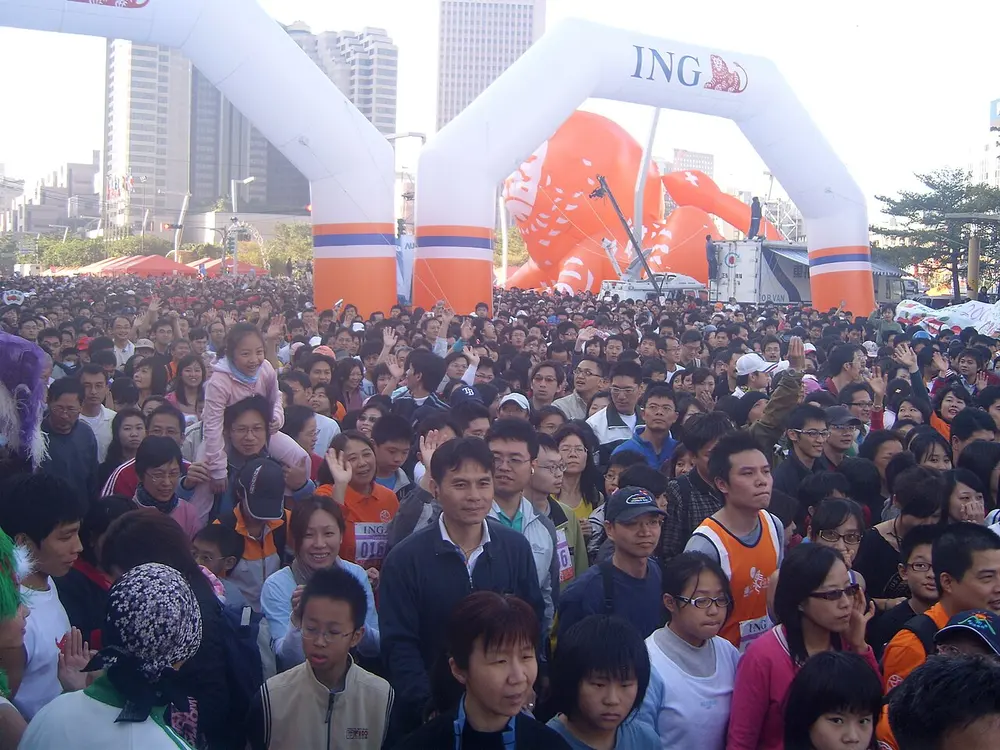
2008 ING Taipei Marathon Fun Run Start. Photo: Rico Shen / Wikimedia Commons, CC BY-SA 4.0.
Course notes
- The out-and-back. Seeing the return leg ahead can help or discourage, depending on your pace. Break the race into sections and focus on the next marker.
- Flat pacing. About 94 metres of climbing offers no natural brake. Check your watch and hold back early.
- December cool. The race is cool by Taiwanese standards, but the start can still feel fresh. Use layers you can discard.
- River repetition. The corridor is fast but monotonous. Have a mental plan for the long stretches.
- The return leg. It can feel different once the field spreads. Hold form rather than trying to recover lost time in one surge.
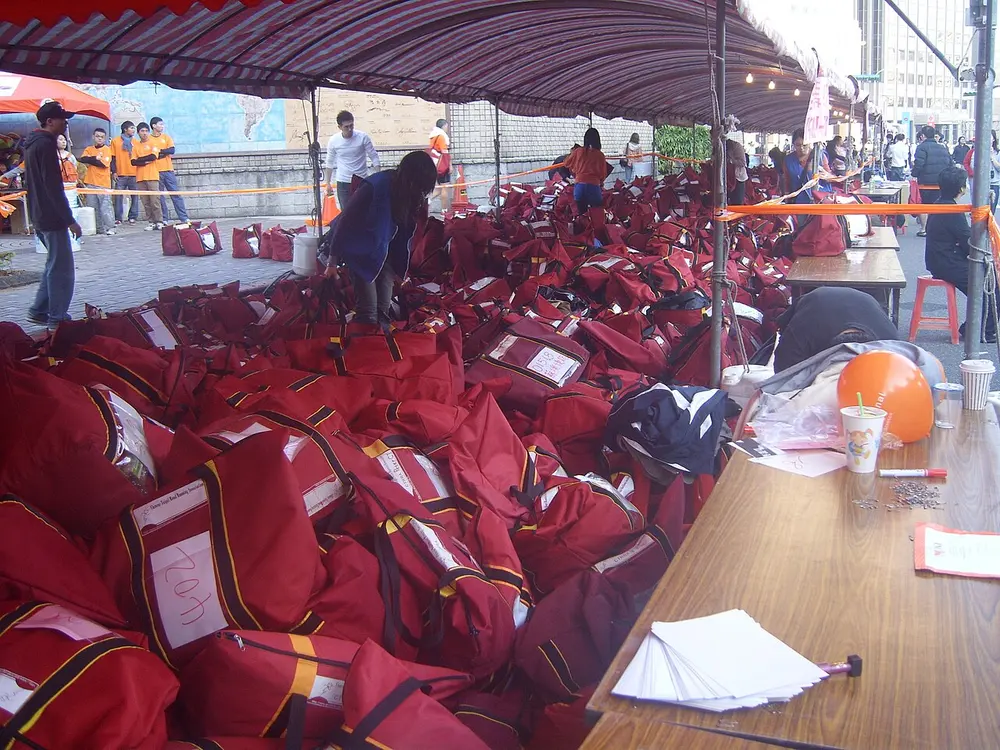
2008 ING Taipei Marathon Locker Service. Photo: Rico Shen / Wikimedia Commons, CC BY-SA 4.0.
Frequently asked questions
Answers to the questions runners ask before entering, drawn from this race's course guide and the directory's own data — the sources behind them are listed below.
When is the Taipei Marathon in 2026?
The race is on 20 December 2026. It is a December city marathon, starting in the government district.
Is the Taipei Marathon a flat course?
Yes. It climbs about 94 metres over the full distance, with no sustained ascent. The river corridor is flat and quick.
Is the Taipei Marathon good for a personal best?
It is well suited to fast times. The flat course, the December date and the consistent river corridor all support an even pace. The out-and-back layout and the repetition are the details to manage.
Is the Taipei Marathon suitable for a first marathon?
Yes. The flat profile, straightforward layout and cooler December conditions make it a manageable debut. A conservative first half is still important, because the flat kilometres can make the early pace feel easier than it is.
Where is the Taipei Marathon run?
It runs from the government district in Taipei, Taiwan, out along the Keelung river and back. The course stays within the city.
What does "cool by Taiwanese standards" mean?
December is cool relative to the rest of the Taiwanese year. It is a winter race, not a cold-weather one, so plan for cooler conditions rather than true winter.
What label does the Taipei Marathon hold?
It holds a World Athletics Gold Label.
More marathons in Asia
Sources for this page
What each source below is used for on this page, and where to check this race yourself.
- World Athletics — the label calendar and the road-race regulations. Used to check whether the race holds a World Athletics label, and its elite competition details.
- AIMS — the international course-measurement standard behind the 42.195 km distance, and the AIMS race calendar.
- The organizer's own publications — course maps, race handbooks and published results. The date, course character and climbing on this page are compiled from them and re-checked each season.
“A World Athletics Label denotes a full application of the Competition and Technical Rules in, at a minimum, the elite component of the competition. Labels also denote superior standards in event organisation, safety and runner experience, support from public authorities to the event and a financial commitment to anti-doping.”
Where do these facts come from?
Dates, course type, climbing and time limits are compiled from the organizer's publications and re-checked each season; elevation is an estimate of total climbing rather than a survey figure. Always confirm race-day details with the organizer before making plans.
Last reviewed 27 October 2026