
Stockholm Marathon
Stockholm's marathon ends inside the 1912 Olympic Stadium, and that alone makes it one of the most distinctive races in Europe.
By Global Marathon Routes editorial team · Last reviewed 27 October 2026
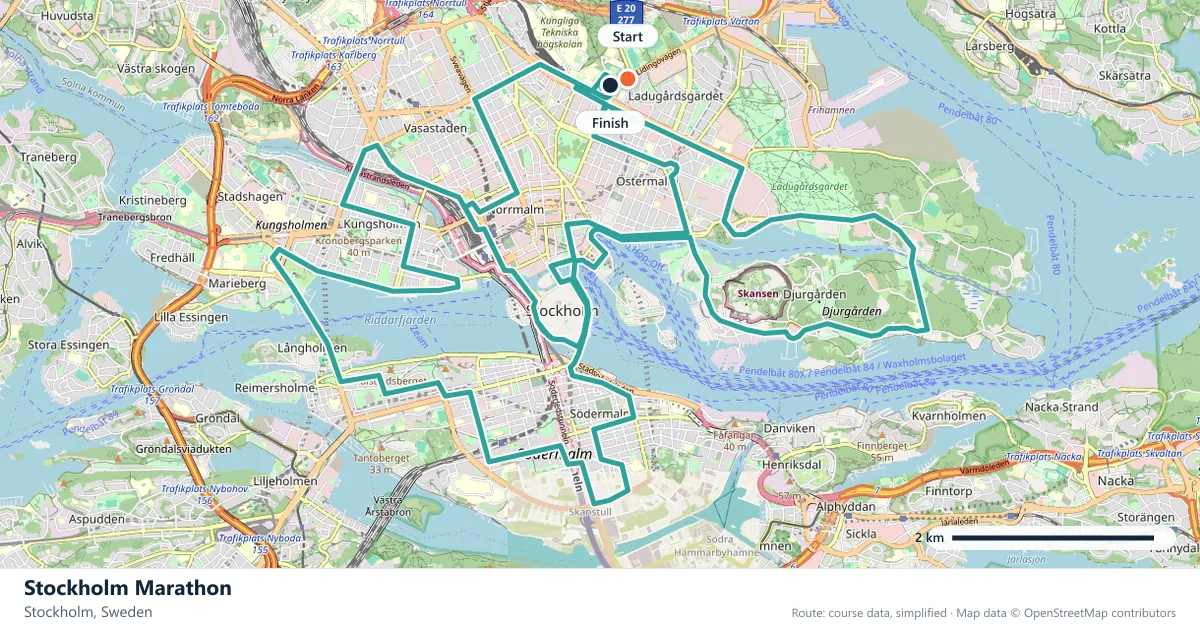
Where does the Stockholm Marathon run?
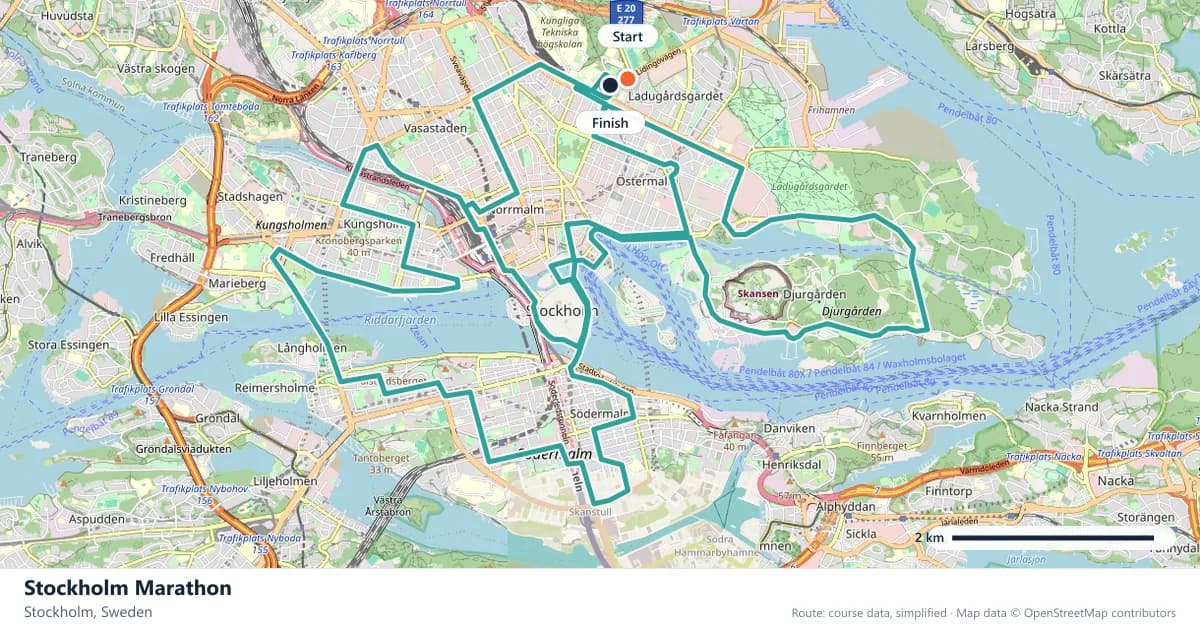
Interactive map
The trace follows the organizer's published course, simplified for the screen: the orange dot is the start, the dark dot the finish. Scroll to zoom, drag to pan.
What is the Stockholm Marathon course like?
A late-spring race that finishes inside the 1912 Olympic Stadium, working through the city islands and out along the archipelago roads. Rolling, with long bridges over the water.
- Next edition
- 29 May 2027
- Elevation gain
- 215 m
- Profile
- Undulating
- First run
- —
Course guide
Stockholm's marathon ends inside the 1912 Olympic Stadium, and that alone makes it one of the most distinctive races in Europe. The next edition is on Saturday 29 May 2027, when the city is warming up and the days are long. The course works through the city's islands and out along the archipelago roads, crossing long bridges over the water.
The profile is undulating, with about 215 metres of climbing. That is more than a flat city marathon, but the rises are short and the course never settles into a single sustained ascent. The bridges do most of the work, lifting the race over the water and then dropping it back onto the next island.
The event holds a World Athletics Label, and it has a reputation as a manageable first marathon as well as a memorable one. The stadium finish gives the day a clear destination, and the island geography keeps the kilometres varied in a way that a mainland loop rarely manages.
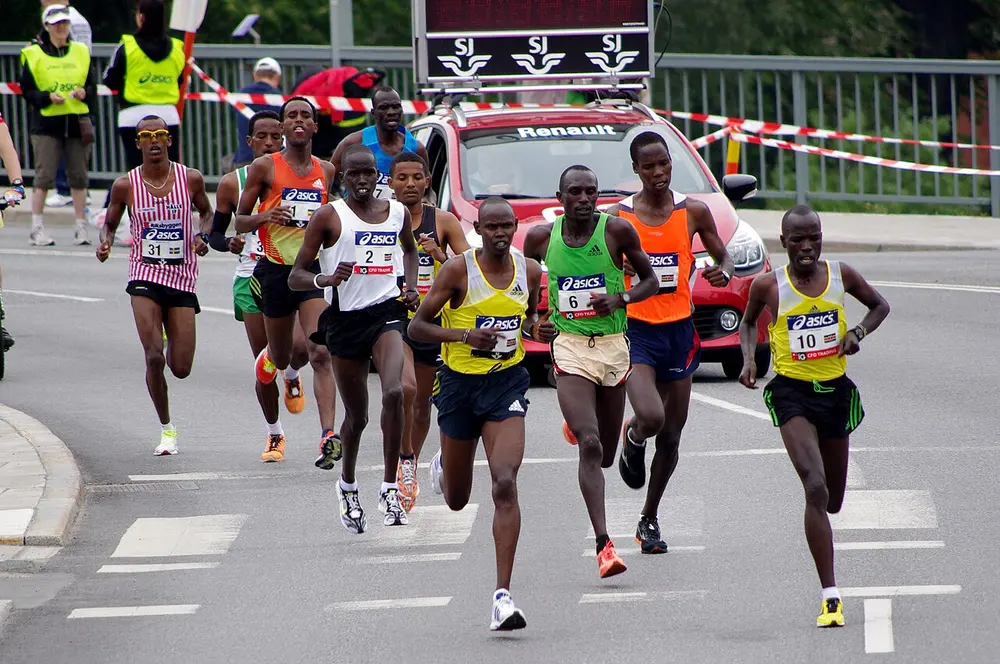
20130601 Stockholm Marathon 6270. Photo: Jakub Hałun / Wikimedia Commons, CC BY-SA 3.0.
The course
The route is a circuit of Stockholm's islands, linked by bridges, before it heads out along the roads that face the archipelago. Water is never far away, and the crossings give the race a rhythm that is quite different from a mainland city loop: a climb, a wide view, a descent and a new island.
The 215 metres of climbing are spread across the course rather than gathered into one hill. The bridges are the obvious set pieces, but the city streets also roll, and the approach to the stadium adds another rise when the legs are already tired.
The course is urban for most of its length, with the archipelago roads providing the most open and exposed running. The combination of city, water and forested shoreline is what makes Stockholm distinctive, and it also makes the race harder to reduce to a simple pace plan.
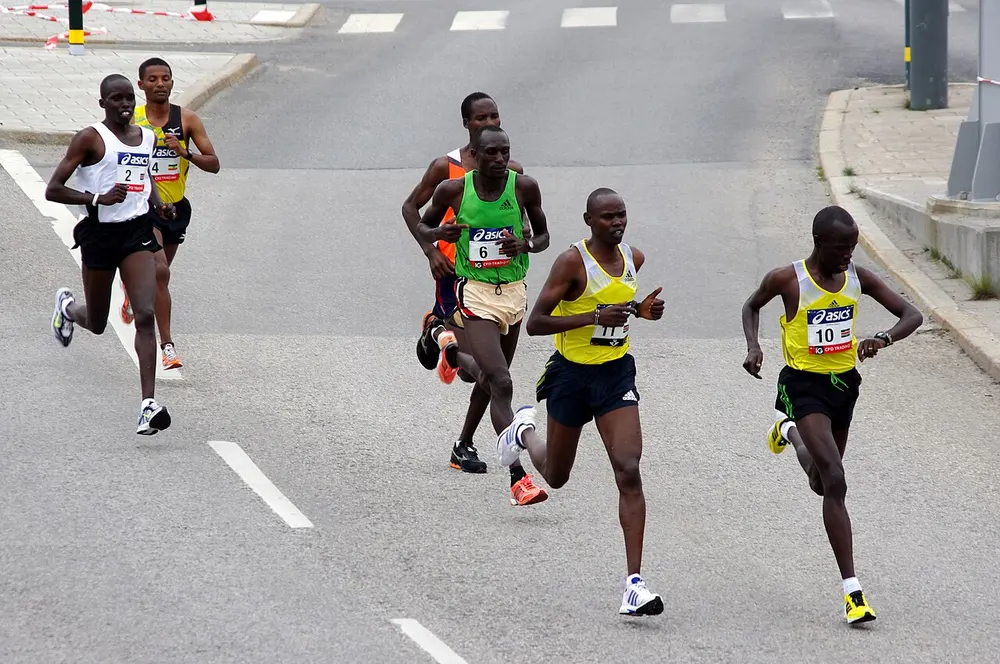
20130601 Stockholm Marathon 6275. Photo: Jakub Hałun / Wikimedia Commons, CC BY-SA 3.0.
Islands and bridges
Stockholm is built on a group of islands where Lake Mälaren meets the Baltic, and the city's geography is the race's geography. The marathon moves between the islands rather than staying on one bank, so every few kilometres the view changes and the surface changes with it.
The bridges are the defining features. They are long enough to feel like climbs, exposed enough to remind runners that they are crossing open water, and frequent enough that the race never becomes a single flat drag. Each crossing is a small event in itself.
The archipelago roads at the outer end of the course are quieter and greener. The city falls away, the water opens up and the race feels more like a coastal run than an urban marathon. That contrast is one of the reasons Stockholm is worth choosing over a flatter, more conventional course.
The stadium finish
The finish inside the 1912 Olympic Stadium is the race's signature moment. The stadium was built for the Stockholm Olympics and has a compact, intimate feel that modern arenas struggle to match. Runners enter it for the final metres rather than finishing on an open road.
That finish changes the shape of the last kilometre. Instead of a long, flat run-in, the race ends with a turn into the stadium, with the grandstand close on both sides. It is a finish that rewards runners who have something left.
The stadium also gives spectators a natural gathering point. Families and friends can wait in one place and see the race arrive, which is not always true at a city marathon with a street finish.
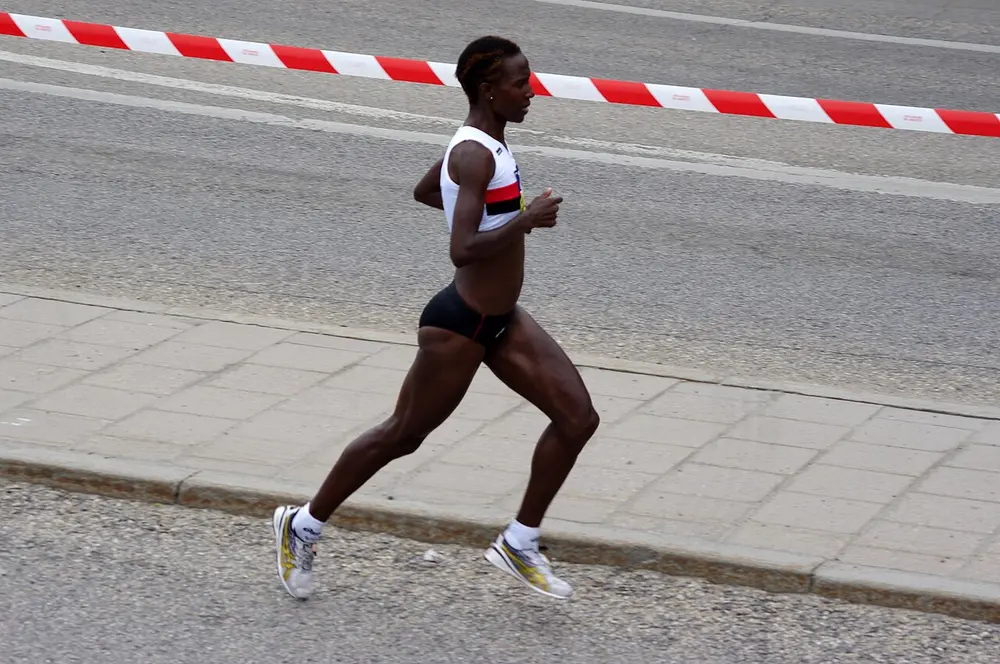
20130601 Stockholm Marathon 6312. Photo: Jakub Hałun / Wikimedia Commons, CC BY-SA 3.0.
A late-spring debut
The race is a manageable first marathon because the route is varied rather than easy. The short rises and long bridges ask for attention, but they also break the distance into pieces, and the stadium finish gives a debutant a clear goal for the final hour.
The late-spring date helps. By the end of May, the worst of the Nordic winter is long gone, the days are long and the city is at its most welcoming. A first marathon here does not require the cold-weather preparation of an early-spring race.
Restraint matters more than speed here. The opening kilometres through the city are lively, the bridges are spectacular, and the temptation to race them is strong.
A debutant who holds back will enjoy the islands more and arrive at the stadium with the energy to appreciate it.
Frequently asked questions
Answers to the questions runners ask before entering, drawn from this race's course guide and the directory's own data — the sources behind them are listed below.
When is Stockholm Marathon 2027?
The next edition is on Saturday 29 May 2027. It is a late-spring race, and final start times are published closer to race day.
Is the Stockholm Marathon flat or hilly?
It is undulating, with about 215 metres of climbing. There are short rises and long bridges rather than a single sustained climb, so it is not a mountain course, but it is not flat either.
Is Stockholm a good debut?
Yes. The short rises and the stadium finish keep it manageable, and the varied route breaks the distance into sections. Pace the bridges sensibly rather than chasing the atmosphere.
Where is the Stockholm Marathon run?
It is run through Stockholm's city islands and out along the archipelago roads, finishing inside the 1912 Olympic Stadium. The route crosses long bridges over the water.
Does the race finish in a stadium?
Yes. The finish is inside the 1912 Olympic Stadium, the venue of the 1912 Olympics. Runners enter the stadium for the closing metres.
What label does Stockholm hold?
It holds a World Athletics Label, alongside a late-spring date and a stadium finish.
More marathons in Europe
Sources for this page
What each source below is used for on this page, and where to check this race yourself.
- World Athletics — the label calendar and the road-race regulations. Used to check whether the race holds a World Athletics label, and its elite competition details.
- AIMS — the international course-measurement standard behind the 42.195 km distance, and the AIMS race calendar.
- The organizer's own publications — course maps, race handbooks and published results. The date, course character and climbing on this page are compiled from them and re-checked each season.
“A World Athletics Label denotes a full application of the Competition and Technical Rules in, at a minimum, the elite component of the competition. Labels also denote superior standards in event organisation, safety and runner experience, support from public authorities to the event and a financial commitment to anti-doping.”
Where do these facts come from?
Dates, course type, climbing and time limits are compiled from the organizer's publications and re-checked each season; elevation is an estimate of total climbing rather than a survey figure. Always confirm race-day details with the organizer before making plans.
Last reviewed 27 October 2026