
Ljubljana Marathon
Ljubljana's marathon is a compact autumn loop that has learned how to be quick without becoming big. The next edition is expected in October 2027, and the course follows the Ljubljanica through the…
By Global Marathon Routes editorial team · Last reviewed 27 October 2026
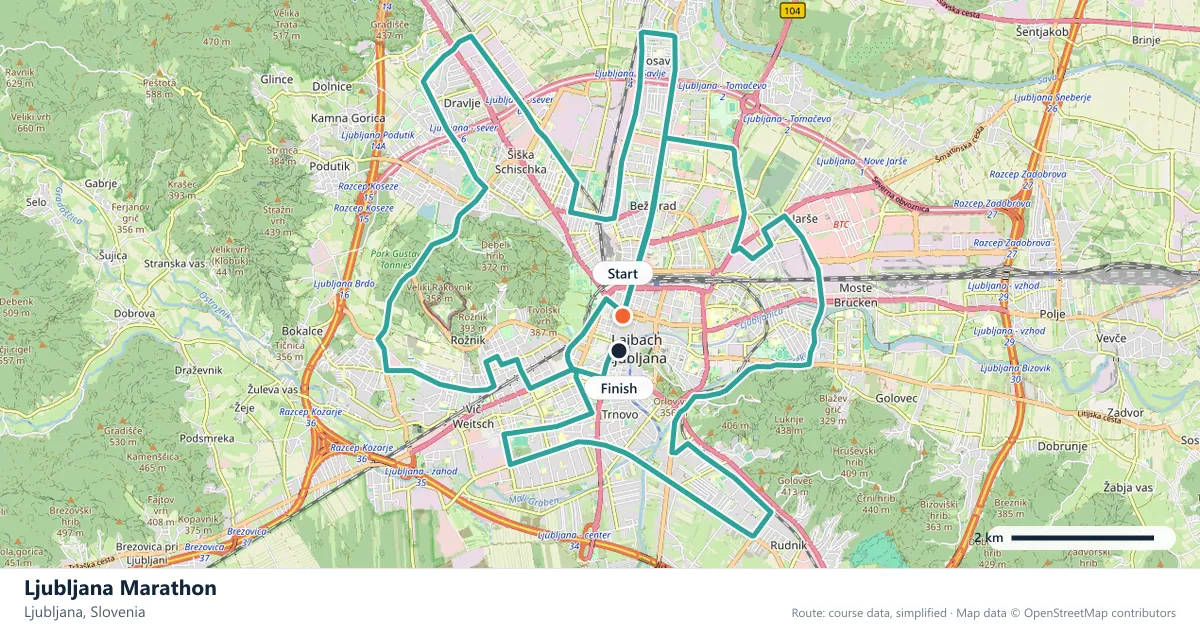
Where does the Ljubljana Marathon run?
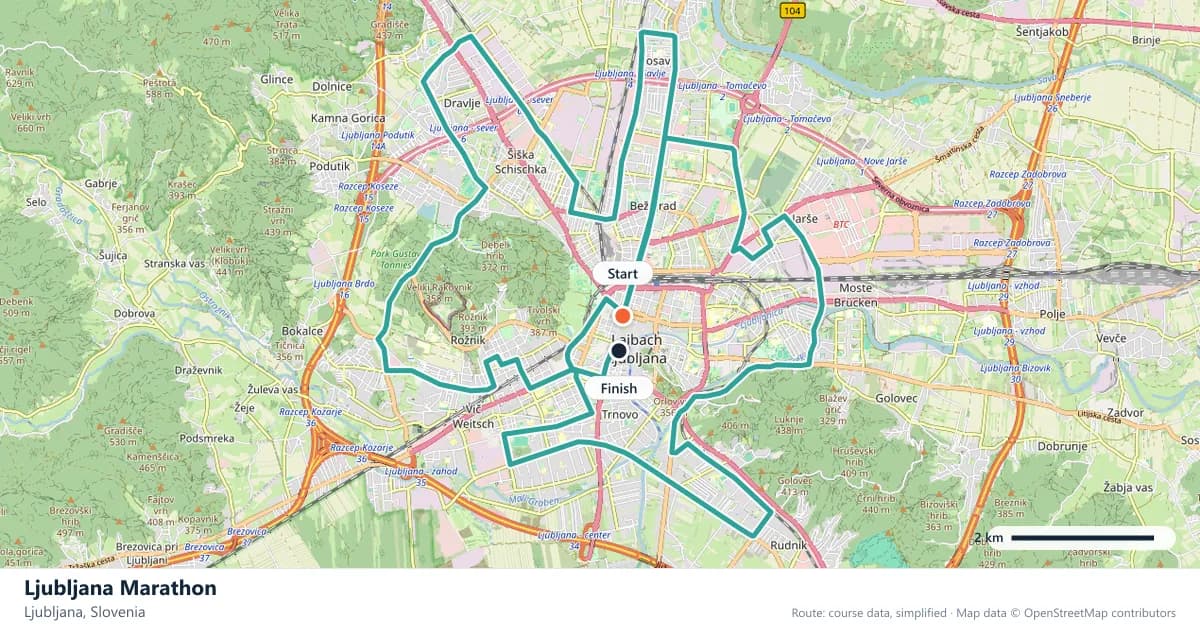
Interactive map
The trace follows the organizer's published course, simplified for the screen: the orange dot is the start, the dark dot the finish. Scroll to zoom, drag to pan.
What is the Ljubljana Marathon course like?
A flat, quick autumn marathon looping through the Slovenian capital and out along the Ljubljanica. Small, friendly and fast enough to attract a serious elite field.
- Next edition
- October 2027 (expected)
- Elevation gain
- 120 m
- Profile
- Undulating
- First run
- —
Course guide
Ljubljana's marathon is a compact autumn loop that has learned how to be quick without becoming big. The next edition is expected in October 2027, and the course follows the Ljubljanica through the Slovenian capital before turning back through its streets. It climbs about 120 metres, gently enough that the race has a reputation for speed.
The field is small by the standards of the major city marathons, but the elite end is serious. That combination, a friendly, walkable city and a course that can produce fast times, is the race's appeal. It feels like a local event until the front of the field comes past, and then it feels considerably more ambitious.
The profile is gently undulating rather than flat. The flat reputation is broadly fair, because the rises are short and the total climbing is low, but the course is not perfectly level. Runners who expect a billiard table will notice the difference; runners who pace by effort will not mind it.
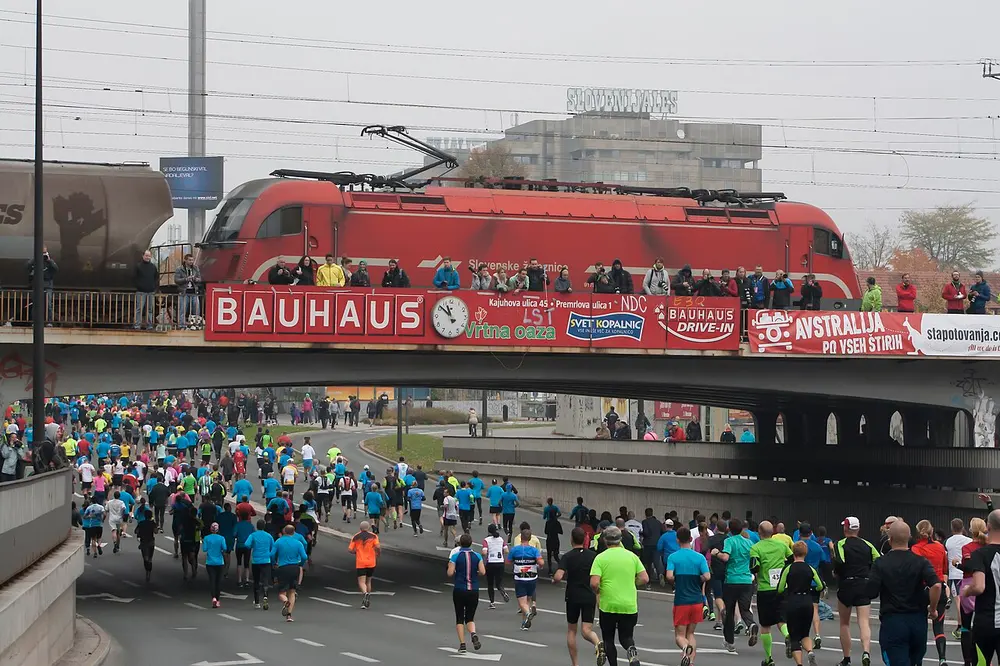
Ljubljana Marathon, Slovenia. Photo: Jeremy Segrott from Cardiff, Wales, UK / Wikimedia Commons, CC BY 2.0.
The course
The route is a loop that stays close to the city and uses the Ljubljanica as its central line. The river runs through the heart of Ljubljana, and the course follows it for part of the way, giving the race a calm, green corridor in the middle of an urban marathon.
The streets around the river are where the course turns and rolls. Ljubljana's centre is compact, with bridges, embankments and a castle hill that shapes the skyline without appearing as a climb on the route. The 120 metres arrive in small pieces rather than one sustained ascent.
Because the route is a loop, familiar sections return in the second half. That can be a comfort or a curse. Runners who know the city can tick off landmarks; runners who do not can still use the river as a reference point and break the race into the stretches between crossings.
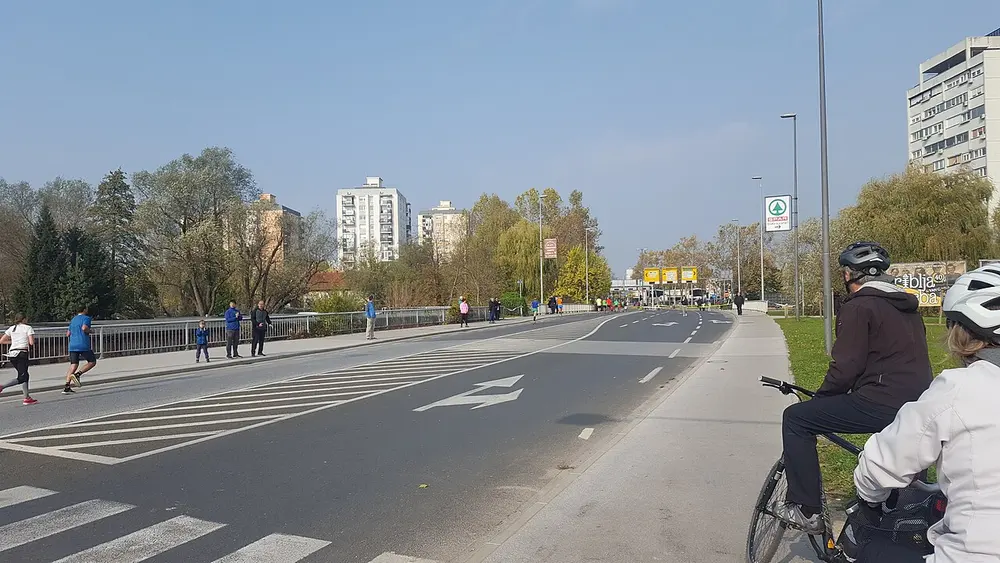
Windy Sunday ride to Ljubljana marathon event 20171029 130702. Photo: LeDucky / Wikimedia Commons, CC BY 2.0.
A small race with a quick edge
The course is built for fast running. The climbing is modest, the loop is contained and the field is small enough that runners can settle into a pace without spending the first kilometres fighting for space. Those are the conditions that make a personal best possible.
The elite presence adds a different kind of speed. A serious front group can lift the atmosphere and pull the race along, but it can also tempt runners into a pace that belongs to someone else. The small field makes that temptation easier to resist if you are honest with yourself.
What makes the race distinctive is the balance. It has the organisation and the course of a much bigger event, without the crowds and the logistics that come with one. For runners who want a quick autumn marathon in a city that can be explored on foot, Ljubljana is unusually well suited.
Following the Ljubljanica
The Ljubljanica is the reason Ljubljana feels like Ljubljana. The river runs through the centre in a series of embankments and bridges, lined with cafés and trees, and it gives the city a scale that is easy to understand on foot.
On the course, the river provides a steady reference point. The embankment stretches are flat and sheltered, and the bridges mark the transitions from one part of the city to another. The water is never far away, even when the route turns inland.
That closeness to the river is also a reminder of how compact the race is. The loop does not escape into suburbs or industrial estates; it stays within the city's everyday geography, with the river as its spine.
Autumn in a small capital
Mid-October is a good moment for a marathon in Ljubljana. The summer crowds are gone, the city is back in its normal rhythm, and the race has the centre more to itself.
The date is fixed for 2026, not provisional. That makes it easier to plan a season around, and it gives the race a clear place in the autumn calendar, between the end of the summer road season and the start of winter training.
For runners visiting the city, the compact centre is a practical advantage. The course is easy to follow, the start and finish are within reach of central accommodation, and the marathon does not require a long, complicated journey across a sprawling capital.
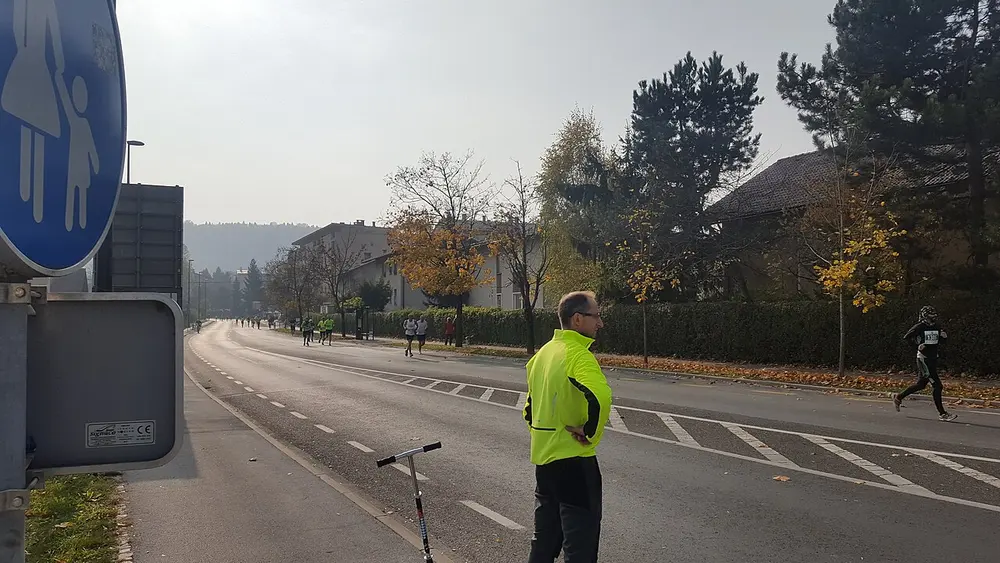
Windy Sunday ride to Ljubljana marathon event 20171029 130705. Photo: LeDucky / Wikimedia Commons, CC BY 2.0.
Frequently asked questions
Answers to the questions runners ask before entering, drawn from this race's course guide and the directory's own data — the sources behind them are listed below.
When is the Ljubljana Marathon?
The next edition is expected in October 2027. It is a mid-autumn race and holds a World Athletics Gold Label.
Is the Ljubljana Marathon a flat course?
Broadly yes. It is gently undulating with about 120 metres of gain, which is low for a marathon. The course has a flat and quick reputation, even though it is not perfectly level.
How quick is the Ljubljana course?
It is quick. The low climbing, the compact loop and the small field give runners a fair chance of a fast time. The race is built around speed, and the course does not throw in a climb that changes the day.
Is Ljubljana a sensible debut?
The race is not specifically a first-marathon event; its character is quick and its field includes a serious elite presence. The modest climbing helps, but a debutant should be prepared to pace carefully and ignore the fast start.
Where is the Ljubljana Marathon run?
It is run in Ljubljana on a loop that stays close to the city and follows the Ljubljanica for part of the way. The course remains within the Slovenian capital.
What is the Ljubljana Marathon's label?
It holds a World Athletics Gold Label, one of the higher tiers on the international road-racing calendar.
Is the Ljubljana Marathon a big-city race?
No. It has a small, friendly field by big-city standards, but it still attracts a serious elite contingent. The atmosphere is one of its main attractions.
More marathons in Europe
Sources for this page
What each source below is used for on this page, and where to check this race yourself.
- World Athletics — the label calendar and the road-race regulations. Used to check whether the race holds a World Athletics label, and its elite competition details.
- AIMS — the international course-measurement standard behind the 42.195 km distance, and the AIMS race calendar.
- The organizer's own publications — course maps, race handbooks and published results. The date, course character and climbing on this page are compiled from them and re-checked each season.
“A World Athletics Label denotes a full application of the Competition and Technical Rules in, at a minimum, the elite component of the competition. Labels also denote superior standards in event organisation, safety and runner experience, support from public authorities to the event and a financial commitment to anti-doping.”
Where do these facts come from?
Dates, course type, climbing and time limits are compiled from the organizer's publications and re-checked each season; elevation is an estimate of total climbing rather than a survey figure. Always confirm race-day details with the organizer before making plans.
Last reviewed 27 October 2026