
Košice Peace Marathon
The Košice Peace Marathon is the oldest marathon in Europe, first run in 1924, and it has never needed big-city scale to make its point.
By Global Marathon Routes editorial team · Last reviewed 27 October 2026
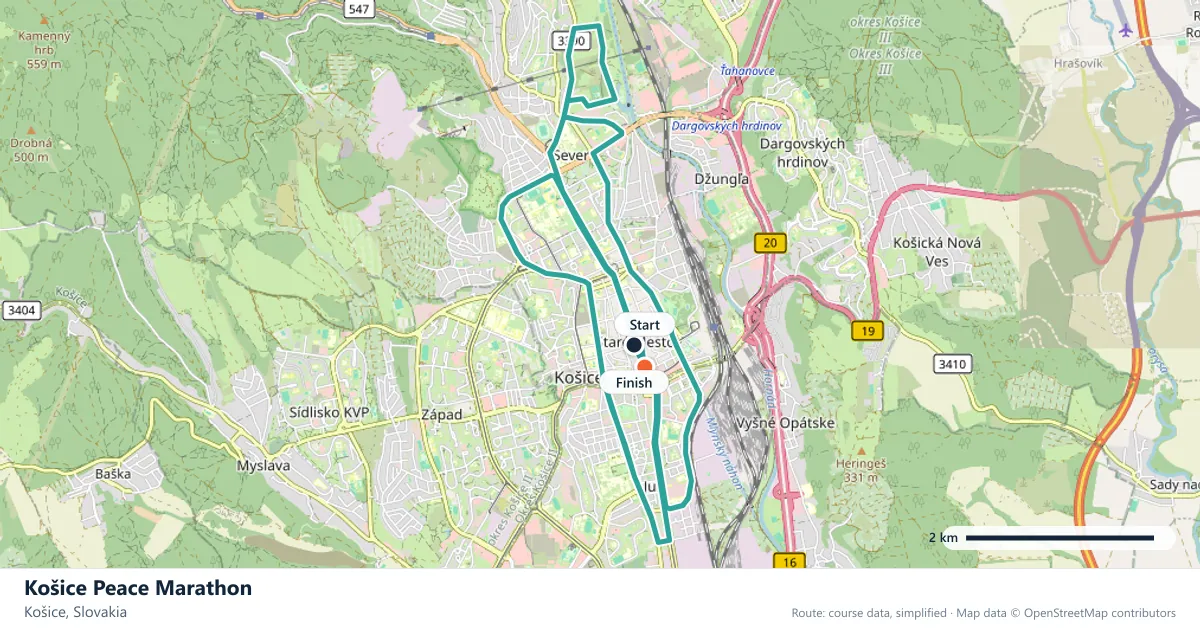
Where does the Košice Peace Marathon run?
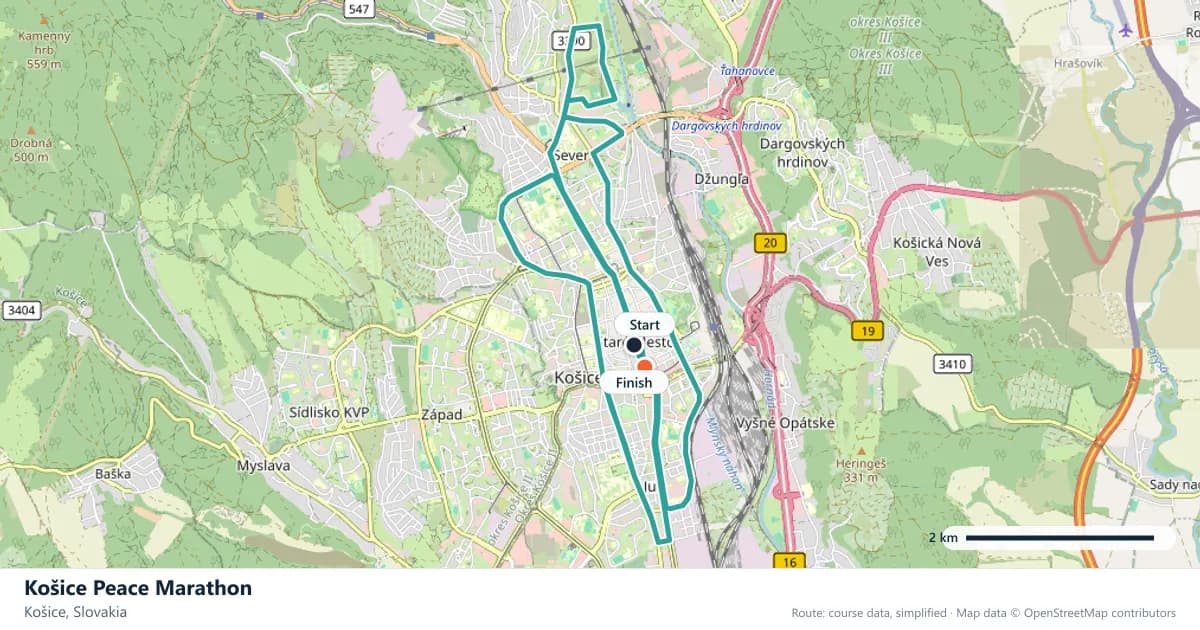
Interactive map
The trace follows the organizer's published course, simplified for the screen: the orange dot is the start, the dark dot the finish. Scroll to zoom, drag to pan.
What is the Košice Peace Marathon course like?
The oldest marathon in Europe, first run in 1924, and still a flat, fast loop through the city's historic centre. A small field by modern standards, but a deep record of winners.
- Next edition
- October 2027 (expected)
- Elevation gain
- 81 m
- Profile
- Flat
- First run
- —
Course guide
The Košice Peace Marathon is the oldest marathon in Europe, first run in 1924, and it has never needed big-city scale to make its point. The 2026 edition was held on Sunday 4 October, over a flat loop through the historic centre, with about 81 metres of climbing. It carries a World Athletics Elite Label.
Modern marathons often measure themselves by field size. Košice measures itself by continuity: the race was first run in 1924, and its winners' list stretches back through several different eras of the sport. The event feels older and more rooted than most races of the same distance.
None of that would matter if the running were poor. The loop is flat and fast, with just enough variety to keep the concentration, and the historic centre gives the kilometres a setting that a purpose-built circuit cannot match. It is a race for runners who want a quick time without the anonymity of a big-city start corral.
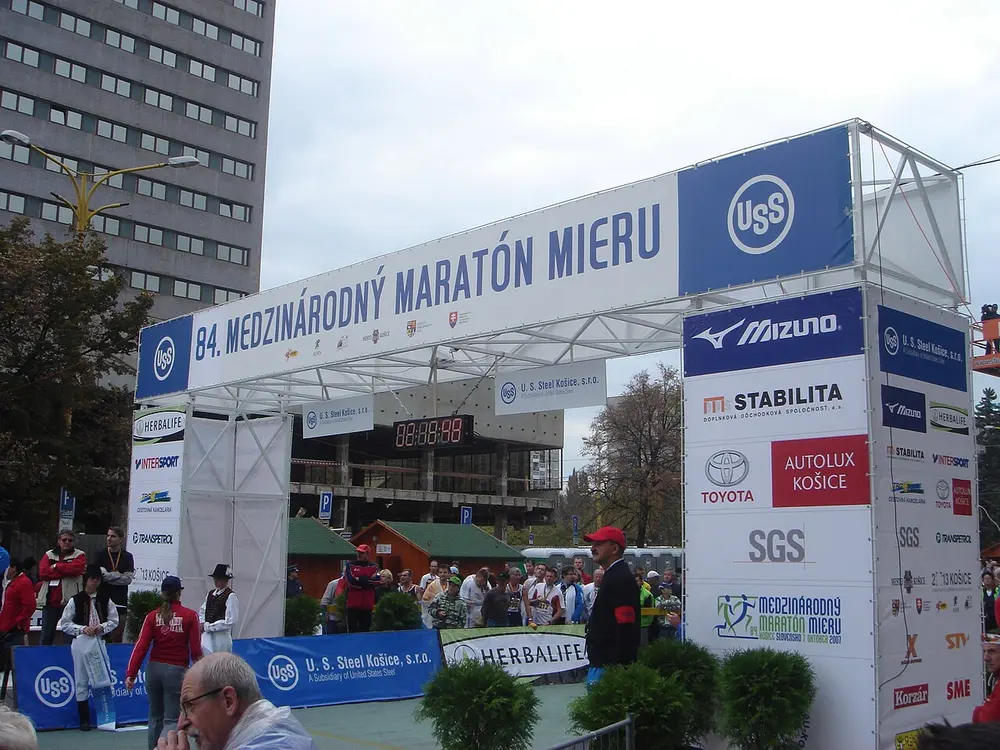
Košice Peace Marathon 2007 04193. Photo: Jonesy22 / Wikimedia Commons, Public domain.
The course
The route is a loop rather than a point-to-point, and it stays within Košice rather than heading into the surrounding countryside. It passes through the historic centre, where the streets are narrower and the buildings closer, and uses the city's grid to keep the race compact and easy to follow.
Flatness is the defining quality. With about 81 metres of climbing, the course has no sustained ascent and no climb that changes the character of the day. The rises that do exist are short and easily absorbed, which is why the race has a reputation for fast times.
The loop format has a psychological effect. Runners see parts of the city more than once, and the later kilometres can feel familiar in a way that is either comforting or tiring, depending on the day. Breaking the race into the sections between landmarks helps; the centre is compact enough that there is always another one coming.
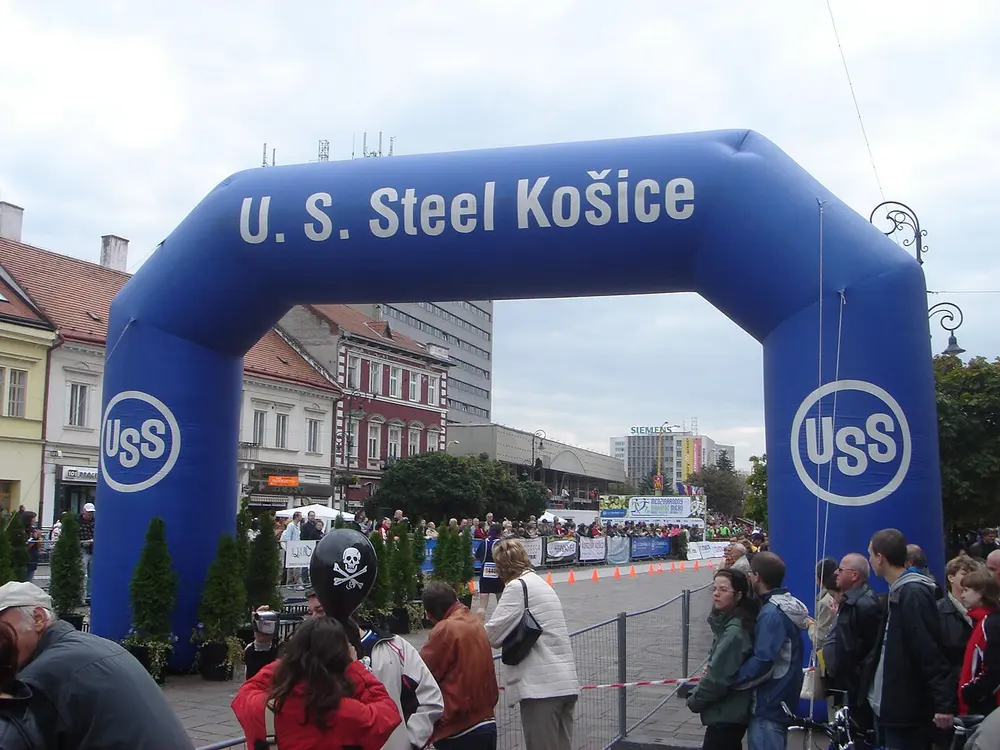
Košice Peace Marathon 2007 04196. Photo: Jonesy22 / Wikimedia Commons, Public domain.
Europe's oldest marathon
The race began in 1924, which makes it the oldest marathon in Europe. That fact is easy to state and harder to absorb: the event predates most of the international road-racing calendar, and it has been run through periods when central Europe's borders and institutions looked very different.
The history shows in the way the race is organised. Košice feels like a civic event rather than an imported product, with the city centre acting as the course and the finish rather than a backdrop. The marathon is not trying to be a stadium show or a mass-participation festival; it is trying to be the race it has always been.
For runners, that history is part of the appeal. There are faster courses and bigger fields, but very few races can offer a flat loop through a historic centre with a century of winners behind it.
A small field with a long memory
The field is small by modern standards, and that changes the experience. There is less crowding at the start, more space on the course and a greater chance of running alone for long stretches. For some runners that is a relief; for others it is a test of self-pacing.
The smaller field also makes the race feel more intimate. The historic centre does not need tens of thousands of runners to feel full, and the spectators are close enough to the course that the support feels personal rather than industrial.
What the race lacks in size it makes up for in depth. The winners' list is long for an event of this scale, and the race has attracted strong fields throughout its history. That combination, small but serious, is unusual and worth seeking out.
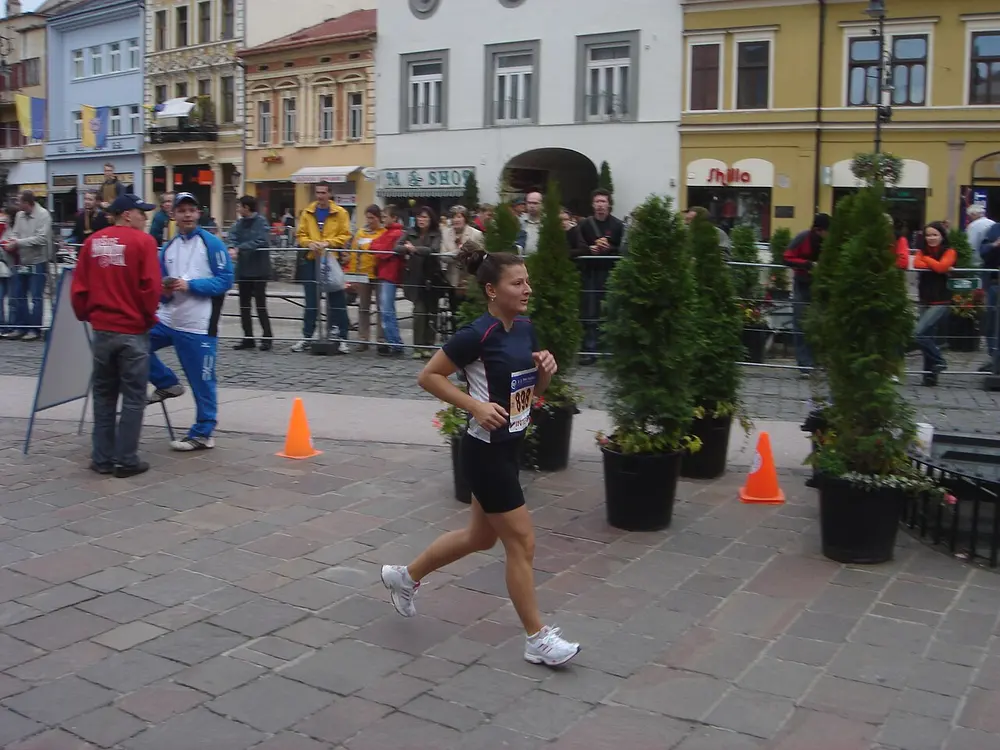
Košice Peace Marathon 2007 04197. Photo: Jonesy22 / Wikimedia Commons, Public domain.
October in Košice
The race falls in early October, at the point when the European season is winding down and the autumn is settling in. It is a date that suits runners coming off a summer of training, and it gives the year a natural closing target.
The historic centre is at its best in autumn, when the city is back in full use after the summer and the race has the streets to itself. The course does not depend on the season, but the date makes the most of the city.
For runners travelling to Košice, the race is compact enough to combine with a weekend in the city. The course stays within the centre, the field is manageable, and the marathon's history gives the trip a sense of occasion that a newer race cannot manufacture.
Frequently asked questions
Answers to the questions runners ask before entering, drawn from this race's course guide and the directory's own data — the sources behind them are listed below.
When was the Košice Peace Marathon held in 2026?
The 2026 edition was held on Sunday 4 October 2026. It is an early-autumn race and carries a World Athletics Elite Label.
Is the Košice Peace Marathon a flat course?
Yes. The course climbs about 81 metres in total, which is very little for a marathon. It is a flat, fast loop through the historic centre, with no significant ascent.
Is the Košice course quick enough for a personal best?
Yes. The flat profile and the compact loop give runners a fair chance of a fast time. The course is quick enough to chase a target, and the small field reduces the traffic that can disrupt pacing at bigger races.
Can you run a first marathon in Košice?
Yes. The flat course, the manageable field and the city-centre route make it a welcoming place to run a first marathon. The main risk is going out too fast on such an easy profile.
How old is the Košice Peace Marathon?
It was first run in 1924, which makes it the oldest marathon in Europe. The race has continued to attract a long list of winners despite its smaller field.
Where is the Košice Peace Marathon run?
It is run entirely in Košice, on a loop through the historic centre. The course stays within the city rather than travelling out into the surrounding countryside.
What label does the Košice Peace Marathon hold?
It holds a World Athletics Elite Label, which reflects the race's standing and the depth of its field.
More marathons in Slovakia
More marathons in Europe
Sources for this page
What each source below is used for on this page, and where to check this race yourself.
- World Athletics — the label calendar and the road-race regulations. Used to check whether the race holds a World Athletics label, and its elite competition details.
- AIMS — the international course-measurement standard behind the 42.195 km distance, and the AIMS race calendar.
- The organizer's own publications — course maps, race handbooks and published results. The date, course character and climbing on this page are compiled from them and re-checked each season.
“A World Athletics Label denotes a full application of the Competition and Technical Rules in, at a minimum, the elite component of the competition. Labels also denote superior standards in event organisation, safety and runner experience, support from public authorities to the event and a financial commitment to anti-doping.”
Where do these facts come from?
Dates, course type, climbing and time limits are compiled from the organizer's publications and re-checked each season; elevation is an estimate of total climbing rather than a survey figure. Always confirm race-day details with the organizer before making plans.
Last reviewed 27 October 2026