
Kathmandu Marathon
The Kathmandu Marathon is run in a valley ringed by hills, at around 1,300 metres above sea level, with the Himalaya visible on the horizon on clear mornings.
By Global Marathon Routes editorial team · Last reviewed 27 October 2026
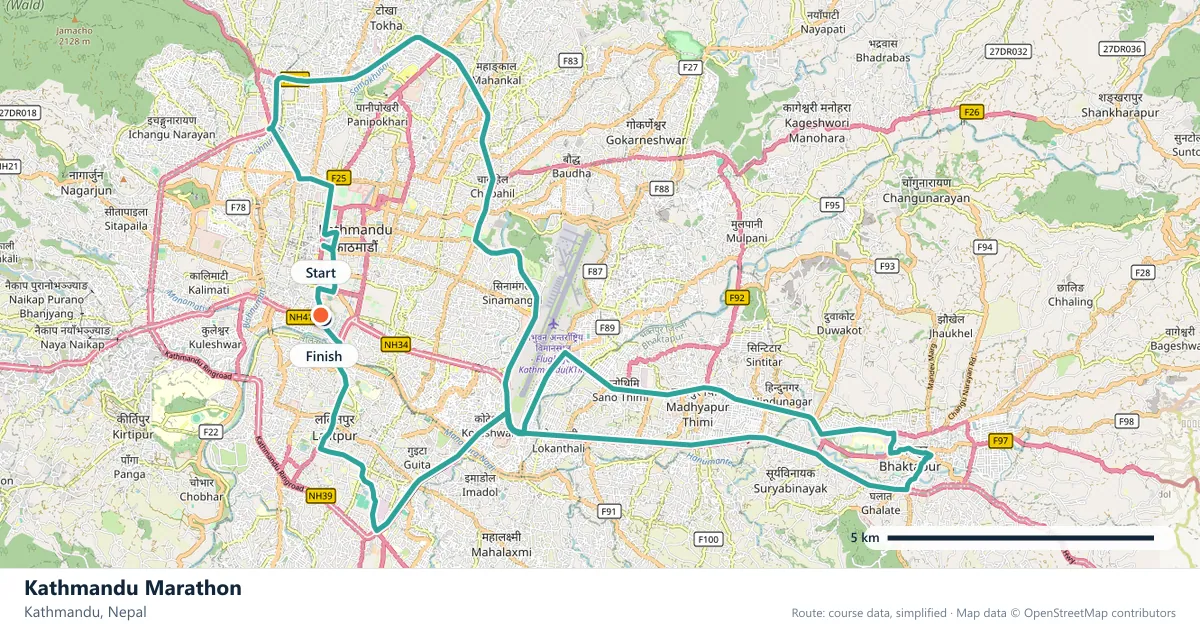
Where does the Kathmandu Marathon run?
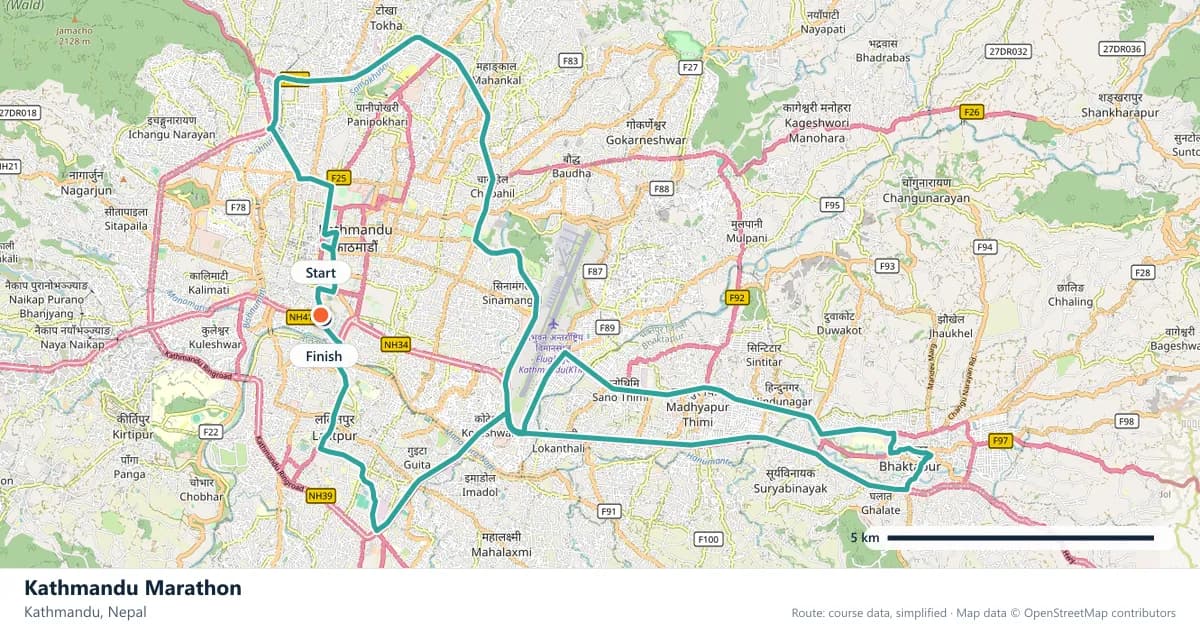
Interactive map
The trace follows the organizer's published course, simplified for the screen: the orange dot is the start, the dark dot the finish. Scroll to zoom, drag to pan.
What is the Kathmandu Marathon course like?
A high-altitude marathon at around 1,300 metres in the Kathmandu valley, with the Himalaya on the horizon on clear mornings. Rolling, dusty and unlike any other city race.
- Next edition
- October 2027 (expected)
- Elevation gain
- 325 m
- Profile
- Hilly
- First run
- —
Course guide
The Kathmandu Marathon is run in a valley ringed by hills, at around 1,300 metres above sea level, with the Himalaya visible on the horizon on clear mornings. The 2026 edition was held on 10 October, over a rolling course that climbs about 325 metres. It is dusty, urban and unlike any other city marathon on the calendar.
The altitude is the first thing that separates Kathmandu from a sea-level race, but it is not the only one. The course rolls through the valley rather than following a river or a coastline, the streets are busy and dusty, and the mountain backdrop gives the day a scale that few cities can match. It is a marathon that feels like an expedition and a city race at the same time.
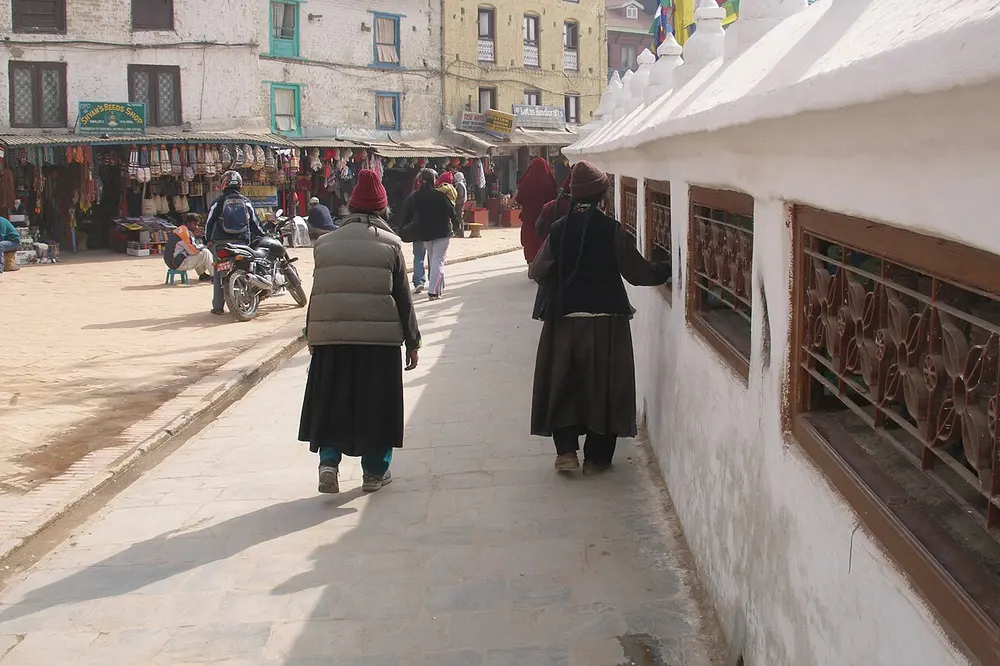
Boudhanath basement, Kathmandu, Nepal. Photo: Vyacheslav Argenberg / Wikimedia Commons, CC BY 4.0.
The course
The race runs through the Kathmandu valley, with about 325 metres of climbing across the route. The terrain is rolling rather than mountainous, but the hills are frequent enough to make the course a real test. There is no single pass or long ascent that defines the day; the difficulty accumulates through repeated rises and the constant demand of running at altitude.
The valley setting means the course is as much about the city as the landscape. The route passes through built-up districts, with the hills framing the horizon and the mountains beyond them appearing when the air is clear. It is not a scenic trail race, and it should not be approached as one. The marathon is run on city roads, with all the turns, surfaces and distractions that implies.
| Race fact | Detail |
|---|---|
| Date | October 2027 (expected) |
| Profile | Hilly |
| Elevation gain | About 325 m |
| Altitude | Around 1,300 m above sea level |
| Setting | Kathmandu valley, with Himalayan views on clear mornings |
The valley at 1,300 metres
At around 1,300 metres, Kathmandu is high enough for the altitude to be felt but not high enough to require expedition-style preparation. The air is thinner than at sea level, and the same pace costs more effort, particularly on the climbs. Runners arriving from lower ground often notice it in the first few kilometres, before the race has properly begun.
The effect is cumulative. A short climb that would be easy at home takes more out of the legs, and the recovery between climbs is slower. That is why the course rewards restraint. The altitude is not dramatic, but it is a constant tax.
Dust and the valley floor
Kathmandu is a dusty city, and the marathon is an urban race rather than a clean mountain trail. The valley traps air and dust, and the streets can feel gritty, especially in the later stages of the race. Runners with respiratory sensitivities should take the conditions seriously and prepare accordingly.
The dust also changes the way the city looks. The light is hazy, the horizon softens, and the mountains appear only when the morning is clear enough. On a good day, the Himalaya gives the race a backdrop that is genuinely extraordinary; on a hazy day, the city itself is the scenery. Either way, the course is a Kathmandu experience rather than a generic marathon.
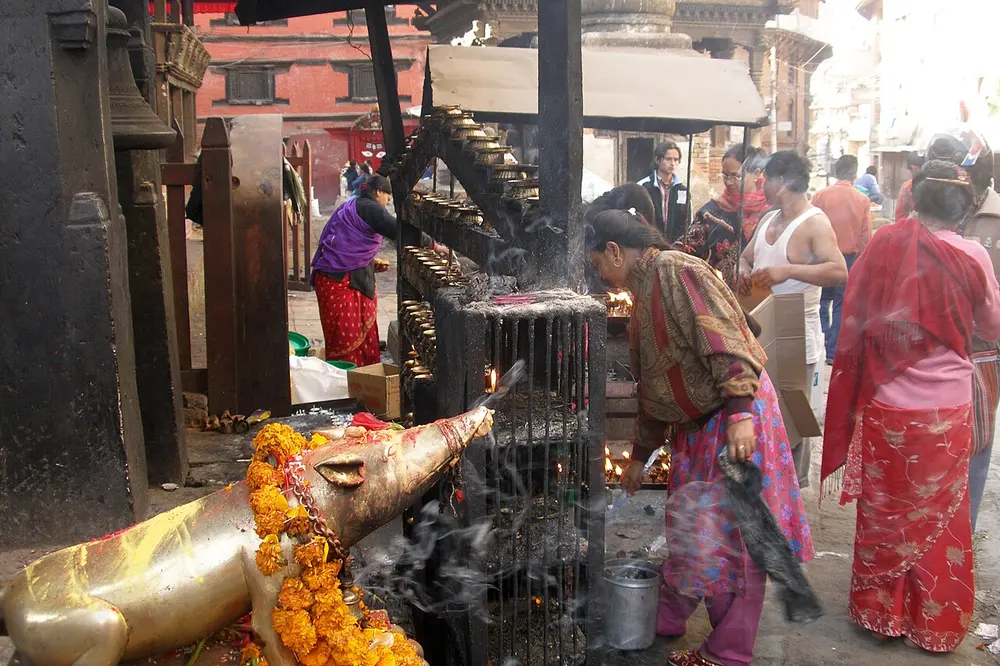
Kathmandu, Basantapur, Holiday, Nepal. Photo: Vyacheslav Argenberg / Wikimedia Commons, CC BY 4.0.
A first marathon with a difference
The Kathmandu Marathon can work as a first marathon, but it is not the easy option. The altitude and the rolling course make the distance harder than a flat race at sea level, and the dusty conditions add another layer. A debutant who trains for hills, arrives with time to adjust and starts conservatively has a good chance of finishing; someone hoping to treat it like a flat city race will struggle.
The first-marathon plan should include the altitude from the beginning. Arriving a few days early helps, as does keeping the first half slower than the pace might feel. The goal is to finish upright and still able to enjoy the valley, not to chase a time that the conditions were never going to allow.
Altitude checklist
- Altitude. The race sits at around 1,300 metres. Expect the effort to feel harder than at sea level, especially on the climbs.
- Rolling hills. About 325 metres of climbing makes this a hilly course. Prepare with sustained hill work rather than only flat running.
- Dusty conditions. Kathmandu is dusty, so plan for an urban race rather than a clean mountain trail.
- Early pacing. The combination of altitude and hills punishes fast starts. Keep the first half controlled.
- The mountain view. On a clear morning the Himalaya is visible. Enjoy it, but do not let the distraction break your rhythm.
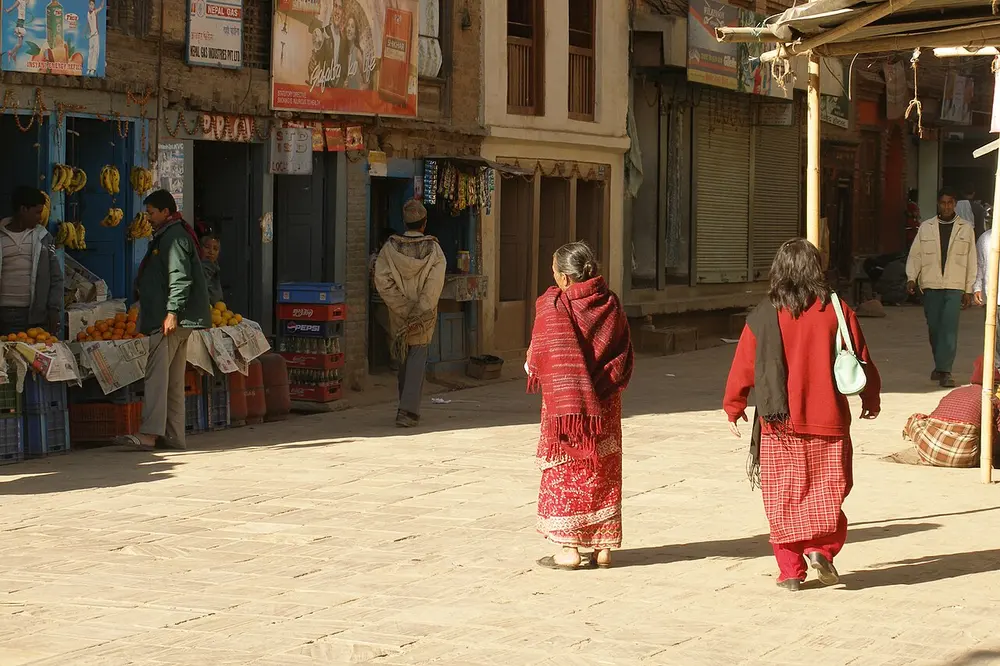
Kathmandu, Basantapur, Street, Nepal. Photo: Vyacheslav Argenberg / Wikimedia Commons, CC BY 4.0.
Frequently asked questions
Answers to the questions runners ask before entering, drawn from this race's course guide and the directory's own data — the sources behind them are listed below.
When was the Kathmandu Marathon in 2026?
The 2026 edition was held on 10 October 2026. It takes place in the Kathmandu valley in Nepal.
Is the Kathmandu Marathon flat or hilly?
It is hilly. The course climbs about 325 metres and rolls through the valley, so it is not a flat city marathon. The altitude of around 1,300 metres adds to the difficulty.
What is the altitude of the Kathmandu Marathon?
The race is at around 1,300 metres above sea level. That is high enough to make the running feel different from sea level, particularly on the hills, without requiring high-altitude expedition preparation.
Is the Kathmandu Marathon good for a personal best?
It is not an obvious personal-best course. The rolling terrain, the altitude and the dusty urban conditions all work against fast, even pacing. The race is better approached as a challenge than as a time trial.
Is the Kathmandu Marathon suitable for a first marathon?
It can work as a first marathon for runners who respect the altitude and the hills. The distance is the same, but the effort is greater than at sea level, and the dust adds a further demand. Arrive early, train on hills and start conservatively.
Where is the Kathmandu Marathon run?
It is run in the Kathmandu valley in Nepal. The course is a rolling city route, with Himalayan views on clear mornings.
Can you see the Himalaya during the race?
On clear mornings the Himalaya is visible on the horizon. The view depends on the day's haze and dust, so it is a bonus rather than a guarantee.
More marathons in Asia
Sources for this page
What each source below is used for on this page, and where to check this race yourself.
- World Athletics — the label calendar and the road-race regulations. Used to check whether the race holds a World Athletics label, and its elite competition details.
- AIMS — the international course-measurement standard behind the 42.195 km distance, and the AIMS race calendar.
- The organizer's own publications — course maps, race handbooks and published results. The date, course character and climbing on this page are compiled from them and re-checked each season.
Where do these facts come from?
Dates, course type, climbing and time limits are compiled from the organizer's publications and re-checked each season; elevation is an estimate of total climbing rather than a survey figure. Always confirm race-day details with the organizer before making plans.
Last reviewed 27 October 2026