
Luxembourg Night Marathon
Most marathons ask you to get up early. The Luxembourg Night Marathon asks you to wait all day. The next edition is on 08 May 2027, and the race starts in the evening and finishes under floodlights…
By Global Marathon Routes editorial team · Last reviewed 27 October 2026
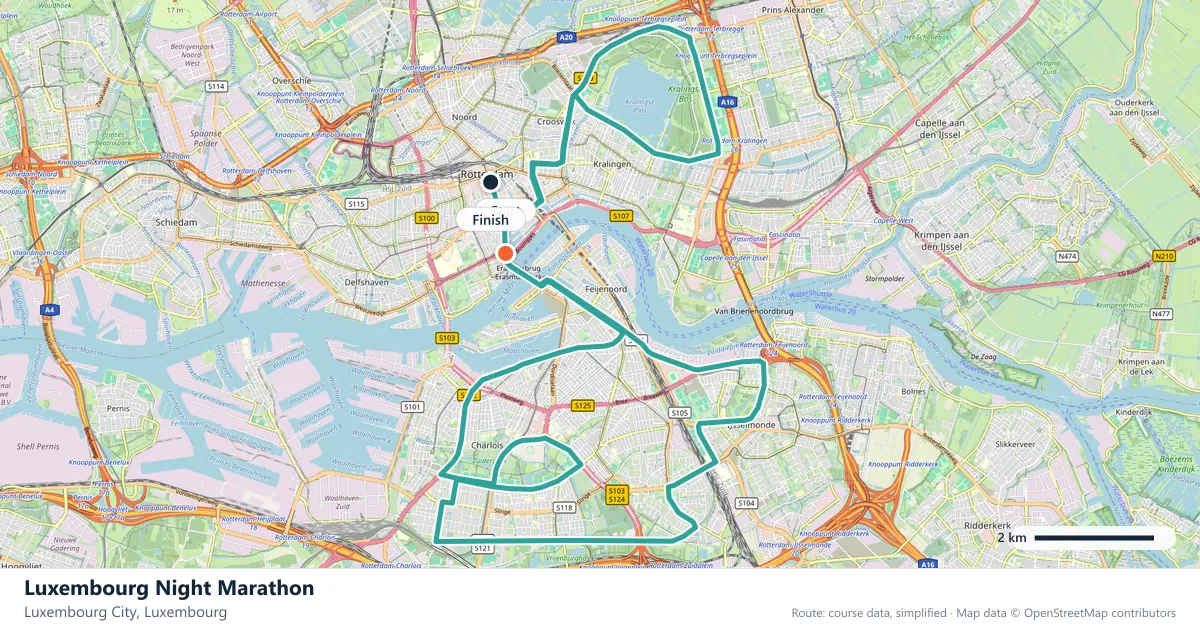
Where does the Luxembourg Night Marathon run?
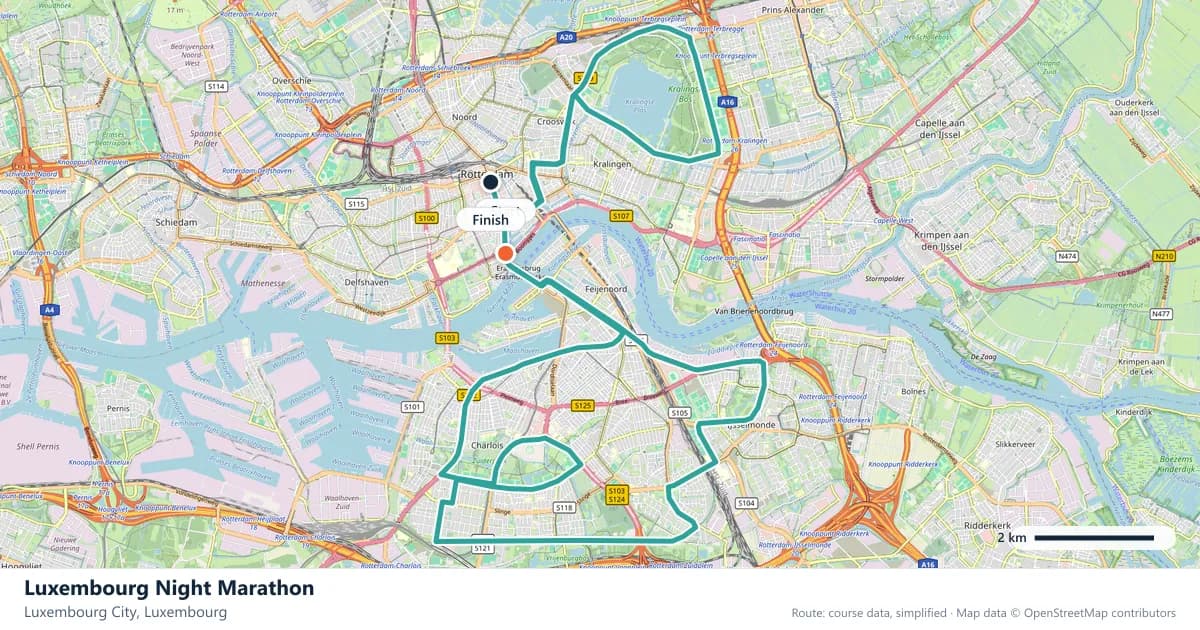
Interactive map
The trace follows the organizer's published course, simplified for the screen: the orange dot is the start, the dark dot the finish. Scroll to zoom, drag to pan.
What is the Luxembourg Night Marathon course like?
Run after dark, starting in the evening and finishing under floodlights in the old town. A flat loop through the valleys and over the Viaduc makes it unlike any other European city race.
- Next edition
- 08 May 2027
- Elevation gain
- 86 m
- Profile
- Flat
- First run
- —
Course guide
Most marathons ask you to get up early. The Luxembourg Night Marathon asks you to wait all day. The next edition is on 08 May 2027, and the race starts in the evening and finishes under floodlights in the old town, which changes the rhythm of race day: when you eat, rest and warm up.
The course is flat: about 86 metres of climbing. It loops through the city's valleys and over the Viaduc. That combination of topography and darkness makes the race unusual. Luxembourg City is built across deep gorges, with the old town on one plateau and newer districts on others, and the course uses the levels.
It suits a first marathon. The climbing is modest, the loop stays within the city, and the floodlit finish gives the final kilometres a clear target. The challenge is not the terrain but the clock: racing at night is a different exercise from a morning race.
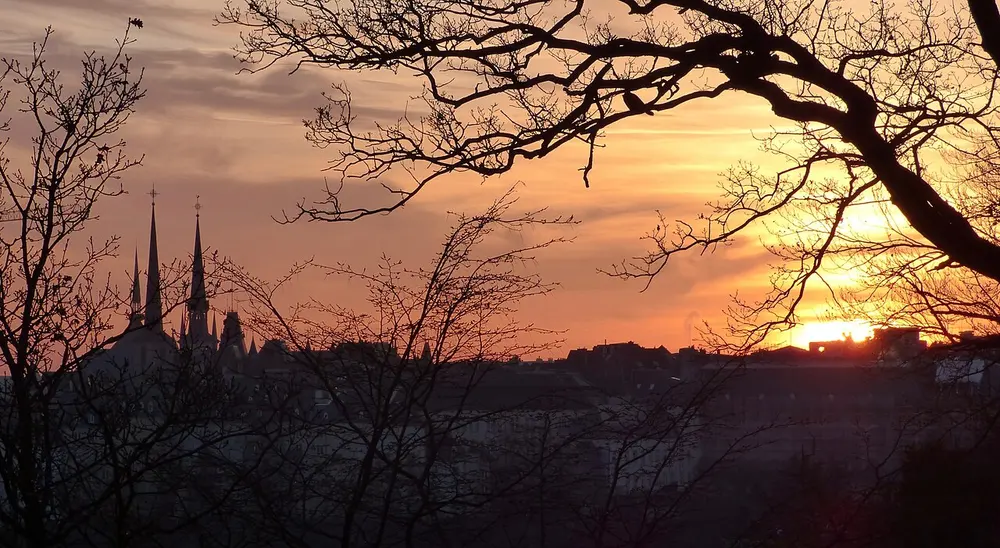
SUNSET in LUXEMBOURG CITY. Photo: Denise Hastert / Wikimedia Commons, CC BY-SA 4.0.
The course
The route loops through the valleys and over the Viaduc, with the old town as the backdrop for the finish. The profile is flat: about 86 metres of gain, but "flat" needs a qualifier in Luxembourg: the city is full of changes of level, and the course uses bridges and valley roads to keep the running gentle.
Instead of circling a historic centre at street level, the course drops into the valleys and climbs back out, using the infrastructure that connects the plateaus. The Viaduc is the signature crossing, opening views of the old town and the gorge below.
The low climbing total means the course does not demand hill training; it demands attention. Transitions between city streets and valley roads are where rhythm slips, and at night they are harder to read. Keep your stride relaxed and let the course unfold.
Valleys, bridges and the old town
Luxembourg City's old town and fortifications are a UNESCO World Heritage site, and the reason is visible from the course: the city was built into a defensive position, with cliffs, gorges and walls doing as much work as any building. The valleys are not scenery around the race; they are its structure.
The Viaduc gives that geography a focal point. Crossing it is one of the moments runners remember, partly because of the view and partly because of the noise. The old town is close, the lights are on, and the finish is on the other side of the valley. It is a good place to feel the race rather than check your watch.
Racing after dark
A night marathon changes the body clock as much as the route. You have the whole day to rest, but you also have the whole day to get nervous, and the usual pre-race routines do not fit. Meals need to be timed so that you are not running on a full stomach at an hour when you would normally be winding down.
Rehearse. Run a few evening sessions in the final weeks, practise eating at race-day times, and treat the start as a late training run. The body adapts more easily when the schedule is familiar.
Depth perception also changes after sunset. The finish is floodlit, but the roads between are darker, and the runners around you are harder to read. Stay aware of the surface, keep your line predictable, and do not rely on a watch that is difficult to see in the dark.
The first-marathon case
The flat profile and compact loop make this a manageable first marathon. There is no big climb, no remote section, and no point where the route leaves the city. The finish in the old town is easy to picture, which helps in the final hour when the legs are tired and the mind is looking for reasons to stop.
What the course does not do is make the distance easy. A night start can disrupt sleep and digestion, and the dark can make the middle of the race feel longer. A debutant should plan the day carefully, eat early enough, and arrive at the start with time to spare rather than rushing from the hotel.
A spring weekend in the city
Early May is a good moment for Luxembourg. The days are long, the weather is usually mild, and the old town is busy without being overwhelmed. With an evening start, there is time to see the fortifications, the Grund and the Corniche during the day.
The night finish gives the weekend a natural shape. Saturday can be a slow morning, an early lunch and an afternoon rest, then the race, then a late celebration in a city that is used to visitors. It is a different kind of marathon weekend, and that is the point.
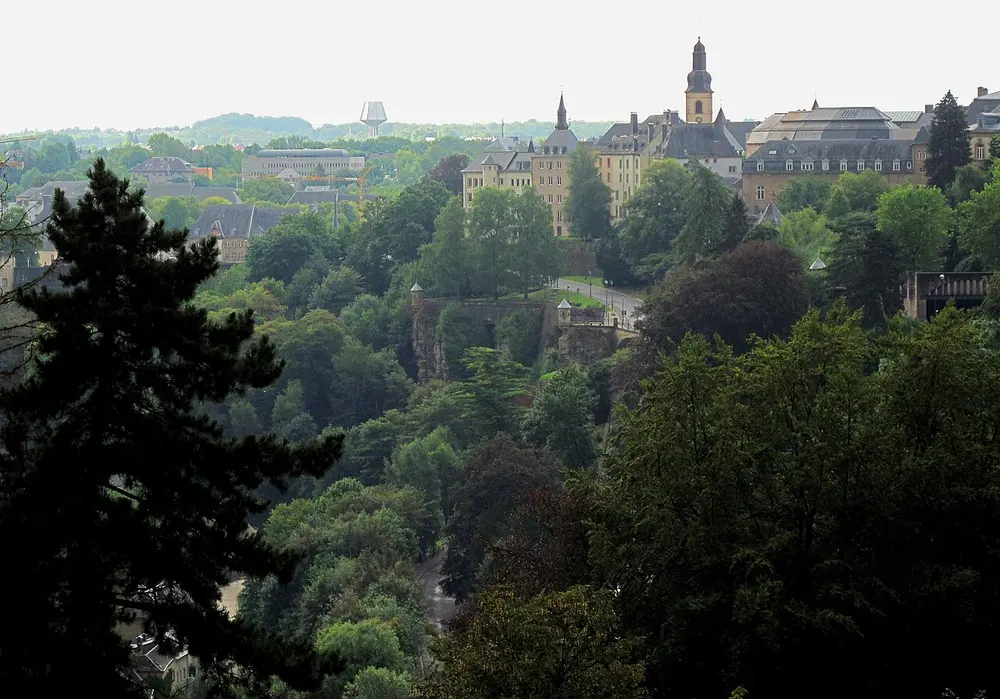
Luxembourg Skyline. Photo: Francisco Anzola / Wikimedia Commons, CC BY 2.0.
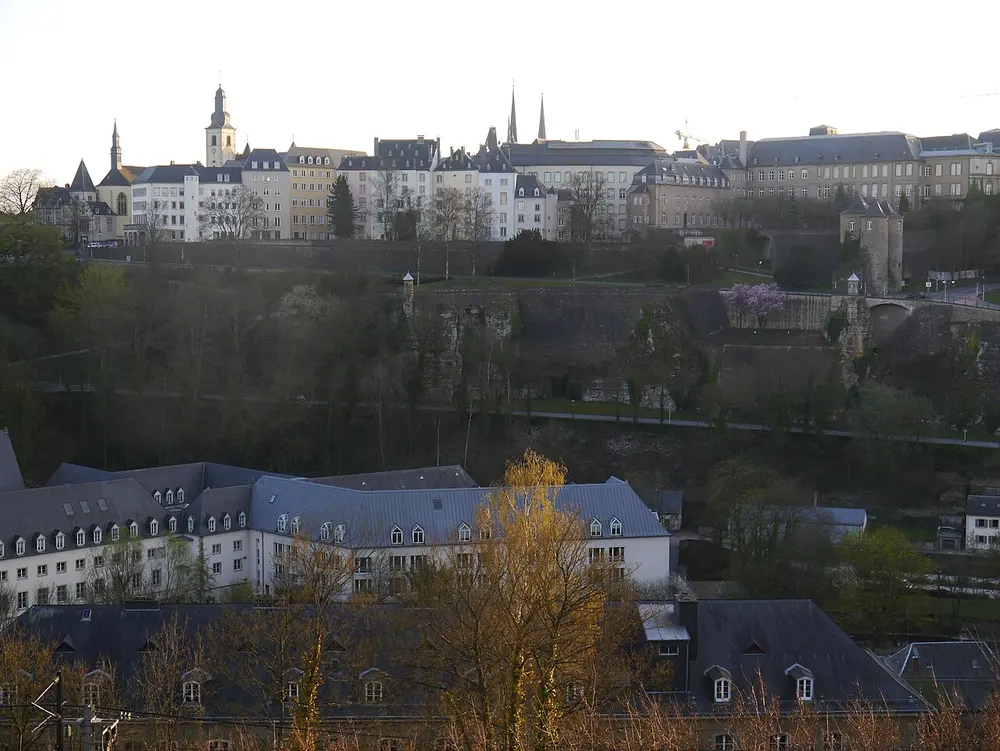
Luxembourg Festungsstadt 13. Photo: Zairon / Wikimedia Commons, CC BY-SA 3.0.
Frequently asked questions
Answers to the questions runners ask before entering, drawn from this race's course guide and the directory's own data — the sources behind them are listed below.
When is the Luxembourg Night Marathon in 2027?
The next edition is scheduled for 08 May 2027. The marathon starts in the evening rather than in the morning.
Is the Luxembourg Night Marathon flat?
Yes. It climbs about 86 metres in total, which is very flat for a marathon. The course loops through the city's valleys and over the Viaduc, using bridges and valley roads to keep the profile gentle.
Is the Luxembourg Night Marathon good for a first marathon?
Yes. The flat course and compact city loop make it approachable for a first marathon. The main challenge is the evening start, which requires a different routine for meals, rest and warm-up.
Where does the marathon finish?
It finishes under floodlights in the old town, after a loop through the valleys and over the Viaduc. The old town is the backdrop for the closing kilometres.
What is it like to run a marathon at night?
The city looks different after dark, the roads are quieter, and the finish is floodlit. It requires a different routine for meals and rest, and the atmosphere is unlike a conventional morning marathon.
What are the landmarks on the course?
The Viaduc is the signature crossing, and the old town and its fortifications frame the finish. The route uses the valleys and the bridges that connect the city's plateaus.
More marathons in Europe
Sources for this page
What each source below is used for on this page, and where to check this race yourself.
- World Athletics — the label calendar and the road-race regulations. Used to check whether the race holds a World Athletics label, and its elite competition details.
- AIMS — the international course-measurement standard behind the 42.195 km distance, and the AIMS race calendar.
- The organizer's own publications — course maps, race handbooks and published results. The date, course character and climbing on this page are compiled from them and re-checked each season.
Where do these facts come from?
Dates, course type, climbing and time limits are compiled from the organizer's publications and re-checked each season; elevation is an estimate of total climbing rather than a survey figure. Always confirm race-day details with the organizer before making plans.
Last reviewed 27 October 2026