
Vilnius Marathon
Vilnius is a city of layers. The baroque old town sits beside the Neris, and above it wooded hills and viewpoints look down on the roofs and church towers.
By Global Marathon Routes editorial team · Last reviewed 27 October 2026
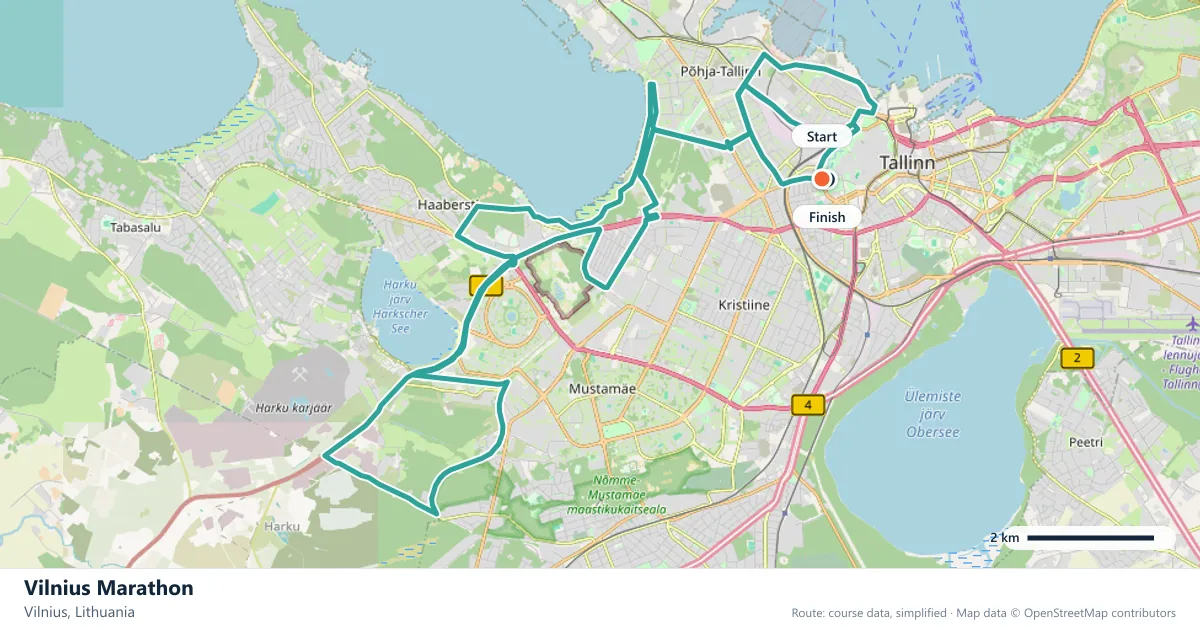
Where does the Vilnius Marathon run?
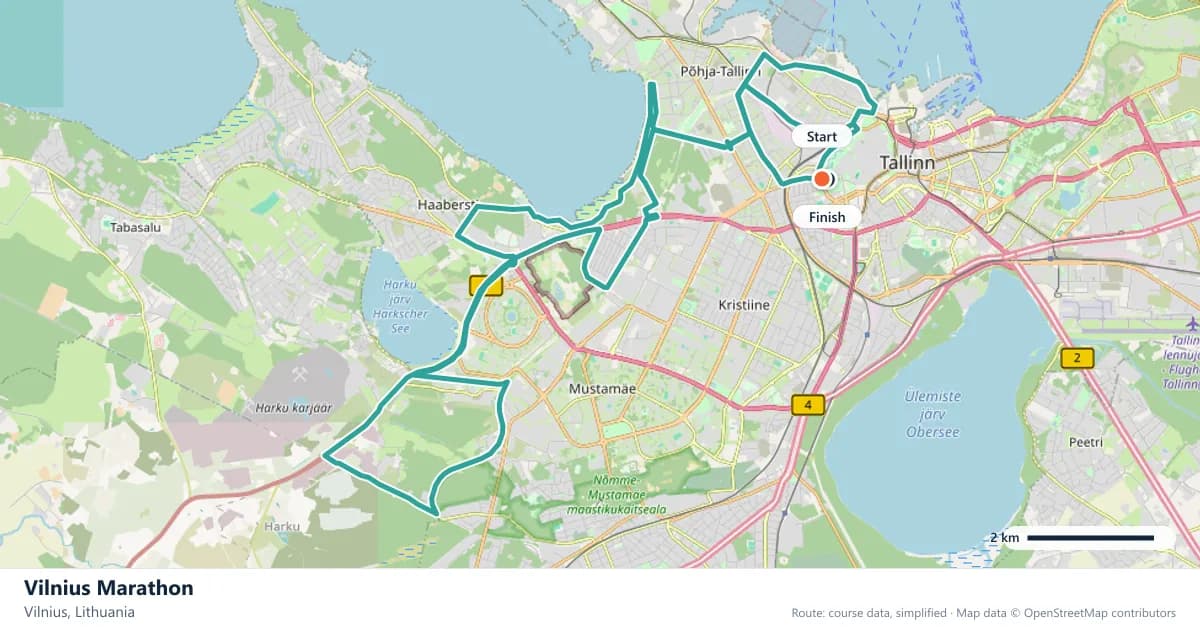
Interactive map
The trace follows the organizer's published course, simplified for the screen: the orange dot is the start, the dark dot the finish. Scroll to zoom, drag to pan.
What is the Vilnius Marathon course like?
A September marathon through the baroque old town and along the Neris, with a loop out to the hilltop viewpoints above the city. Rolling but quick when the weather holds.
- Next edition
- 12 September 2027
- Elevation gain
- 224 m
- Profile
- Undulating
- First run
- —
Course guide
Vilnius is a city of layers. The baroque old town sits beside the Neris, and above it wooded hills and viewpoints look down on the roofs and church towers. The 2027 edition is scheduled for 12 September, and the course works through the old town and along the river before climbing out to those viewpoints.
The profile is undulating, with about 224 metres of climbing, and it holds a World Athletics Label. That is substantial climbing for a city marathon, and it changes the character of the day: this is not a flat course where pace alone decides the result. The climbs are short rather than alpine, but they are frequent enough to make rhythm a moving target.
It is a race for runners who want a fast time on a course with shape. The profile is rolling rather than mountainous, and on a good September day it can be quick. It is not the easiest place to chase a personal best, but far from a slow one.
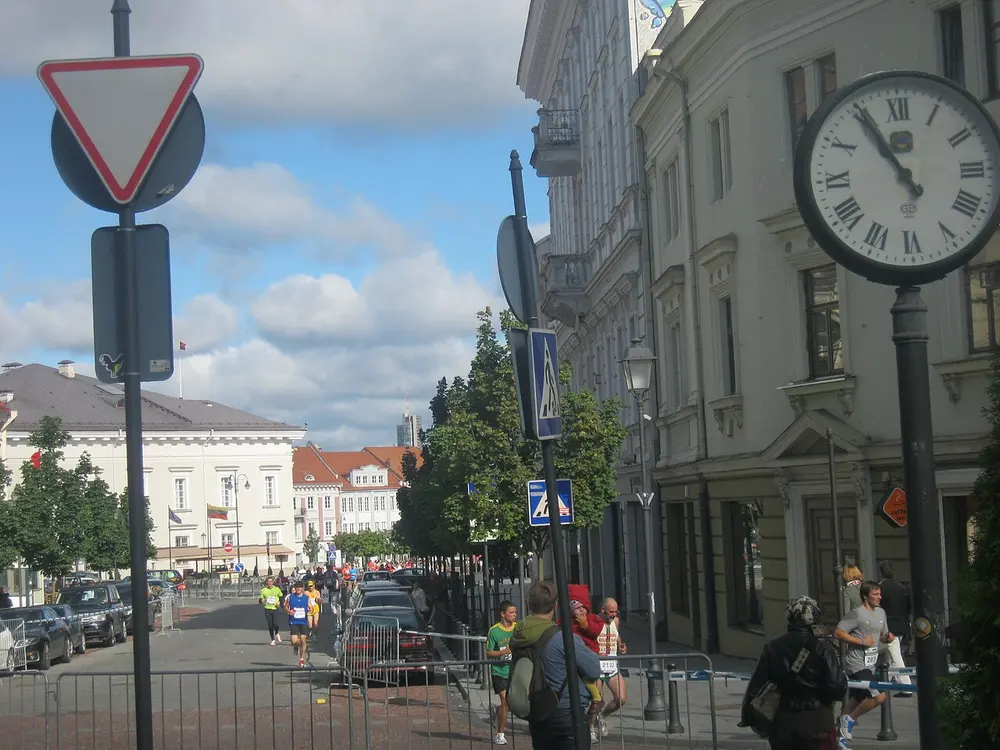
Vilnius Marathon 2012 6448. Photo: Bearas / Wikimedia Commons, CC BY-SA 3.0.
The course
The route runs through the old town, follows the Neris, and makes a loop out to the hilltop viewpoints. Those three elements give the race its structure: historic streets, a riverside stretch, and a climb that changes the effort before the return.
The 224 metres of climbing are spread across the distance rather than concentrated in one wall. You can prepare on rolling routes at home, but you cannot reduce the course to a single hill. The total is the challenge.
The old town imposes its own rhythm. The streets are narrow in places, the surface changes, and the turns come quickly. Run the tight sections smoothly and save the faster running for the open roads.
The climb to the viewpoints
The loop to the hilltop viewpoints is the defining section. It lifts the course above the river and gives runners a view back over the old town's church towers and red roofs. The climb is short enough to run, but long enough to remind you that the course has been rising.
Run it by effort rather than pace. A flat-course split will feel impossible on the way up, and defending it will empty the legs before the descent. Shorten the stride, stay relaxed, and accept a slower kilometre.
The descent is fast, which is both an opportunity and a trap. It restores momentum but taxes the quads if it pulls you into an uncontrolled stride. Stay tall, keep the feet quick, and do not use the downhill to repair a fast start.
Old town and river
Vilnius's old town is one of the largest surviving medieval centres in Europe and a UNESCO World Heritage site. Its baroque churches and courtyards give the early race a density a modern city loop cannot match. The Neris provides the open space: a wide river with green banks and bridges.
The contrast is the pleasure of the course: one moment between old buildings, the next beside open water with the city on the far bank. That variety makes the middle of the race feel shorter.
September conditions
September in Vilnius is late summer turning into autumn. The light is lower, the air is cooler, and the city has returned to its normal rhythm. For a marathon, that is close to ideal: cool enough to race hard, not yet cold enough to make the start miserable.
A good September day can be quick; a wet or windy one can make the rolling profile feel harder than the numbers suggest. Check the forecast in race week and do not assume late summer means heat.
Planning the race
The old town is the natural base, with the river and the historic streets within walking distance. Vilnius is compact, and the course stays close to the centre. Arrive a day early if you can: the hilltop views are worth seeing before you climb them on tired legs.
Race morning is simpler than the profile suggests: plan the wait before the start and the return from the finish, then let the course handle the navigation.
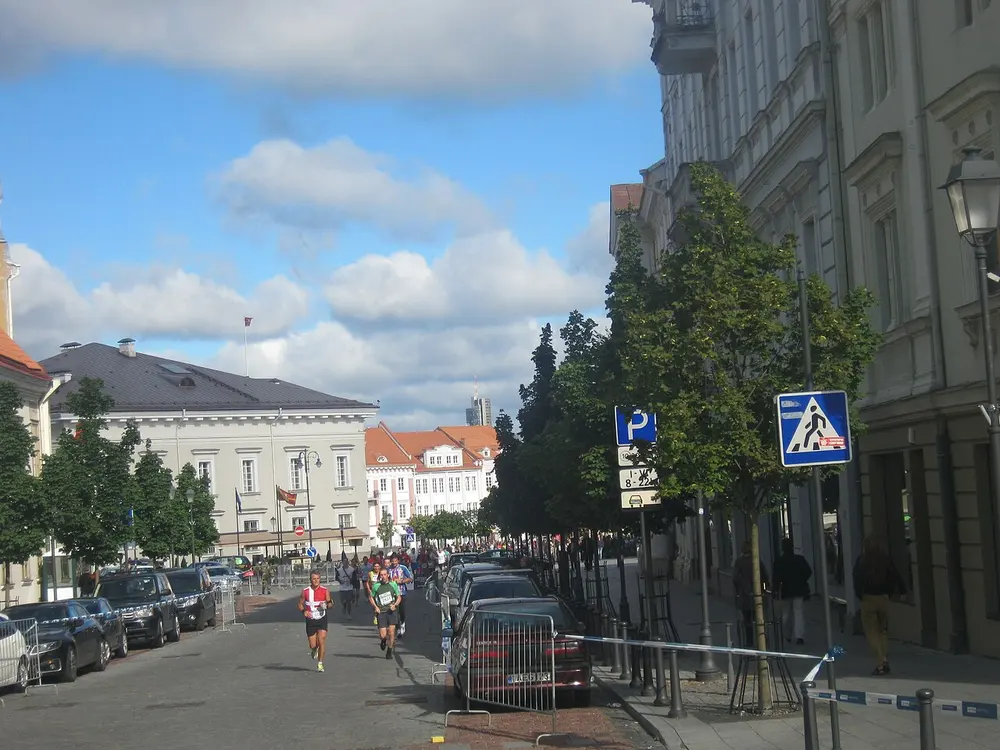
Vilnius Marathon 2012 6449. Photo: Bearas / Wikimedia Commons, CC BY-SA 3.0.
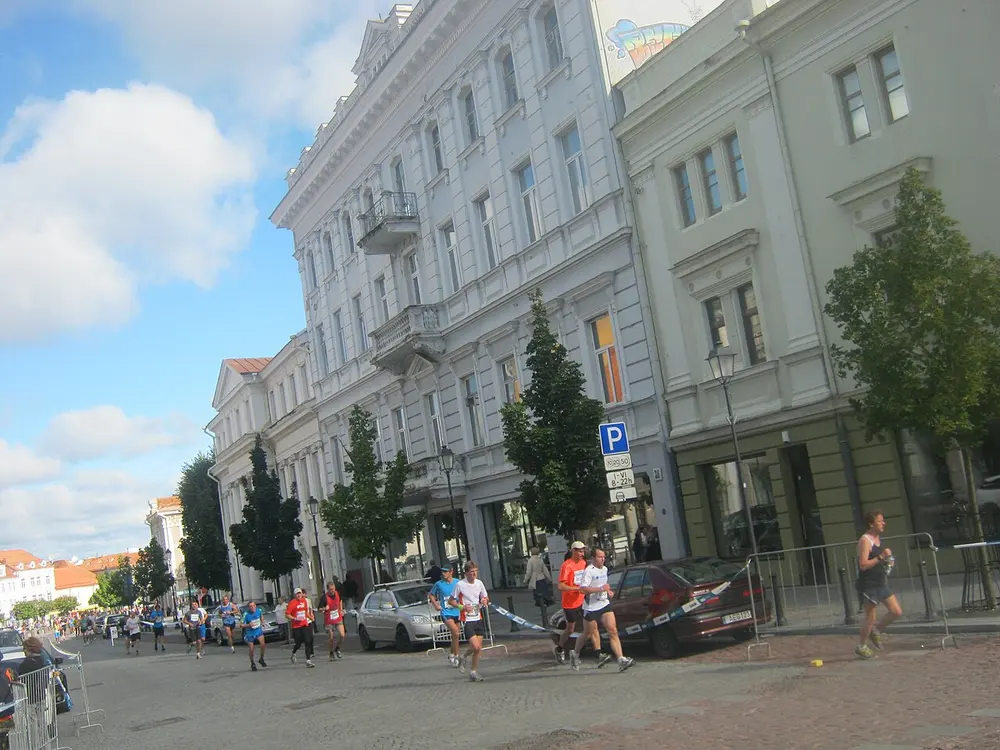
Vilnius Marathon 2012 6450. Photo: Bearas / Wikimedia Commons, CC BY-SA 3.0.
Frequently asked questions
Answers to the questions runners ask before entering, drawn from this race's course guide and the directory's own data — the sources behind them are listed below.
When is the Vilnius Marathon in 2027?
The 2027 edition is scheduled for 12 September 2027. It is a late-summer race, held as the city returns to its autumn rhythm.
Is the Vilnius Marathon flat or hilly?
It is undulating, with about 224 metres of climbing. That is not a mountain marathon, but the course has a genuine climb to the hilltop viewpoints and enough short rises to break up even pacing. Prepare on rolling terrain rather than assuming a city course will be flat.
Is the Vilnius Marathon good for a personal best?
It is suited to fast times when the weather holds. The rolling profile is the main obstacle: there is enough climbing to disrupt even splits, and the hilltop loop arrives when the legs are already working. On a good September day it can be quick, but hill-specific training helps.
Where is the Vilnius Marathon run?
It runs through the baroque old town and along the Neris, with a loop out to the hilltop viewpoints above the city. The course stays within Vilnius.
What is the defining section of the course?
The climb to the hilltop viewpoints is the feature that separates Vilnius from a flat city marathon. It adds the race's main climb and changes the character of the second half.
What is the weather like in September?
September in Vilnius is usually cooler than high summer, with lower light and a hint of autumn. Conditions can vary, so check the forecast in race week and prepare for a range rather than assuming heat.
More marathons in Europe
Sources for this page
What each source below is used for on this page, and where to check this race yourself.
- World Athletics — the label calendar and the road-race regulations. Used to check whether the race holds a World Athletics label, and its elite competition details.
- AIMS — the international course-measurement standard behind the 42.195 km distance, and the AIMS race calendar.
- The organizer's own publications — course maps, race handbooks and published results. The date, course character and climbing on this page are compiled from them and re-checked each season.
“A World Athletics Label denotes a full application of the Competition and Technical Rules in, at a minimum, the elite component of the competition. Labels also denote superior standards in event organisation, safety and runner experience, support from public authorities to the event and a financial commitment to anti-doping.”
Where do these facts come from?
Dates, course type, climbing and time limits are compiled from the organizer's publications and re-checked each season; elevation is an estimate of total climbing rather than a survey figure. Always confirm race-day details with the organizer before making plans.
Last reviewed 27 October 2026