
Riga Marathon
The Riga Marathon is a spring race built around a river crossing. The Daugava separates Riga's medieval old town from the left bank, and the course uses that geography as its organising idea: wide…
By Global Marathon Routes editorial team · Last reviewed 27 October 2026
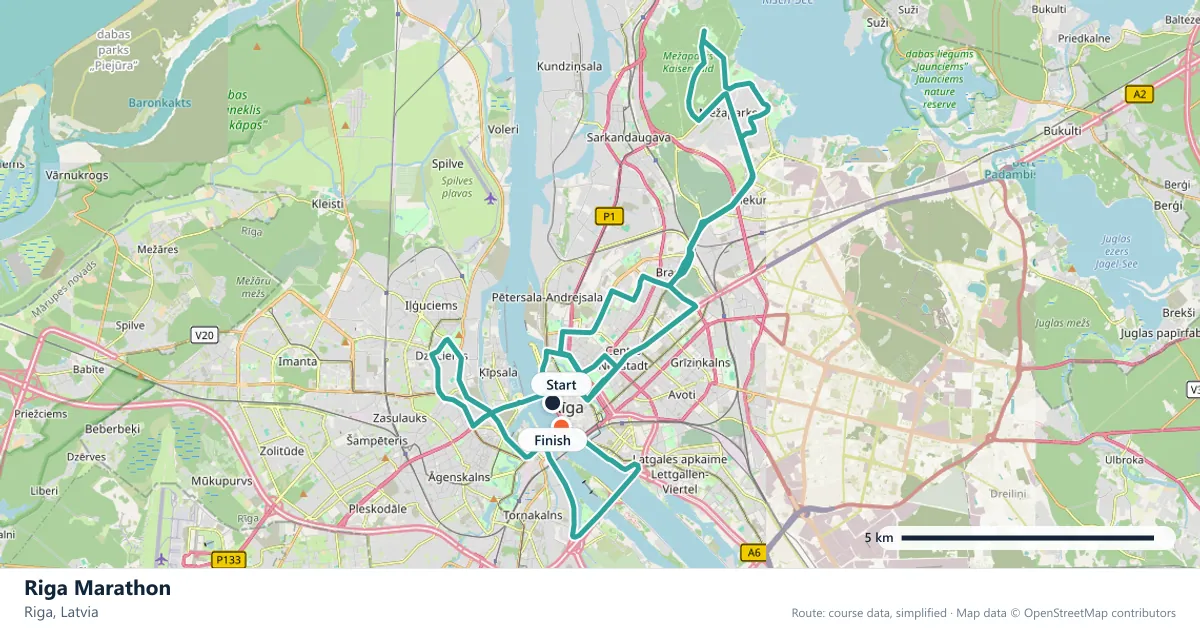
Where does the Riga Marathon run?
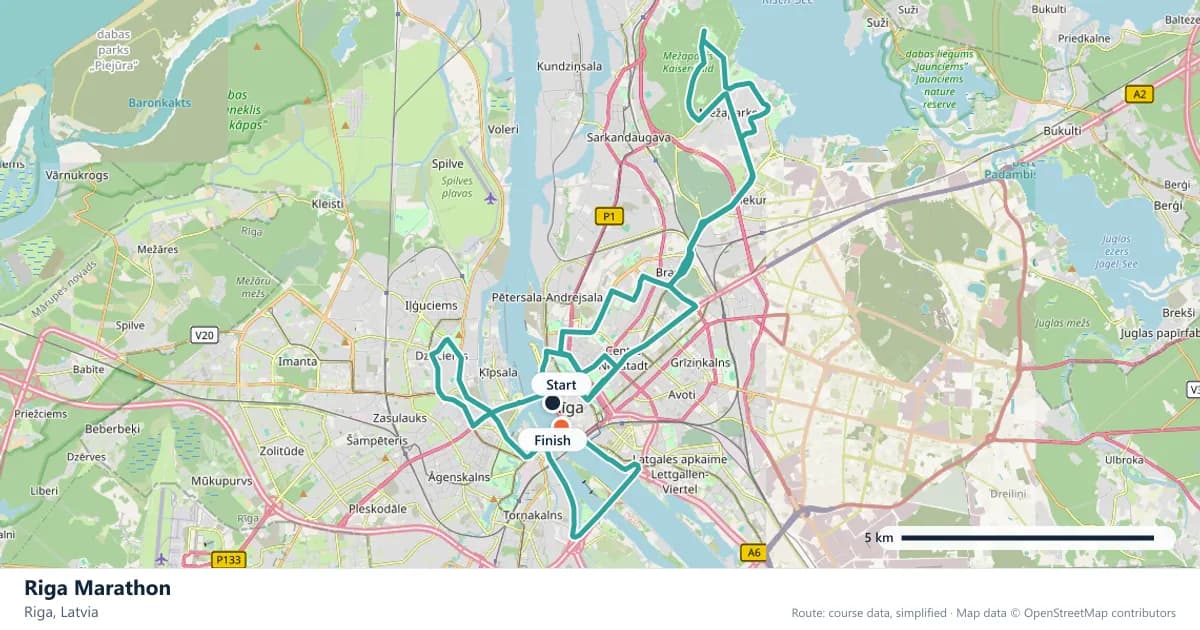
Interactive map
The trace follows the organizer's published course, simplified for the screen: the orange dot is the start, the dark dot the finish. Scroll to zoom, drag to pan.
What is the Riga Marathon course like?
A flat Baltic spring marathon crossing the Daugava between the medieval old town and the left bank. Wide roads, cool air and a fast, even course.
- Next edition
- May 2027 (expected)
- Elevation gain
- 120 m
- Profile
- Undulating
- First run
- —
Course guide
The Riga Marathon is a spring race built around a river crossing. The Daugava separates Riga's medieval old town from the left bank, and the course uses that geography as its organising idea: wide roads, bridge crossings and a route that moves between two sides of the same city. The next edition is expected in May 2027.
The course is undulating, with about 120 metres of climbing, which is flat by marathon standards. That low total explains the race's reputation for fast, even running: no climb is large enough to rearrange a pacing plan, and the wide roads let the field settle.
It holds a World Athletics Label, and the course can carry a personal-best attempt or a debut. The appeal is not a dramatic course but the combination of cool Baltic air, level running and a compact city.
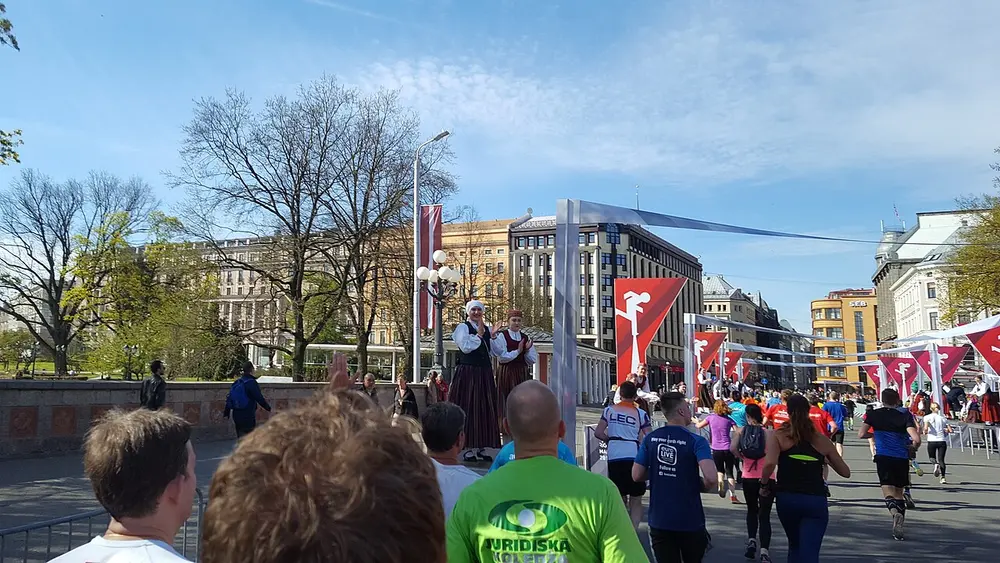
Lattelecom Riga Marathon 2017. Photo: Fcartoons / Wikimedia Commons, CC BY-SA 4.0.
The course
The route crosses the Daugava and links the medieval old town with the left bank. The river is never far away, and the bridges give the race its rhythm: a stretch on one side, a crossing, then a different set of streets. The wide roads let the field spread out, which matters when even pacing is the goal.
The 120 metres of climbing are spread thinly across the route. There is no sustained ascent, and the rises that do exist are short enough to roll through without changing stride. The course is undulating on paper, but the sensation for most runners will be of a flat race with a few gentle changes of level.
That makes Riga a course for rhythm. The danger is not a hill but the ease of the first half. With no terrain to slow you down, the opening kilometres can pass at a pace that feels comfortable and turns out to be too quick.
Crossing the Daugava
The Daugava is the spine of the race and one of Riga's defining features. It is a wide, slow river, and the bridges open up views of the old town skyline, the church spires and the modern buildings opposite. On a clear spring day, the crossing is one of the pleasures of the course.
It is also a place to be patient. Bridges draw a surge, partly because of the openness and partly because the field is still fresh. Let the crossing come and go without chasing it; the second crossing is a better place to judge what you have left.
Two sides of the city
The old town is the historic half of the city: a medieval core, a skyline that has made Riga a UNESCO World Heritage site, and streets that reward a walk after the race. The left bank is a different city altogether, with wider roads and a more open feel. Moving between them is what gives the marathon its shape.
Riga is also known for its Art Nouveau district, one of the finest in Europe, and for the Central Market halls near the river. Those are city facts rather than course promises, but they explain why the weekend is worth more than the race alone.
A spring race after a Baltic winter
May is a release after a long northern winter. The air is usually cool, the light is generous, and the city is coming back to life. For a marathon, those are good conditions: cool enough to limit overheating, mild enough that the start does not feel brutal.
The training implications matter just as much. A May race means the build happens in late winter and early spring, when daylight is short and the weather is unreliable. Runners who keep the long runs consistent through that period arrive with the fitness the course rewards. Those who wait for the first warm week may run out of time.
Pace, not terrain
Riga rewards runners who can hold an even effort. The low climbing total means there is no natural brake, and the wide roads mean there is no technical section to slow you down.
Set the pace slightly slower than goal for the first 10 kilometres, then settle. The course will not give you a hill to recover on, so any time spent too fast early has to be paid back on the flat.
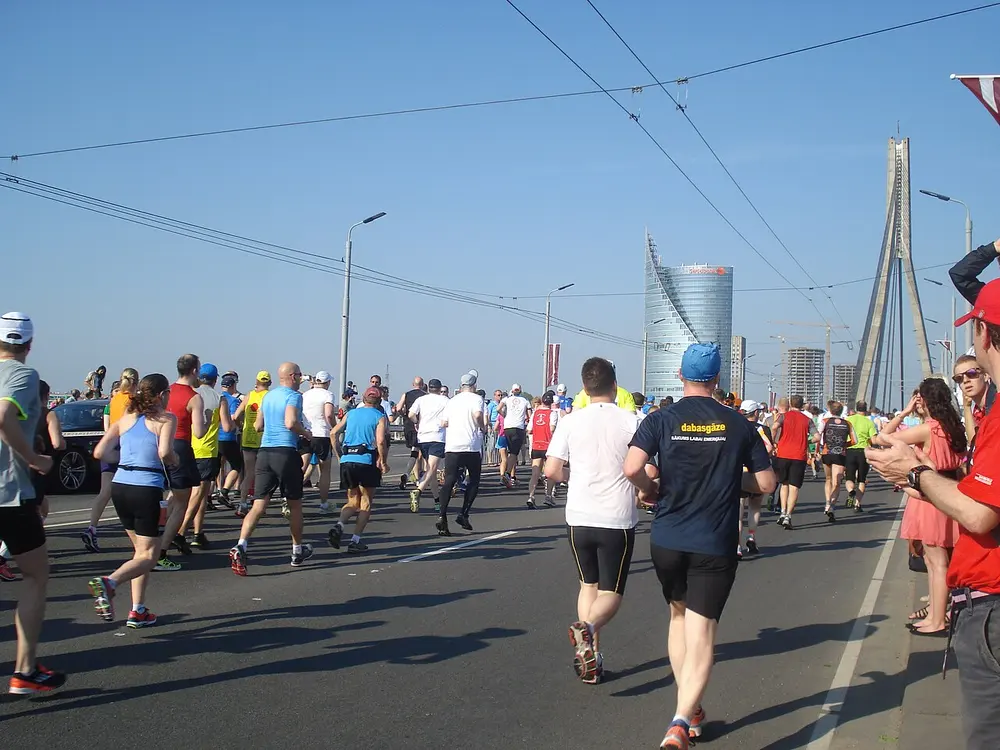
Riga Marathon 2013 01. Photo: Alma Pater / Wikimedia Commons, CC BY-SA 3.0.
Planning around an expected date
The next edition is expected in May 2027, so the exact date should be confirmed with the organiser before travel is booked. That is normal for a race more than a year out, but it matters in a city where spring weekends fill quickly.
Once the date is fixed, Riga is straightforward. The old town is the natural base, the airport and rail links are close, and the course keeps the main race-day locations within the city.
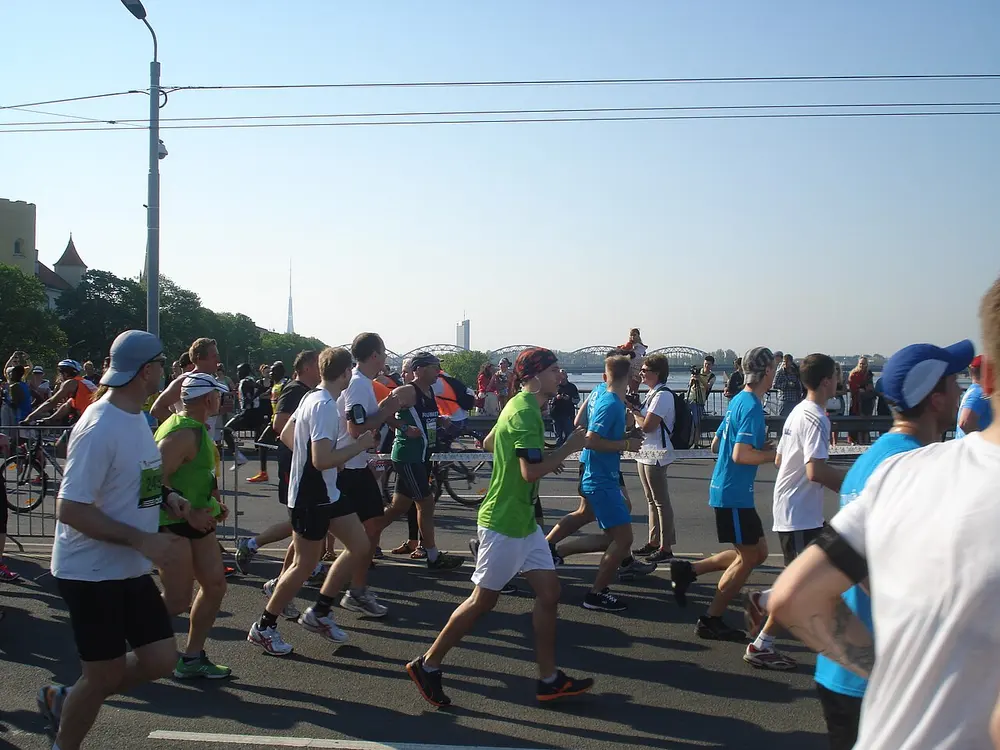
Riga Marathon 2013 02. Photo: Alma Pater / Wikimedia Commons, CC BY-SA 3.0.
Frequently asked questions
Answers to the questions runners ask before entering, drawn from this race's course guide and the directory's own data — the sources behind them are listed below.
When is the Riga Marathon?
The next edition is expected in May 2027. The exact date has not been confirmed, so check the organiser's final schedule before booking travel.
Is the Riga Marathon flat?
It is undulating, with about 120 metres of climbing, which is flat by marathon standards. The rises are short and spread across the route, and the wide roads keep the running even.
Is the Riga Marathon good for a personal best or a first marathon?
Yes, on both counts. The low climbing total and usually cool spring air favour fast times, while the wide, even roads and compact city make it manageable for a first marathon. Pace discipline is the main challenge.
Where is the Riga Marathon run?
It runs through Riga, crossing the Daugava to link the medieval old town with the left bank. The route uses wide roads on both sides of the river.
What is the course like?
The course is a loop that moves between the old town and the left bank, with the Daugava as its organising feature. The profile is undulating but modest, with about 120 metres of climbing and no sustained ascent.
Does the Riga Marathon hold a World Athletics label?
Yes. It holds a World Athletics Label.
More marathons in Europe
Sources for this page
What each source below is used for on this page, and where to check this race yourself.
- World Athletics — the label calendar and the road-race regulations. Used to check whether the race holds a World Athletics label, and its elite competition details.
- AIMS — the international course-measurement standard behind the 42.195 km distance, and the AIMS race calendar.
- The organizer's own publications — course maps, race handbooks and published results. The date, course character and climbing on this page are compiled from them and re-checked each season.
“A World Athletics Label denotes a full application of the Competition and Technical Rules in, at a minimum, the elite component of the competition. Labels also denote superior standards in event organisation, safety and runner experience, support from public authorities to the event and a financial commitment to anti-doping.”
Where do these facts come from?
Dates, course type, climbing and time limits are compiled from the organizer's publications and re-checked each season; elevation is an estimate of total climbing rather than a survey figure. Always confirm race-day details with the organizer before making plans.
Last reviewed 27 October 2026