
Helsinki City Marathon
Helsinki in May is a city emerging from a long winter. The light returns early, the Baltic is still cold, and the shoreline paths fill with runners who have waited months for the season.
By Global Marathon Routes editorial team · Last reviewed 27 October 2026
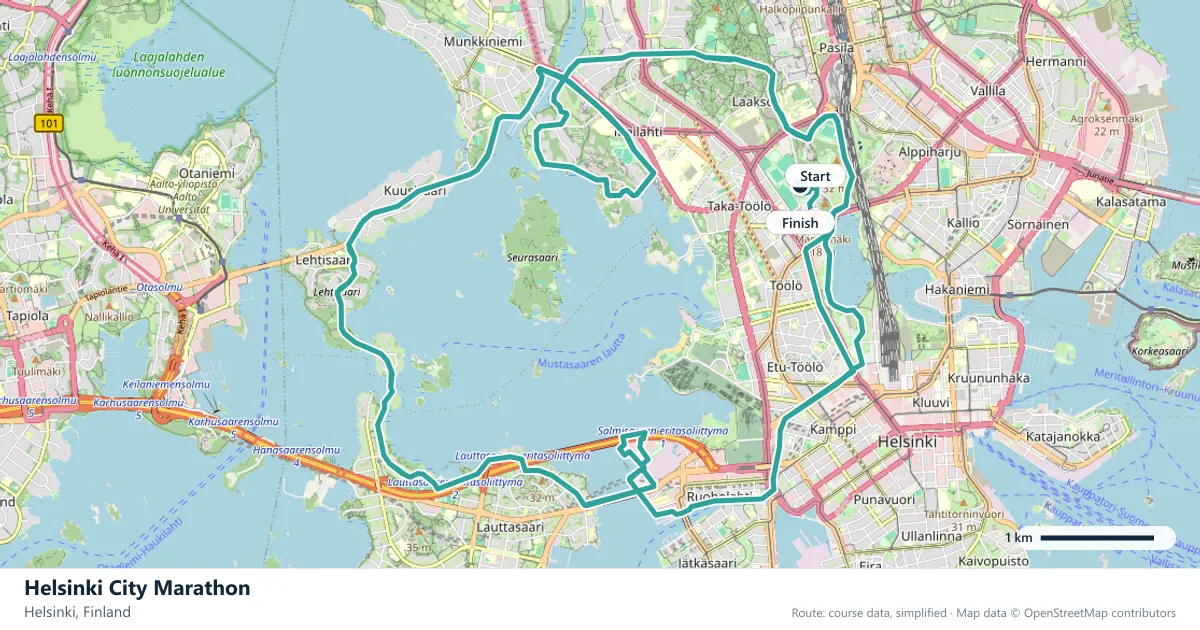
Where does the Helsinki City Marathon run?
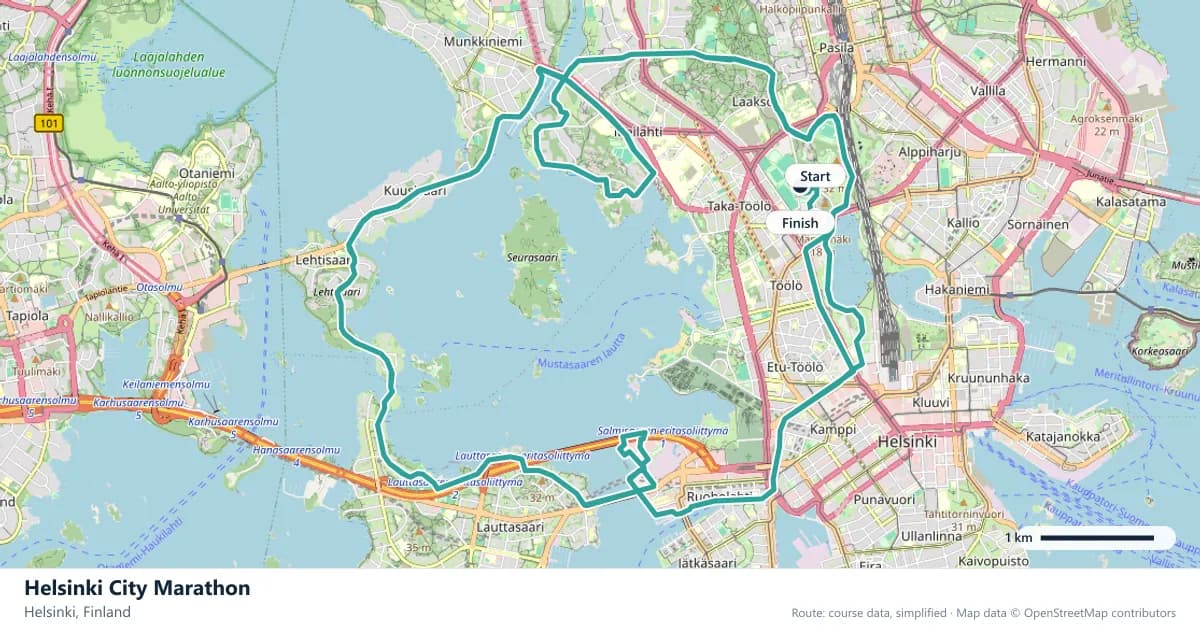
Interactive map
The trace follows the organizer's published course, simplified for the screen: the orange dot is the start, the dark dot the finish. Scroll to zoom, drag to pan.
What is the Helsinki City Marathon course like?
A spring marathon on the Baltic, running along the shoreline and out through the islands of the eastern harbour. Rolling terrain and cold, clean air.
- Next edition
- 08 May 2027
- Elevation gain
- 360 m
- Profile
- Hilly
- First run
- —
Course guide
Helsinki in May is a city emerging from a long winter. The light returns early, the Baltic is still cold, and the shoreline paths fill with runners who have waited months for the season. The Helsinki City Marathon uses that setting for a spring race along the water and out through the islands of the eastern harbour. The next edition is on 8 May 2027.
This is a hilly marathon by city standards. The course climbs about 360 metres, not in one long ascent but in repeated rises that roll through the shoreline and the island roads. Cold, clean air is part of the race's identity, and the sea is never far from the route.
Helsinki is also a generous place for a first marathon. The terrain is demanding enough to require preparation, but the course is manageable, the air is cool and the route stays close to the city. It is a northern spring race with a character all of its own.
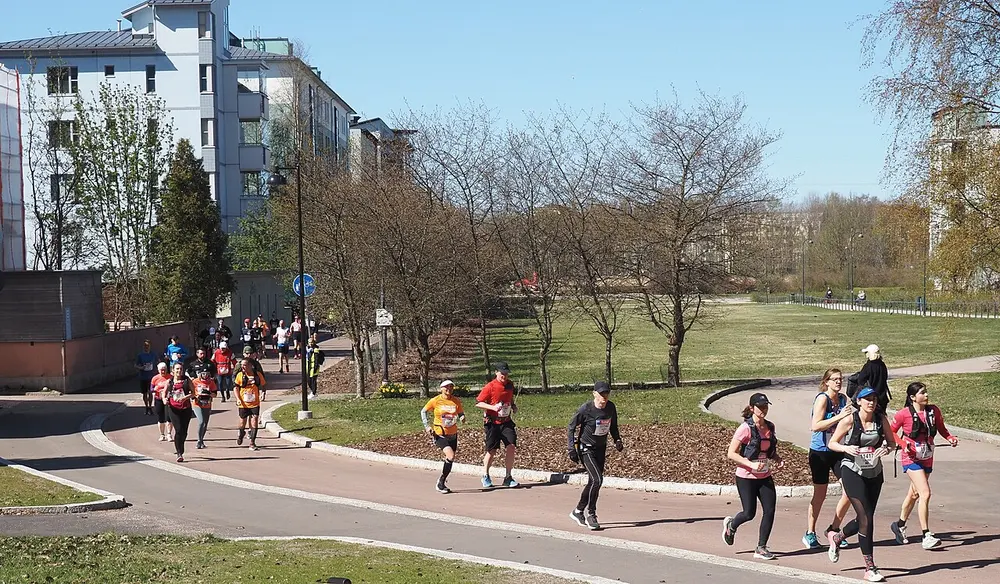
Helsinki City Run (half marathon) in Finland, 2024 May. Photo: Tuula Sipilä / Wikimedia Commons, CC BY 4.0.
The course
The route follows the shoreline and works out through the islands of the eastern harbour. The sea is a constant presence, and the rolling terrain gives the race a very different rhythm from a flat city course. The shoreline sections are open and exposed, while the island roads add turns and short climbs.
About 360 metres of climbing arrives in repeated rises rather than one long ascent. That makes the course harder than its individual gradients suggest: each rise is manageable, but the accumulation is real. The right approach is a steady effort and a conservative first half, with the expectation that the hills will take a little more out of the legs than the profile suggests.
The eastern harbour islands
Helsinki is built around a coastline of bays, islands and inlets, and the eastern harbour is one of the city's most distinctive waterscapes. The marathon uses the shoreline and the island roads, giving runners views across the water and a sense of moving through the archipelago without leaving the city.
The islands also shape the race's rhythm. Bridges and causeways connect the landmasses, and each transition brings a change of direction or a short rise. On a course with 360 metres of climbing, those transitions are the hills in miniature: not dramatic, but frequent enough to require attention.
360 metres in short rises
The climbing is the defining challenge. There is no single hill that dominates the race, which can make the course feel easier than it is in the first half. The rises come in waves, and each one taken too hard leaves a small debt. By the later stages, those debts have a way of collecting.
Training on rolling roads is more useful than training only on flat paths. The course rewards runners who can keep an even effort over changing terrain, and it punishes those who try to hold a fixed pace through every rise. Let the climbs slow you slightly; the descents will give some of it back, but not all of it.
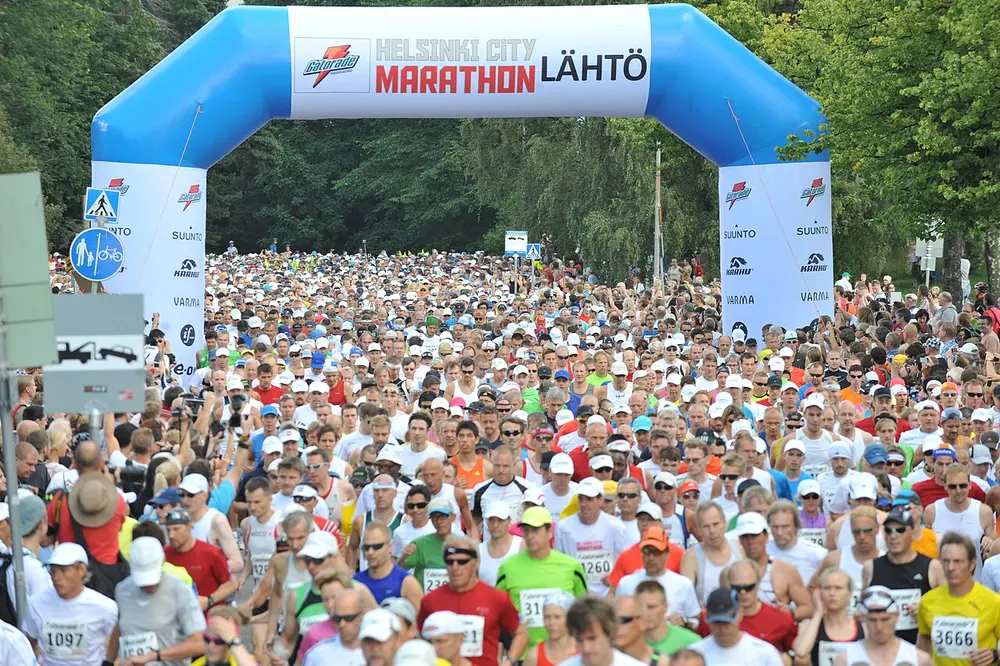
'Helsinki City Marathon lähtö. Photo: Tiina.soikkeli / Wikimedia Commons, CC BY-SA 3.0.
Cold air and a debut
The cold, clean air is one of Helsinki's advantages for distance running. It helps the body regulate itself, and it makes the shoreline sections feel bracing rather than oppressive. It can also make the wait before the start uncomfortable, so plan a warm layer you can discard once you are moving.
For a first marathon, the course is manageable if you respect the terrain. The 360 metres are not alpine, and the shoreline setting keeps the morning interesting. A debutant should arrive with some hill work in the legs, a realistic target and a plan to start slowly. The distance is still 42.195 kilometres, and the rolling profile adds to the fatigue.
A northern spring weekend
Helsinki is compact and easy to navigate, with the market square, the Esplanadi park and the harbour within walking distance of the centre. The city's design and maritime history give a race weekend plenty to fill the days around the marathon, and the long May daylight makes the evenings feel generous.
The race itself feels like a local event with an international field rather than a mass-market major. That is part of its appeal: a demanding course, cool air and a setting that feels genuinely northern. Runners who enjoy that combination will find plenty to like.
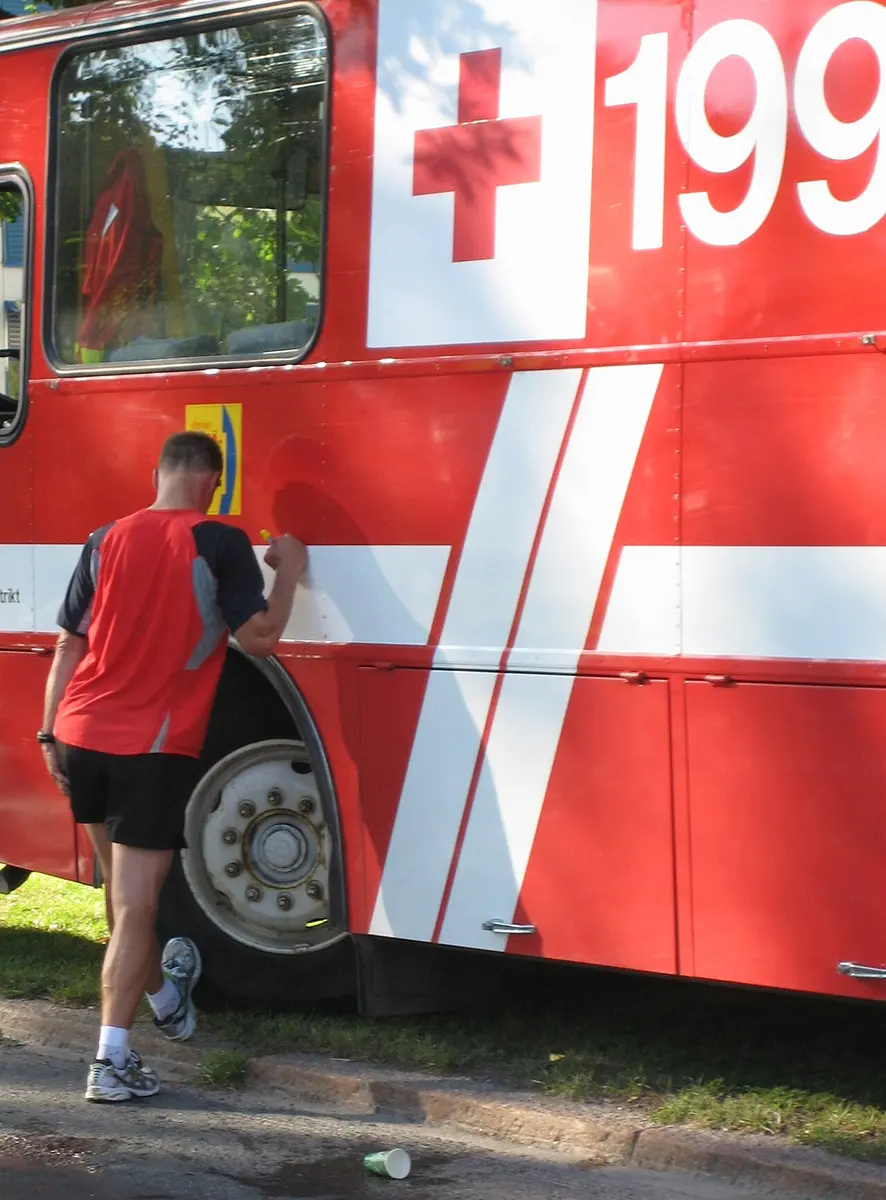
Help from an ambulance truck on Helsinki City Marathon 2007. Photo: Pöllö / Wikimedia Commons, CC BY-SA 3.0.
Frequently asked questions
Answers to the questions runners ask before entering, drawn from this race's course guide and the directory's own data — the sources behind them are listed below.
When is the Helsinki City Marathon?
The next edition is on 8 May 2027. It is a spring race in the Finnish capital.
Is the Helsinki City Marathon hilly?
Yes, by city-marathon standards. It climbs about 360 metres in repeated rises rather than one long ascent, so it rewards hill-specific preparation rather than a flat time trial.
Is Helsinki suitable for a first marathon?
It is a sensible choice for a debut, provided you prepare for the rolling terrain. The course is manageable with conservative pacing and some hill work, and the cool air helps over the distance.
Where does the Helsinki City Marathon run?
It runs along the shoreline and out through the islands of the eastern harbour. The route is coastal throughout, with the Baltic as a constant presence.
How hard is the course?
The 360 metres of climbing arrive in short, repeated rises. That makes it harder than a flat city marathon but not a mountain race, as long as you pace conservatively and do not attack every rise.
What is the air like?
The race is known for cold, clean air. It helps once you are running, but the wait before the start can feel chilly, so bring a layer you can leave behind.
More marathons in Europe
Sources for this page
What each source below is used for on this page, and where to check this race yourself.
- World Athletics — the label calendar and the road-race regulations. Used to check whether the race holds a World Athletics label, and its elite competition details.
- AIMS — the international course-measurement standard behind the 42.195 km distance, and the AIMS race calendar.
- The organizer's own publications — course maps, race handbooks and published results. The date, course character and climbing on this page are compiled from them and re-checked each season.
Where do these facts come from?
Dates, course type, climbing and time limits are compiled from the organizer's publications and re-checked each season; elevation is an estimate of total climbing rather than a survey figure. Always confirm race-day details with the organizer before making plans.
Last reviewed 27 October 2026