
Tallinn Marathon
Tallinn's old town is one of the best-preserved medieval cities in northern Europe, with towers, gabled houses and cobbled lanes that make the modern world feel briefly distant.
By Global Marathon Routes editorial team · Last reviewed 27 October 2026
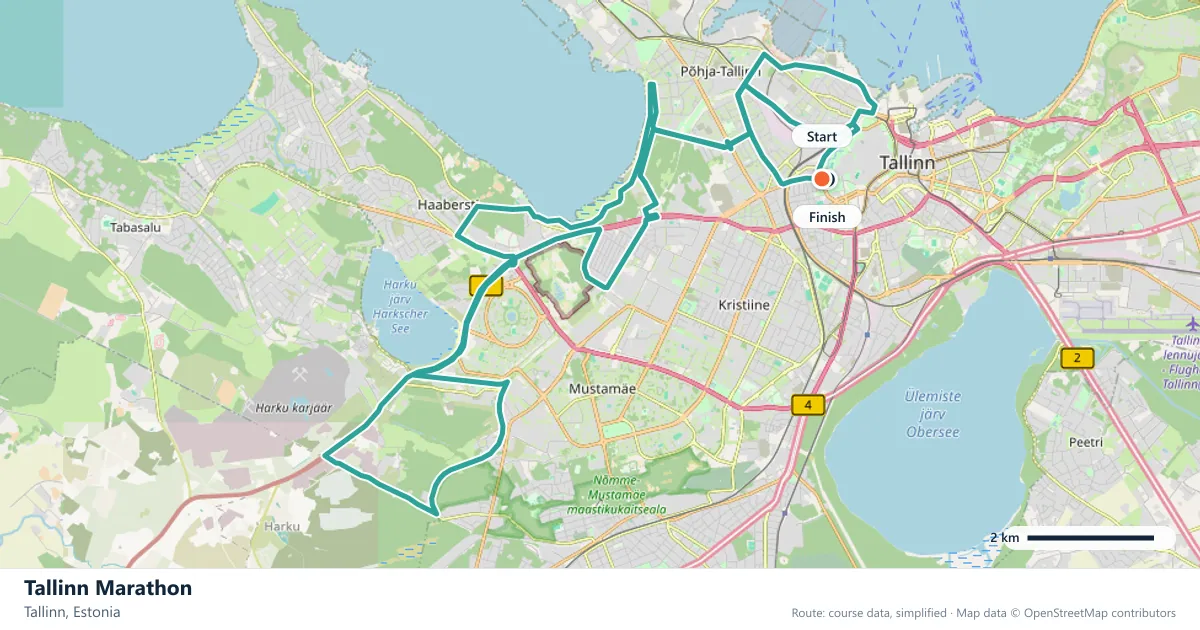
Where does the Tallinn Marathon run?
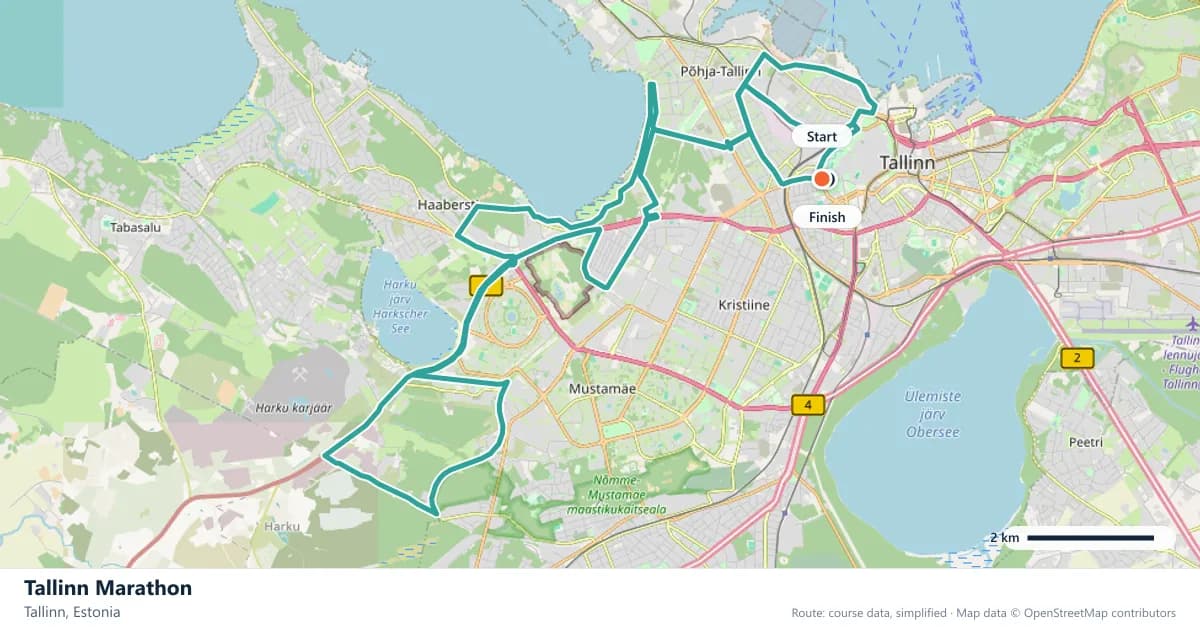
Interactive map
The trace follows the organizer's published course, simplified for the screen: the orange dot is the start, the dark dot the finish. Scroll to zoom, drag to pan.
What is the Tallinn Marathon course like?
A late-summer race that starts in the medieval old town and works along the Baltic coast. Mostly flat, with cobbles in the first kilometres, and cool sea air throughout.
- Next edition
- 13 September 2027
- Elevation gain
- 112 m
- Profile
- Undulating
- First run
- —
Course guide
Tallinn's old town is one of the best-preserved medieval cities in northern Europe, with towers, gabled houses and cobbled lanes that make the modern world feel briefly distant. The marathon begins there, then turns towards the Baltic and spends the rest of the morning on the coast. The next edition is on 13 September 2027.
The course is mostly flat, with about 112 metres of climbing, but it is not a pure time trial. The first kilometres are cobbled, and the transition from the old town to the sea is part of the race's character. Cool sea air stays with the field throughout, and the late-summer date gives the training block a full season to build.
Tallinn suits runners who want a fast course with a technical opening and a setting that feels genuinely different from the usual city loop. It holds a World Athletics Elite Label.
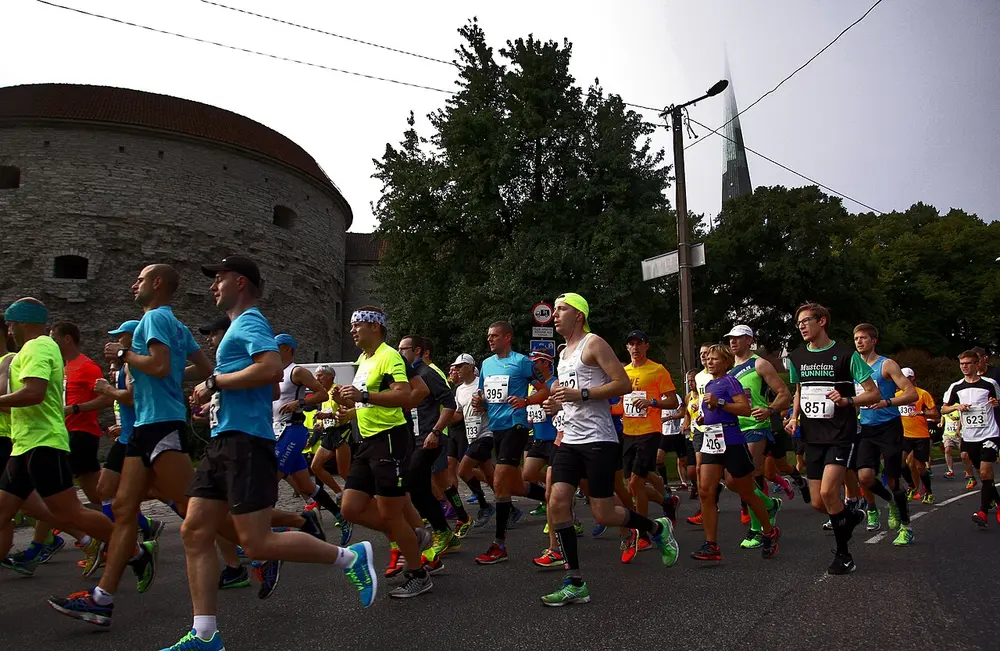
Tallinn 2016-09. Photo: Guillaume Baviere from Uppsala, Sweden / Wikimedia Commons, CC BY-SA 2.0.
The course
The opening section runs through the medieval old town, where the streets are narrow, the surface is cobbled and the buildings press close on both sides. That is the most demanding part of the route in terms of attention: it is not the place to chase a fast split or to fight for position.
Once the course leaves the old town and reaches the coast, the character changes. The route opens out, the profile flattens and the Baltic becomes the constant on one side. The 112 metres of climbing are spread across short rises rather than one long ascent, and the coastal running gives the race its rhythm.
Cobbles before the coast
The cobbles are the defining technical feature of the Tallinn Marathon. They demand a shorter stride, careful footing and a little patience, especially when the field is still bunched and the streets are narrow. Runners who try to maintain road pace through this section often pay for it later.
The old town itself is a UNESCO World Heritage site, and the route's passage through it is one of the race's signature experiences. The medieval walls, the towers and the Town Hall Square give the start a sense of occasion that a modern city-centre start cannot match. The cobbles are part of that experience, not an obstacle to be resented.
The Baltic edge
Once the race reaches the sea, the course opens up. The Baltic coast around Tallinn is low and green, with the water never far from the road and the air noticeably cooler than inland. The coastal stretches are mostly flat, with occasional short rises where the route moves between the shoreline and the city.
That transition is the heart of the race. The first part is historic and enclosed; the second is open and maritime. Runners who can adapt to both get the best out of the course, and supporters get two very different kinds of viewing.
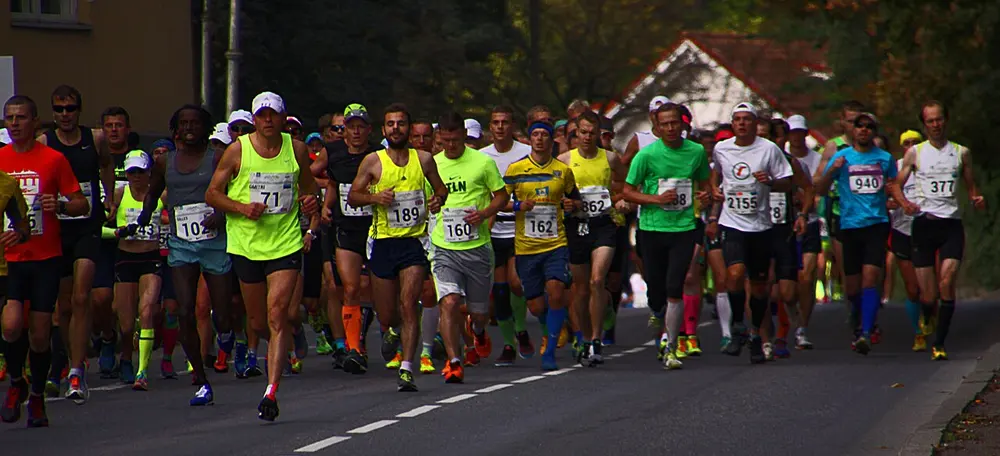
Tallinn 2016-09 (photo 2). Photo: Guillaume Baviere from Uppsala, Sweden / Wikimedia Commons, CC BY-SA 2.0.
A late-summer date
The September date gives the race a late-summer feel. It sits between the main spring season and the late-autumn races, so the training happens through the light northern summer, with long days and relatively mild weather. The race itself arrives as the season begins to turn.
That timing can be an advantage. The summer build does not have to compete with a spring race, and the September date gives more room to recover from an earlier season. It also means the city is still alive with late-summer energy, without the deepest winter cold.
Racing in cool sea air
The sea air keeps the race cool, which helps over 42.195 kilometres, but it can feel chilly while you wait for the start. A warm layer you can discard is more useful than a heavy kit, and gloves are worth considering for the old town section.
The course is mostly flat, but the cobbles and the short coastal rises mean it is not a pure personal-best course. Runners chasing a time should bank nothing in the first kilometres, use the coast to settle into a rhythm and save their fastest running for the smoother stretches. The Elite Label reflects the race's standing, not an easy route.
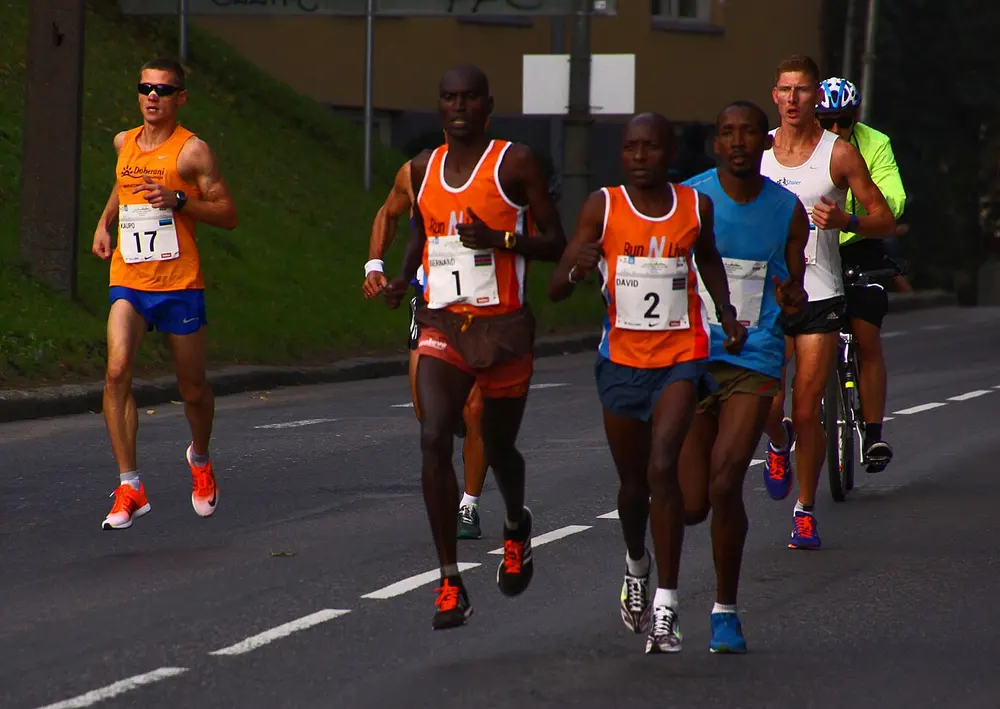
Tallinn 2016-09 (photo 3). Photo: Guillaume Baviere from Uppsala, Sweden / Wikimedia Commons, CC BY-SA 2.0.
Frequently asked questions
Answers to the questions runners ask before entering, drawn from this race's course guide and the directory's own data — the sources behind them are listed below.
When is the Tallinn Marathon?
The next edition is on 13 September 2027. It is a late-summer race in the Estonian capital.
Is the Tallinn Marathon flat or hilly?
It is mostly flat, with about 112 metres of climbing, and it is undulating rather than hilly. The short rises and the cobbled opening interrupt the rhythm, but for most runners it will feel like a flat marathon with a technical start.
Is Tallinn good for a personal best?
The mostly flat course and cool sea air suit fast times, but the cobbles and the old-town turns mean it is not a pure time trial. A personal best is possible with disciplined pacing and careful footing.
Is the Tallinn Marathon suitable for a first marathon?
It is, for a runner who is comfortable on cobbles. The manageable profile and the late-summer date suit a debut, while the technical opening demands patience and a conservative start.
What is the surface like?
The opening kilometres are cobbled, so the first part requires care with footing and pace. The rest of the course is mostly flat road, with the coastal setting and cool sea air as the defining features.
Does the Tallinn Marathon hold a World Athletics label?
Yes, it holds a World Athletics Elite Label. The label reflects its place among the established European races.
More marathons in Europe
Sources for this page
What each source below is used for on this page, and where to check this race yourself.
- World Athletics — the label calendar and the road-race regulations. Used to check whether the race holds a World Athletics label, and its elite competition details.
- AIMS — the international course-measurement standard behind the 42.195 km distance, and the AIMS race calendar.
- The organizer's own publications — course maps, race handbooks and published results. The date, course character and climbing on this page are compiled from them and re-checked each season.
“A World Athletics Label denotes a full application of the Competition and Technical Rules in, at a minimum, the elite component of the competition. Labels also denote superior standards in event organisation, safety and runner experience, support from public authorities to the event and a financial commitment to anti-doping.”
Where do these facts come from?
Dates, course type, climbing and time limits are compiled from the organizer's publications and re-checked each season; elevation is an estimate of total climbing rather than a survey figure. Always confirm race-day details with the organizer before making plans.
Last reviewed 27 October 2026