
Copenhagen Marathon
Copenhagen's marathon is built around water. The harbour runs through the middle of the city, the bridges connect its islands and districts, and the lakes sit like a green ring just beyond the…
By Global Marathon Routes editorial team · Last reviewed 27 October 2026
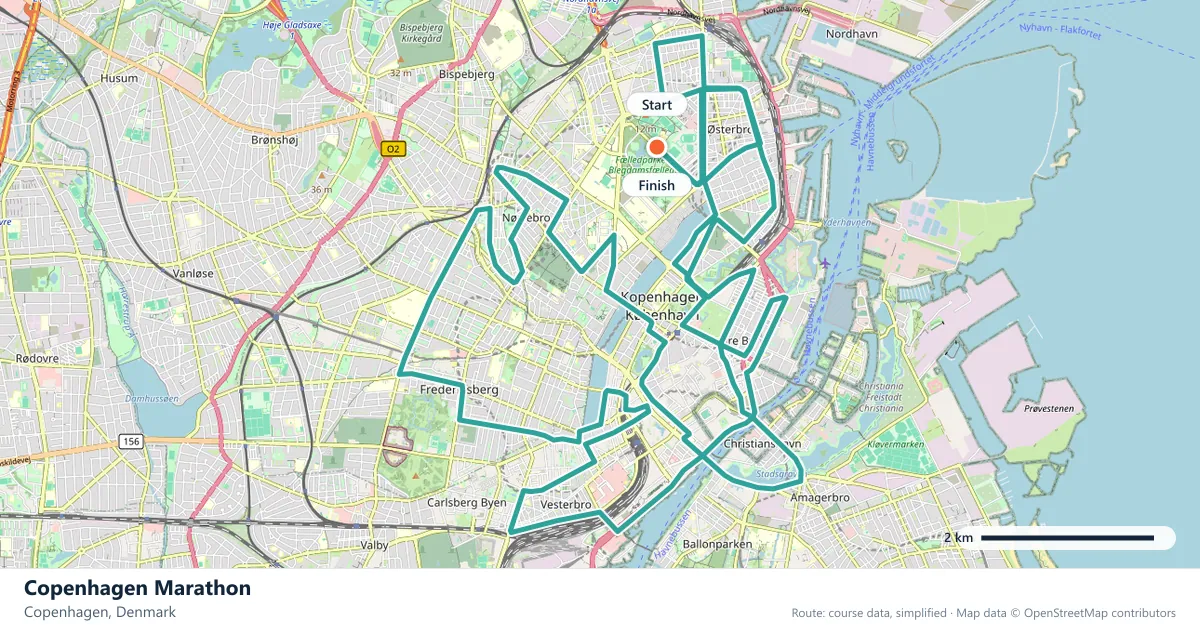
Where does the Copenhagen Marathon run?
Interactive map
The trace follows the organizer's published course, simplified for the screen: the orange dot is the start, the dark dot the finish. Scroll to zoom, drag to pan.
What is the Copenhagen Marathon course like?
A flat spring marathon that loops through the city's bridges and waterfront districts, finishing near the lakes. Cool Danish conditions and wide roads suit fast running.
- Next edition
- 09 May 2027
- Elevation gain
- 75 m
- Profile
- Flat
- First run
- —
Course guide
Copenhagen's marathon is built around water. The harbour runs through the middle of the city, the bridges connect its islands and districts, and the lakes sit like a green ring just beyond the centre. The race uses that geography as a loop, crossing bridges and following the waterfront before finishing near the lakes. The next edition is on 9 May 2027.
About 75 metres of climbing is spread across a flat loop that uses wide roads, letting a large field spread out. Cool Danish spring conditions are part of the appeal, and the race holds a World Athletics Label. It is a route for rhythm rather than survival: there is no hill to break the stride and no technical section to slow the field.
Copenhagen is also a city that makes a race weekend easy. The centre is compact, the harbour districts are walkable and the Danish capital has a relaxed, unforced atmosphere that suits a spring marathon.
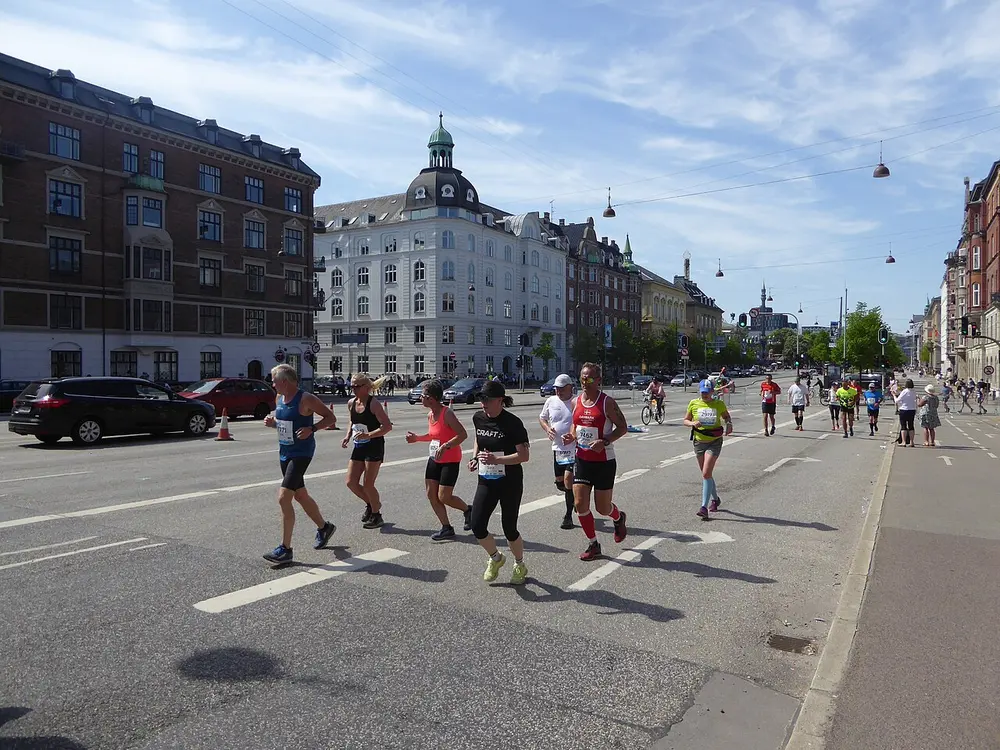
Copenhagen Marathon 2018 on H.C. Andersens Boulevard. Photo: Leif Jørgensen / Wikimedia Commons, CC BY-SA 4.0.
The course
The route is a loop through the city's bridges and waterfront districts, with the finish near the lakes. That shape keeps the start and finish in the same part of Copenhagen and gives the race a clear geography: the harbour on one side, the city on the other, and the bridges marking the transitions.
The climbing is minimal, around 75 metres in total, and it is spread across the whole route. The bridge crossings add short rises, but there is no sustained ascent and no section that requires hill-specific training. The wide roads let the field settle early, which is one reason the course can support fast running.
Bridges and harbour water
Copenhagen is a city of islands and inlets, and its bridges are part of daily life rather than scenic extras. The marathon uses several of them, and each one changes the view: the harbour opens up, the city skyline shifts, and the water becomes the dominant element again.
The waterfront districts give the course its character. The harbour is a working, swimming, living space in Copenhagen, not a decorative backdrop, and the race passes through areas where the city meets the water. On a flat course, those changes of scene are what keep the morning interesting.
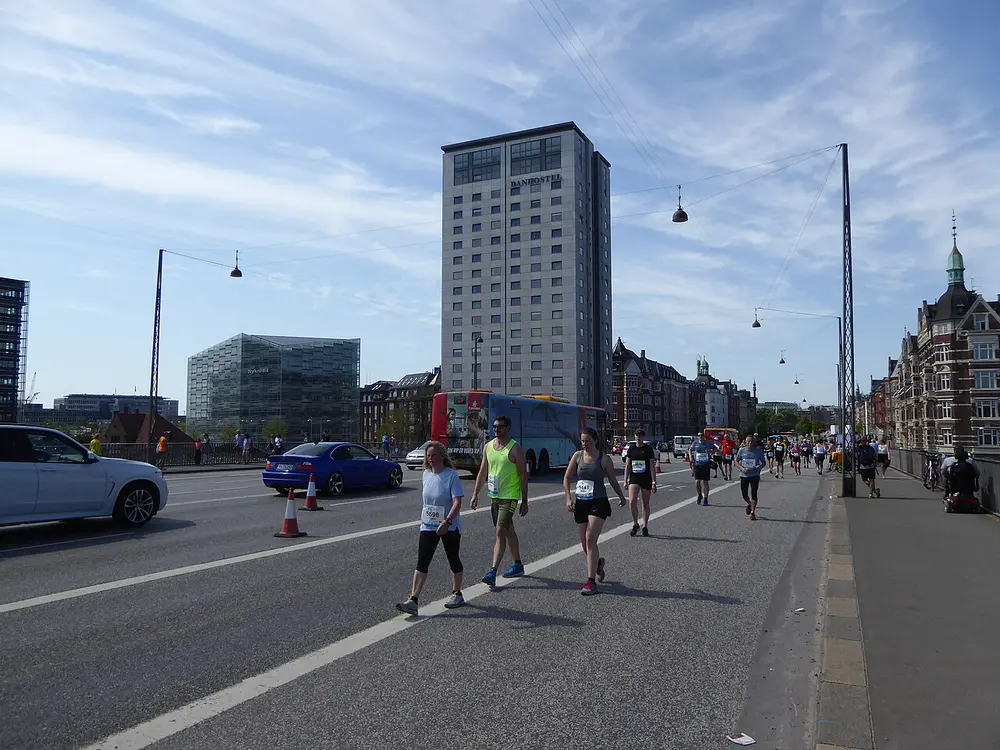
Copenhagen Marathon 2018 on Langebro 01. Photo: Leif Jørgensen / Wikimedia Commons, CC BY-SA 4.0.
The lakes finish
The finish near the lakes gives the closing kilometres a clear destination. Copenhagen's lakes form a chain of long, narrow bodies of water on the western edge of the centre, with paths and streets running alongside them. The area is open, green and easy to navigate, which helps runners and supporters alike.
A finish near the lakes also means the final part of the race is likely to be flat and exposed rather than tucked between buildings. That suits a fast finish if you have paced well, and it punishes a runner who has spent too much in the first half. The last kilometres are a good place to use whatever rhythm the course has helped you build.
Cool-weather running
Copenhagen in May is usually mild rather than warm, and the race's cool conditions are part of why it has a fast reputation. Cool air helps the body regulate itself over 42.195 kilometres, but it can also make the wait before the start uncomfortable. Plan for a range of conditions and wear layers you can remove.
The city's spring weather can change through the morning, so a single forecast is not enough. A light jacket or arm warmers that can be discarded are more useful than a heavy kit. Once you are moving, the flat route and the harbour views do the rest.
A spring city break
Copenhagen is an easy city to combine with a marathon weekend. The centre is compact, the public transport is straightforward and the harbour districts are made for walking. The Little Mermaid, Nyhavn and the Tivoli Gardens are the obvious landmarks, and the lakes are a short walk from the centre.
The race itself keeps a friendly, northern-European feel: a flat course, a manageable field and a finish that is easy to reach. It is a good choice for runners who want a spring marathon without the scale of a major, and for anyone who prefers cool air and wide roads to heat and hills.
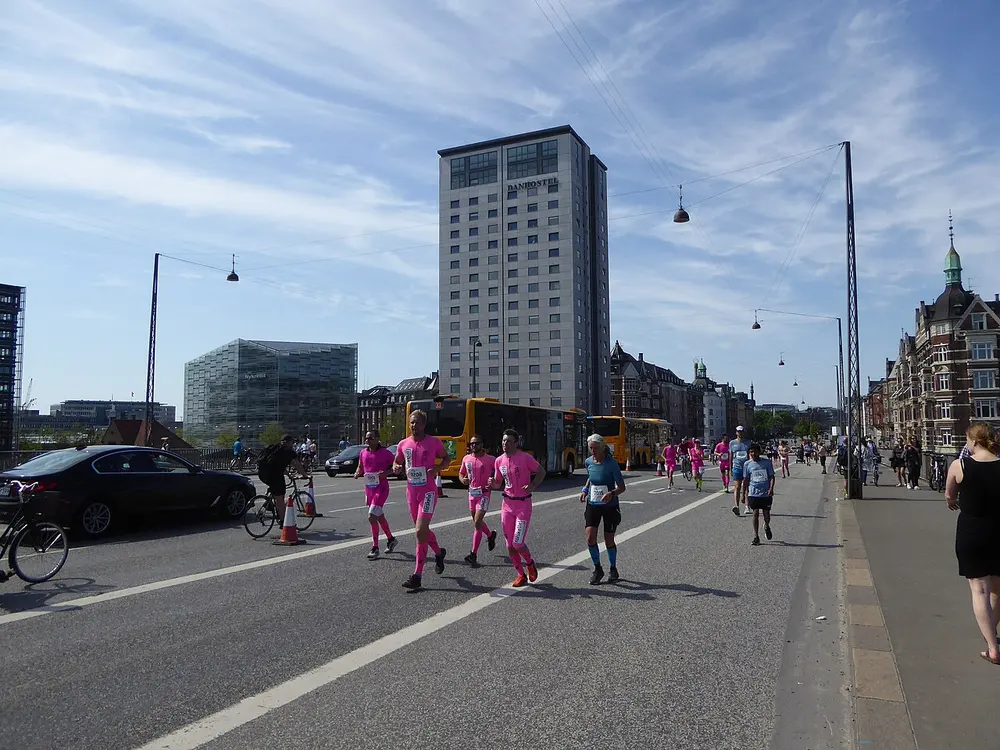
Copenhagen Marathon 2018 on Langebro 02. Photo: Leif Jørgensen / Wikimedia Commons, CC BY-SA 4.0.
Frequently asked questions
Answers to the questions runners ask before entering, drawn from this race's course guide and the directory's own data — the sources behind them are listed below.
When is the Copenhagen Marathon?
The next edition is on 9 May 2027. It is a spring race in the Danish capital.
Is the Copenhagen Marathon flat?
Yes. The course climbs about 75 metres in total, with no sustained ascent. The bridge crossings add a few short rises, but there is nothing that requires hill-specific training.
Is Copenhagen good for a personal best?
The flat profile, wide roads and cool spring conditions make it a fair course for a fast time. A personal best still depends on pacing, but the terrain gives you very little to fight against.
Is Copenhagen suitable for a first marathon?
It is. The limited climbing, wide roads and clear loop make the distance the main challenge rather than the course. Start conservatively and use the flat kilometres to settle into a rhythm.
Where does the Copenhagen Marathon run?
It runs on a loop through the city's bridges and waterfront districts, finishing near the lakes. The course stays within Copenhagen.
What label does the Copenhagen Marathon hold?
It holds a World Athletics Label, reflecting its place on the international road-running calendar.
More marathons in Europe
Sources for this page
What each source below is used for on this page, and where to check this race yourself.
- World Athletics — the label calendar and the road-race regulations. Used to check whether the race holds a World Athletics label, and its elite competition details.
- AIMS — the international course-measurement standard behind the 42.195 km distance, and the AIMS race calendar.
- The organizer's own publications — course maps, race handbooks and published results. The date, course character and climbing on this page are compiled from them and re-checked each season.
“A World Athletics Label denotes a full application of the Competition and Technical Rules in, at a minimum, the elite component of the competition. Labels also denote superior standards in event organisation, safety and runner experience, support from public authorities to the event and a financial commitment to anti-doping.”
Where do these facts come from?
Dates, course type, climbing and time limits are compiled from the organizer's publications and re-checked each season; elevation is an estimate of total climbing rather than a survey figure. Always confirm race-day details with the organizer before making plans.
Last reviewed 27 October 2026