
Zagreb Marathon
Zagreb's Lower Town is a planner's city: a grid of blocks and avenues laid out below the older, hilly settlements, with Jelacic Square at its centre and the cathedral close by.
By Global Marathon Routes editorial team · Last reviewed 27 October 2026
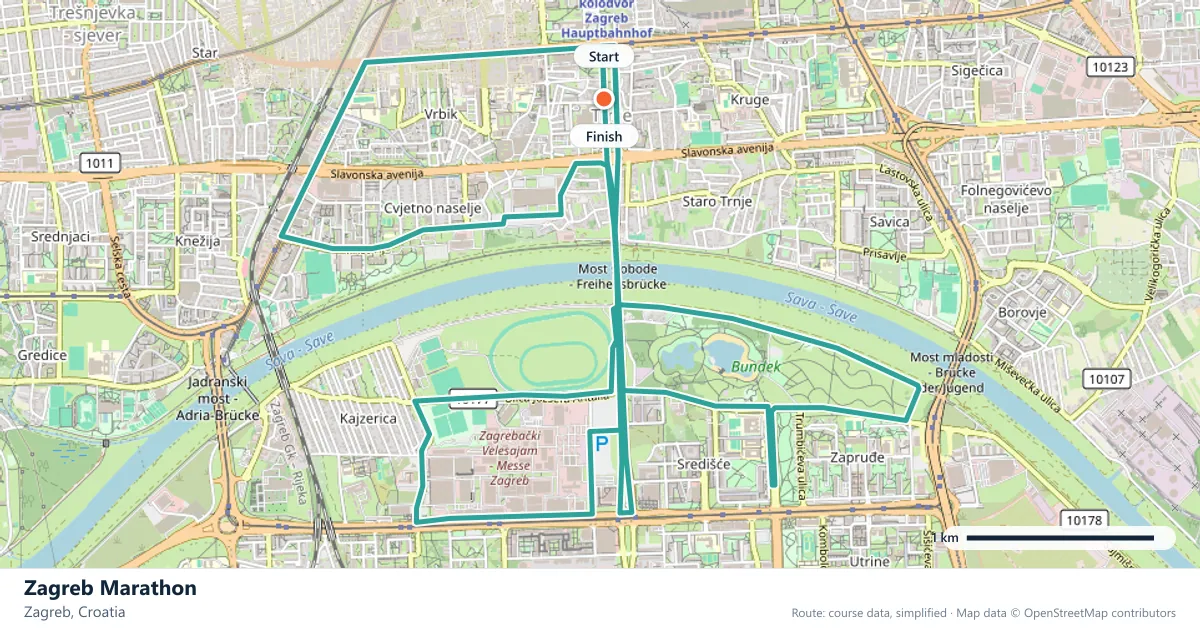
Where does the Zagreb Marathon run?
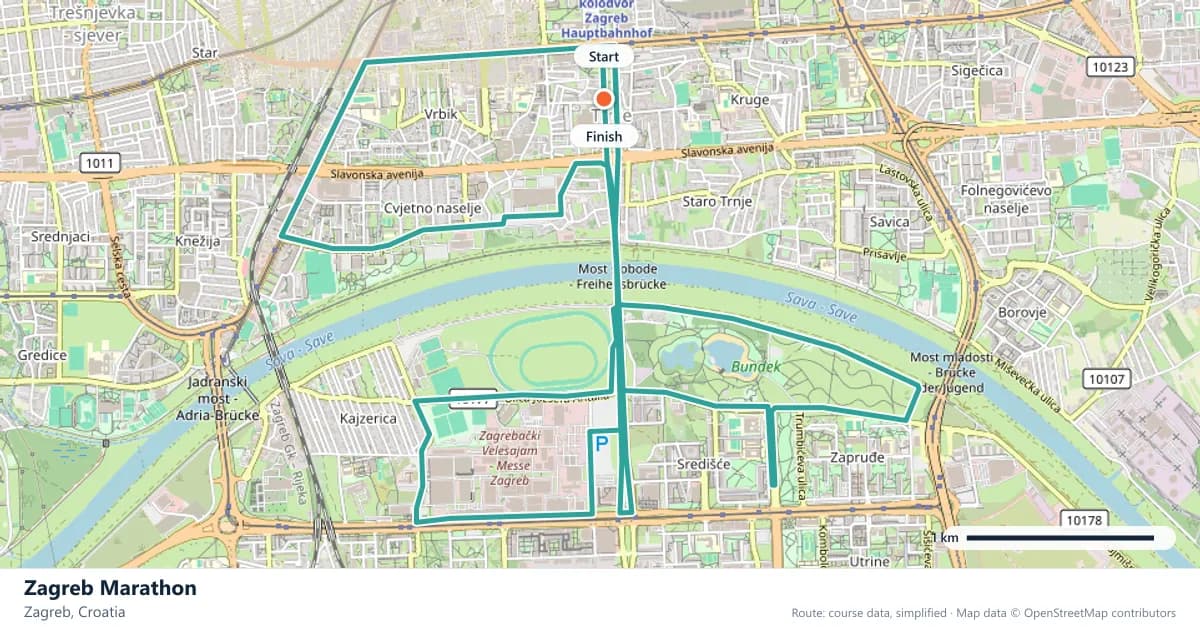
Interactive map
The trace follows the organizer's published course, simplified for the screen: the orange dot is the start, the dark dot the finish. Scroll to zoom, drag to pan.
What is the Zagreb Marathon course like?
A very flat city marathon through Zagreb's lower town, with the cathedral and the Jelacic square as the fixed points. Quick roads and an October date.
- Next edition
- October 2027 (expected)
- Elevation gain
- 30 m
- Profile
- Flat
- First run
- —
Course guide
Zagreb's Lower Town is a planner's city: a grid of blocks and avenues laid out below the older, hilly settlements, with Jelacic Square at its centre and the cathedral close by. The marathon uses that grid as its stage, staying on the flat ground and turning the Croatian capital into a compact 42.195-kilometre circuit. The edition covered here took place on 11 October 2026.
The course is very flat. It climbs about 30 metres in total, which is barely more than the undulation of an ordinary city street. The roads are quick, the landmarks are close together and the October date gives the race a late-season feel. It holds a World Athletics Label.
Zagreb is not a backdrop city in the way Vienna or Prague is. Its appeal is more workaday: a central European capital with a handsome Lower Town, a strong café culture and a marathon that uses the streets rather than touring the sights. For runners chasing a time, that directness is the point.
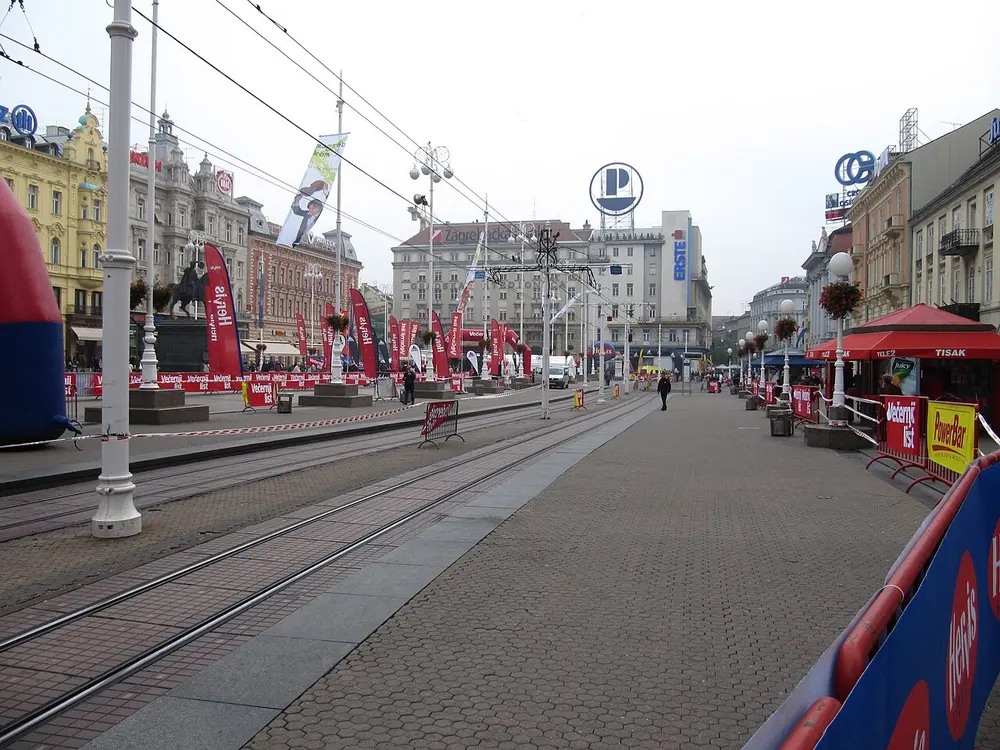
Zagreb Marathon 20101010 2156. Photo: Branko Radovanović / Wikimedia Commons, CC BY-SA 3.0.
The course
The route stays in the Lower Town, using the grid of streets that runs from Jelacic Square towards the railway station and out across the surrounding blocks. The cathedral and the square are the fixed points, and the course returns to them often enough that the race feels anchored rather than linear.
There is almost nothing on the profile to interrupt the pace. The 30 metres of climbing are spread so thinly that they disappear into the general rhythm of city running. What remains is the need to manage corners, keep your line through the wider streets and hold a pace that the course itself will not enforce.
The Lower Town grid
The Lower Town was built in the late nineteenth and early twentieth centuries, and its layout still reflects that planned confidence: broad avenues, regular blocks and a chain of green squares that runs through the centre. Jelacic Square is the civic heart, with the ban's statue and the surrounding facades, and the cathedral's twin spires are never far away.
For the race, the grid is a gift and a test. It is easy to follow, it gives spectators multiple viewing points and it keeps the course compact. It also means the running is repetitive: the same kind of blocks, the same width of street, the same flat horizon. Runners who need variety may find the second half mentally harder than the profile suggests.
A 30-metre marathon
Thirty metres of climbing over 42.195 kilometres is about as flat as a city marathon gets. There is no climb to break the rhythm and no descent to recover on, so the course offers no external structure. The pace you set early is the pace you will have to manage later, and the flat roads make an ambitious first half feel deceptively reasonable.
That is why Zagreb is a personal-best course rather than a scenic tour. The quick roads reward even splits, and the compact Lower Town means there are no long, empty stretches where the pace can drift. The race asks for discipline, not strength.
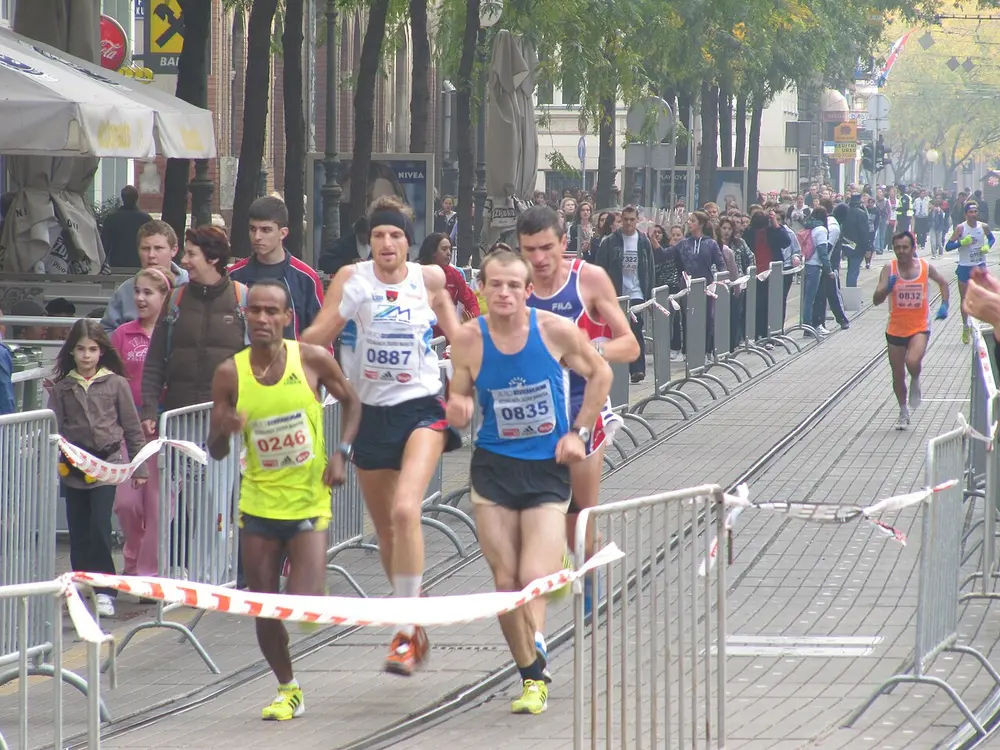
Zagreb Marathon 20101010 2166. Photo: Branko Radovanović / Wikimedia Commons, CC BY-SA 3.0.
Landmarks as metronomes
The cathedral and Jelacic Square do more than decorate the route. They give the race a repeating structure: the spire comes into view, the square opens up, the streets close in again. On a flat course, those markers are useful because they divide the morning into manageable pieces.
The cathedral itself is one of Zagreb's defining buildings, with two tall spires that are visible from much of the centre. Jelacic Square is the city's main meeting point, named after the nineteenth-century ban Josip Jelacic. The race passes through both, and their familiarity is part of the appeal: this is a marathon that belongs to the city rather than to a tourist itinerary.
Autumn in the Lower Town
Mid-October is a good time for a marathon in Zagreb. The summer heat has gone, the city is back in its normal rhythm and the lower town's cafés and squares are still busy enough to give the race an audience. The date also sits late in the season, which means the training block has to be built through the summer.
The compact course makes race weekend easy to manage. The centre is walkable, the start and finish are within the same part of the city, and supporters can move between the square and the cathedral without long journeys. That simplicity is part of Zagreb's character: a low-friction marathon in a city that does not need to exaggerate its charms.
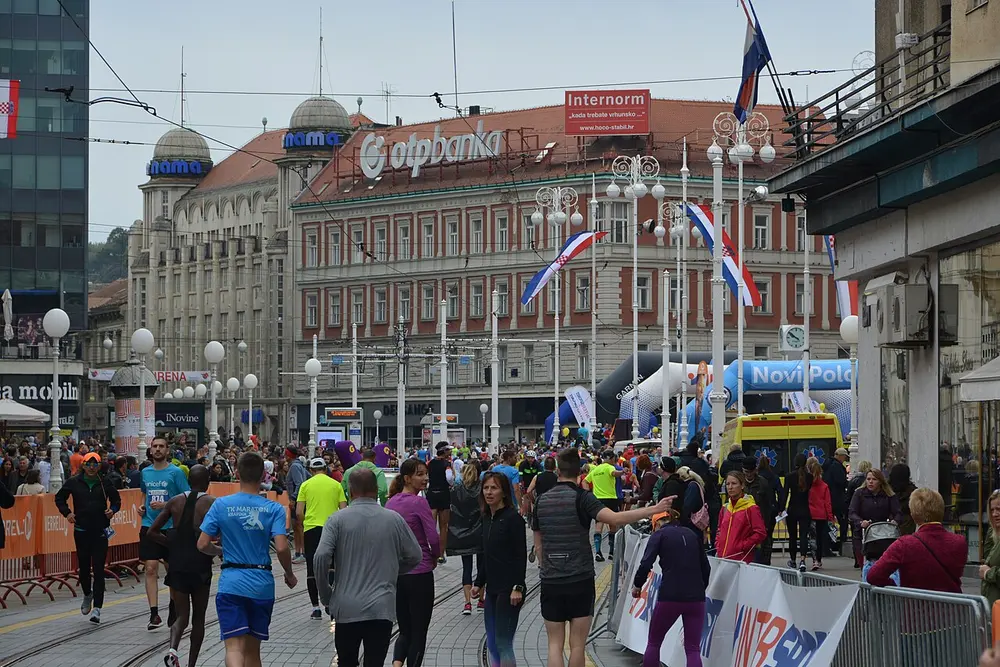
2017 Zagreb Marathon 20171008. Photo: Branko Radovanović / Wikimedia Commons, CC BY-SA 4.0.
Frequently asked questions
Answers to the questions runners ask before entering, drawn from this race's course guide and the directory's own data — the sources behind them are listed below.
When was the Zagreb Marathon?
The edition covered here took place on 11 October 2026. It is an autumn race in the Croatian capital.
Is the Zagreb Marathon flat?
Yes. The course climbs about 30 metres in total, with no sustained rise. It is one of the flattest city marathons on the calendar.
Is Zagreb a good personal-best course?
The flat profile and quick roads make it well suited to a fast time. A personal best still depends on pacing and conditions, but there is almost no terrain to slow you down.
Where does the Zagreb Marathon run?
It runs through Zagreb's Lower Town, with the cathedral and Jelacic Square as the fixed points. The course stays on the flat grid below the older, hilly parts of the city.
Does the Zagreb Marathon hold a World Athletics label?
Yes, it holds a World Athletics Label. The race is part of the international road-running calendar.
What landmarks does the course pass?
The cathedral and Jelacic Square are the defining landmarks. They recur through the route and give the lower-town circuit its structure.
More marathons in Europe
Sources for this page
What each source below is used for on this page, and where to check this race yourself.
- World Athletics — the label calendar and the road-race regulations. Used to check whether the race holds a World Athletics label, and its elite competition details.
- AIMS — the international course-measurement standard behind the 42.195 km distance, and the AIMS race calendar.
- The organizer's own publications — course maps, race handbooks and published results. The date, course character and climbing on this page are compiled from them and re-checked each season.
“A World Athletics Label denotes a full application of the Competition and Technical Rules in, at a minimum, the elite component of the competition. Labels also denote superior standards in event organisation, safety and runner experience, support from public authorities to the event and a financial commitment to anti-doping.”
Where do these facts come from?
Dates, course type, climbing and time limits are compiled from the organizer's publications and re-checked each season; elevation is an estimate of total climbing rather than a survey figure. Always confirm race-day details with the organizer before making plans.
Last reviewed 27 October 2026