
Patagonia International Marathon
The Patagonia International Marathon is not a city race with a mountain view. It is a road-and-trail marathon inside Torres del Paine, at the southern edge of Chilean Patagonia, and the landscape is…
By Global Marathon Routes editorial team · Last reviewed 27 October 2026
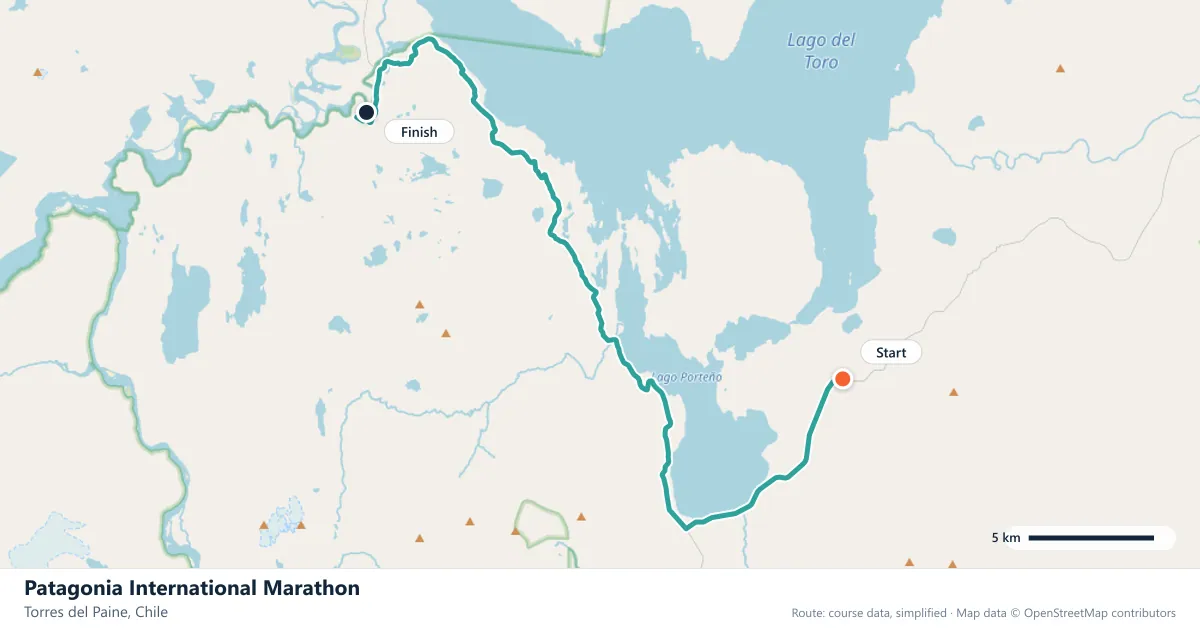
Where does the Patagonia International Marathon run?
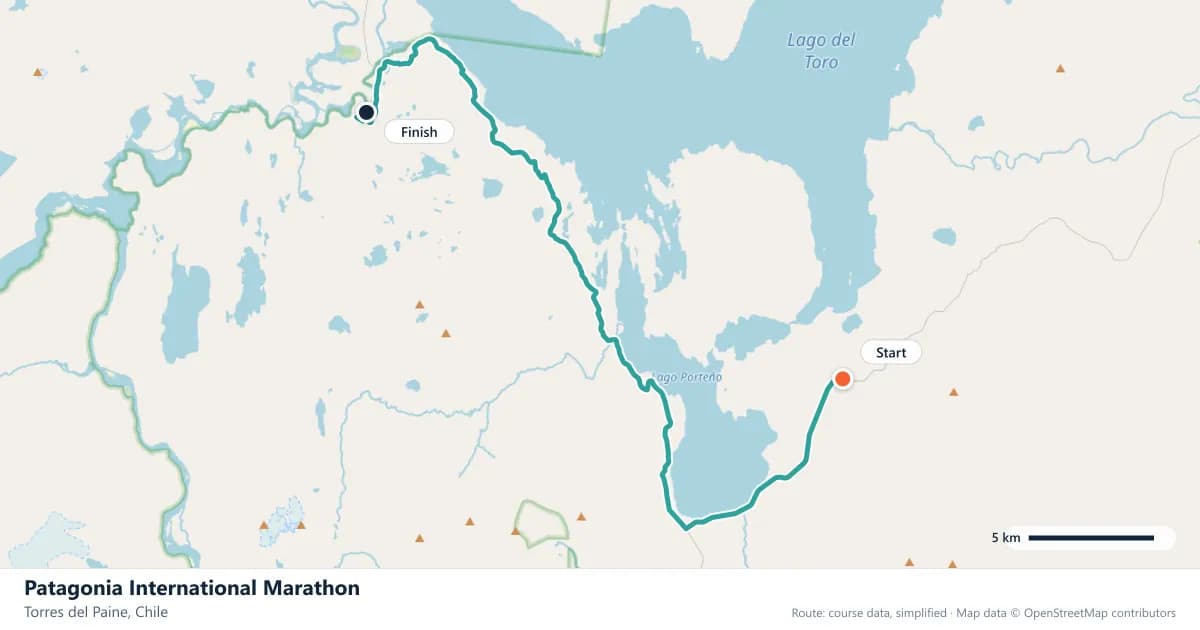
Interactive map
The trace follows the organizer's published course, simplified for the screen: the orange dot is the start, the dark dot the finish. Scroll to zoom, drag to pan.
What is the Patagonia International Marathon course like?
A road-and-trail marathon in Torres del Paine at the southern edge of Patagonia, with more than 1,000 metres of climbing. The wind is the one thing every runner remembers.
- Next edition
- 04 September 2027
- Elevation gain
- 1002 m
- Profile
- Hilly
- First run
- —
Course guide
The Patagonia International Marathon is not a city race with a mountain view. It is a road-and-trail marathon inside Torres del Paine, at the southern edge of Chilean Patagonia, and the landscape is the event. The 2027 edition is scheduled for 4 September.
The course gains 1,002 metres, so the hilly profile is the heart of the challenge rather than a detail. The surface changes between road and trail, the weather can turn, and the wind is the element every runner remembers. This is a marathon that asks for preparation, not a last-minute decision.
It is also, in its own way, suited to a first marathon. The distance is achievable for a debutant who trains specifically for hills and trails, but the day is far harder than a flat city race. The reward is a route through one of the world's great national parks.
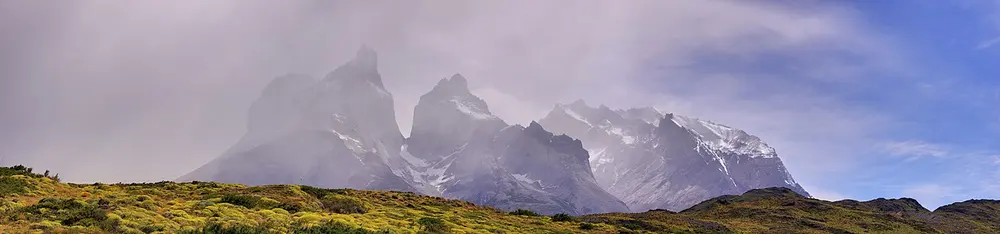
175 - Torres del Paines - Janvier 2010. Photo: Martin St-Amant ( S23678 ) / Wikimedia Commons, CC BY-SA 3.0.
The course
The race follows a road-and-trail route through Torres del Paine, gaining 1,002 metres over the full distance. The climbing is constant enough that there is no easy half: the legs are always either ascending or descending, and the trail sections demand a different kind of attention from road running.
The surface is part of the challenge. Roads are fast and predictable; trails are softer, uneven and slower, and the change of footing forces the body to work in different ways. Runners who have only trained on tarmac will find the trail kilometres longer than their watch suggests.
The granite towers
Torres del Paine is named for its granite towers, the three sheer peaks that rise above the park and have become the symbol of Patagonia. The massif also includes the Cuernos del Paine, the horned peaks beside the towers, and the glaciers and lakes that surround them.
The course does not need to climb the towers for them to dominate the day. They are the reason the race exists, and they give the route a scale that no city marathon can match. The park is also home to guanacos, condors and other Patagonian wildlife, which adds another layer to the experience.
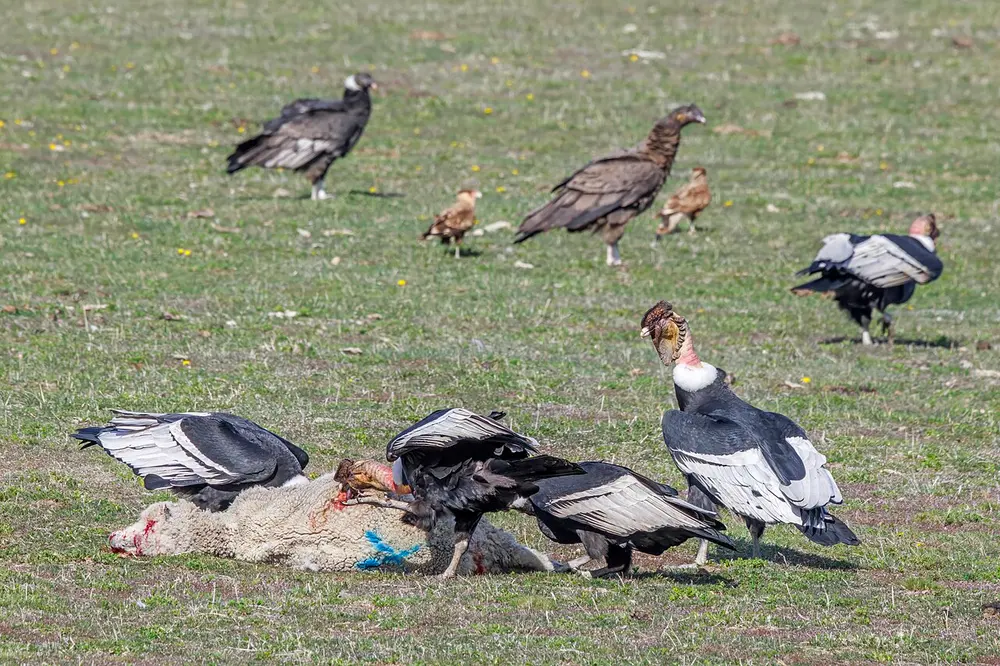
Andean condors (Vultur gryphus) on carcass Torres del Paine. Photo: Charles J. Sharp / Wikimedia Commons, CC BY-SA 4.0.
The wind
The wind is the one thing every runner remembers. Patagonia is exposed, and the weather can change quickly, so a calm section can become a struggle within minutes. The wind affects effort on every surface, and on exposed trail it can make a flat kilometre feel like a climb.
The response is to run by feel rather than pace. Lean into the wind, shorten the stride and accept the slower kilometres. Trying to hold a target pace in a Patagonian gust is a quick way to spend energy that will be needed later.
Trail legs and hill legs
Preparation for Torres del Paine should include both. The 1,002 metres of climbing reward hill training, and the road-and-trail surface rewards time on uneven ground. Road marathons do not fully prepare the ankles, calves and hips for the demands of a mixed-surface race.
The wind adds a third requirement: practice running in it. If possible, train on exposed routes and in bad weather, so that the race-day conditions are familiar rather than shocking. The more varied the training, the more the course feels like a challenge rather than a surprise.
The debut at the end of the map
A first marathon is possible here, but it is a different proposition from a city debut. The distance is the same, yet the climbing, the surface and the wind add three layers of difficulty that a flat road race does not have. A debutant needs a solid block of hill and trail training, and a realistic finish-time goal.
The reward is a race unlike any other. The granite towers, the open steppe and the Patagonian wind make the day memorable in a way that a personal-best attempt on a city loop cannot match. It is a marathon to finish and remember.
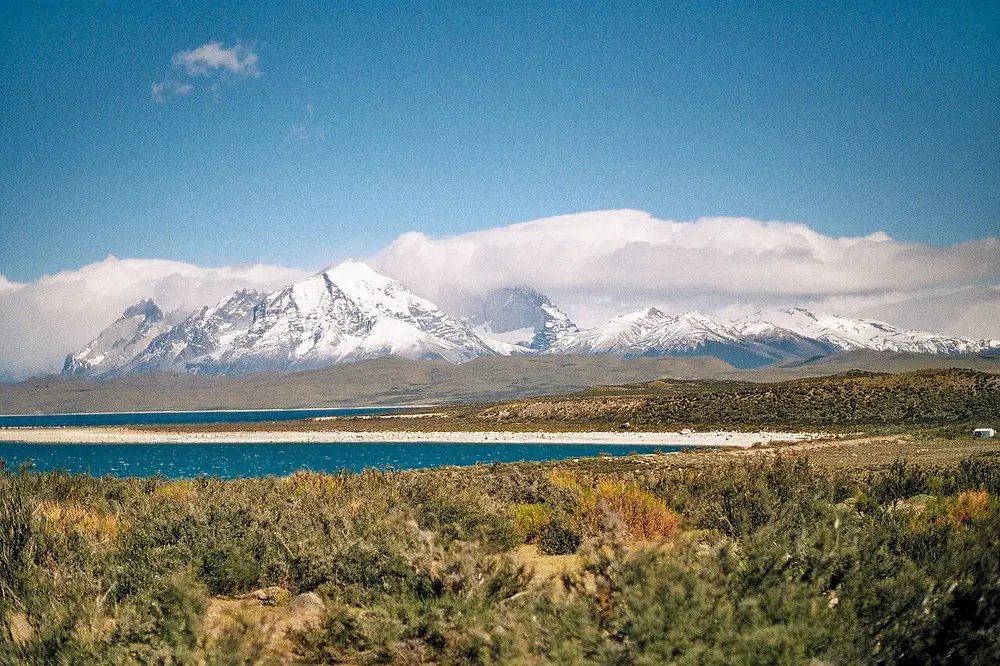
Cordillera del Paine, Torres del Paine National Park, Chile. Photo: Canopus24 . / Wikimedia Commons, CC BY-SA 3.0.
Frequently asked questions
Answers to the questions runners ask before entering, drawn from this race's course guide and the directory's own data — the sources behind them are listed below.
When is the Patagonia International Marathon?
The next edition is scheduled for 4 September 2027, in Torres del Paine, Chilean Patagonia.
Is the Patagonia International Marathon a hilly course?
Yes. It is hilly, with 1,002 metres of climbing over the full distance. The ascent is spread across the route rather than concentrated in one climb.
Is the course road or trail?
It is a road-and-trail route, so the surface changes during the race. Runners should expect slower, more variable footing on the trail sections.
Can I run Torres del Paine as my first marathon?
It is possible, but it is a much harder debut than a flat city race. The climbing, the trail surface and the wind require specific preparation and a realistic goal.
Why is the wind so memorable?
The race is held in exposed Patagonian terrain, where the wind can arrive suddenly and affect effort for long stretches. It is the element runners talk about most after the race.
Is the Patagonia International Marathon a fast course?
The race is not set up as a fast course. More than 1,000 metres of climbing, mixed surfaces and strong wind all work against an even, quick effort.
What is the setting like?
The course runs through Torres del Paine National Park, with the granite towers and the Cordillera del Paine dominating the landscape. It is a wilderness race rather than a city marathon.
More marathons in Chile
More marathons in Americas
Sources for this page
What each source below is used for on this page, and where to check this race yourself.
- World Athletics — the label calendar and the road-race regulations. Used to check whether the race holds a World Athletics label, and its elite competition details.
- AIMS — the international course-measurement standard behind the 42.195 km distance, and the AIMS race calendar.
- The organizer's own publications — course maps, race handbooks and published results. The date, course character and climbing on this page are compiled from them and re-checked each season.
Where do these facts come from?
Dates, course type, climbing and time limits are compiled from the organizer's publications and re-checked each season; elevation is an estimate of total climbing rather than a survey figure. Always confirm race-day details with the organizer before making plans.
Last reviewed 27 October 2026