
Antwerp Marathon
Antwerp has always been a city of arrival and departure. Ships work the Scheldt, the cathedral spire rises above the roofs, and the diamond quarter near the station has the guarded, businesslike air…
By Global Marathon Routes editorial team · Last reviewed 27 October 2026
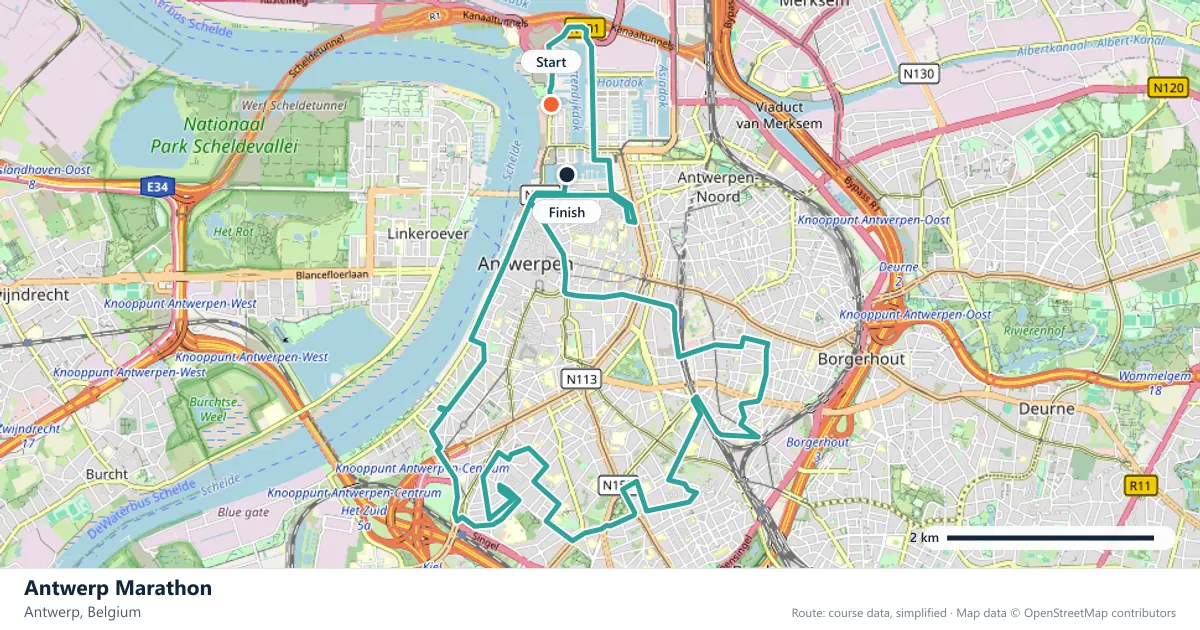
Where does the Antwerp Marathon run?
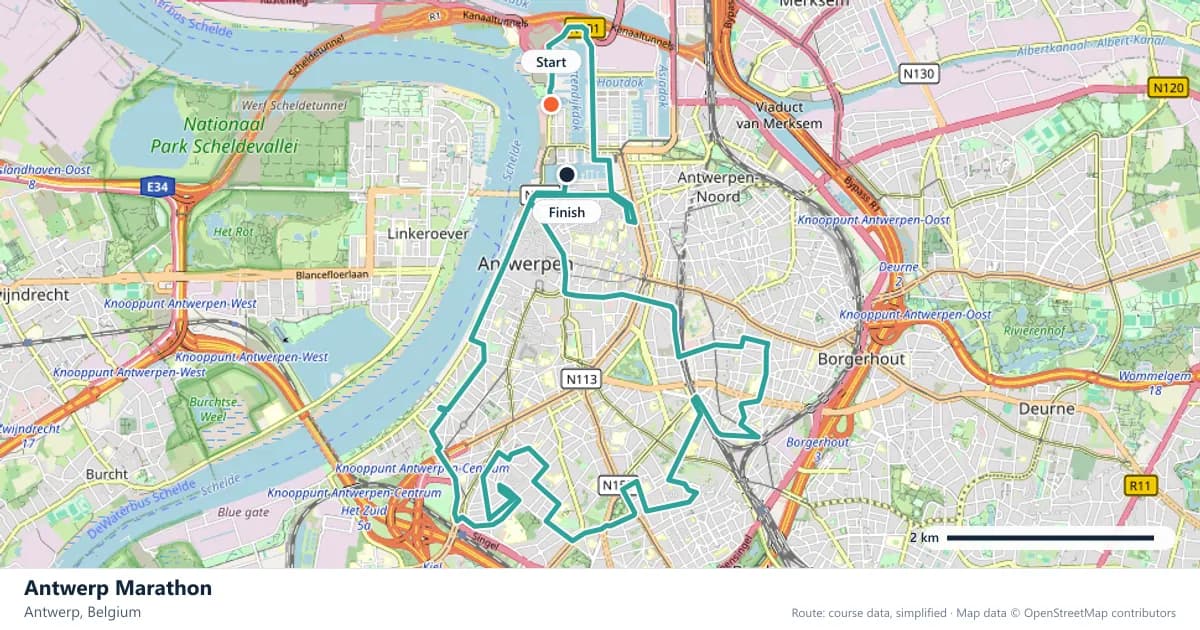
Interactive map
The trace follows the organizer's published course, simplified for the screen: the orange dot is the start, the dark dot the finish. Scroll to zoom, drag to pan.
What is the Antwerp Marathon course like?
A flat city race through Antwerp, from the Scheldt quays past the cathedral and the diamond quarter. Fast roads and an autumn date, with the harbour as the backdrop.
- Next edition
- October 2027 (expected)
- Elevation gain
- 35 m
- Profile
- Flat
- First run
- —
Course guide
Antwerp has always been a city of arrival and departure. Ships work the Scheldt, the cathedral spire rises above the roofs, and the diamond quarter near the station has the guarded, businesslike air of a trade that has passed through here for centuries. The marathon takes that port-city geography and turns it into a flat, fast autumn route, with the next edition expected in October 2027.
The course runs from the Scheldt quays past the Cathedral of Our Lady and through the diamond quarter, with the harbour never far away. Only about 35 metres of climbing interrupt the 42.195 kilometres, so the roads are quick and the profile offers almost no resistance. It is a race built around pace, not around hills.
That makes Antwerp a straightforward personal-best target. The autumn date gives a summer of training something to aim at, and the flat city streets reward even splits. It is less of a landmark tour than a major, but the cathedral, the river and the working port give the kilometres a strong sense of place.
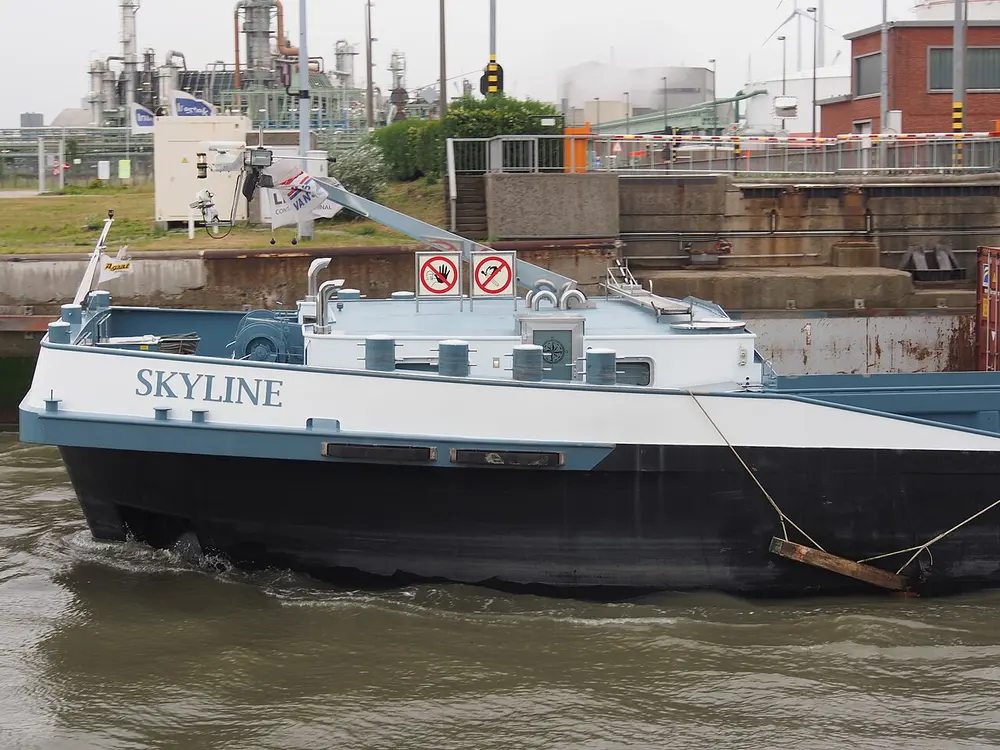
Skyline - ENI 06105024, Van Cauwelaertsluis, Port of Antwerp pic2. Photo: Alf van Beem / Wikimedia Commons, CC0.
The course
The route is a city circuit rather than a loop out into the countryside. It uses the quays along the Scheldt, turns through the historic streets around the cathedral and passes the diamond district, with the harbour as a recurring backdrop. The surface is road throughout, and the changes of direction are more significant than the changes of gradient.
With 35 metres of climbing, there is no climb to plan for and no descent to recover on. The race is decided by rhythm, by how well you take the corners and by whether you can keep the pace honest when the course offers no feedback. The flatness is an opportunity, but it is also a trap for anyone who lets the first half run away.
Along the Scheldt
The Scheldt is Antwerp's reason for existing, and the riverfront is one of the most open parts of the course. The quays give the race long views across the water, with the port's cranes and shipping in the distance. The scale is different from the tight streets around the cathedral: here the city feels broad and industrial, and the running has room to settle.
The river also shapes the course's turns. The route works along the bank rather than following it without interruption, so there are points where the water disappears and the city closes in again. Those changes keep the race from becoming a monotonous straight, but they also demand attention when the field is still dense.
The cathedral and the diamond quarter
The Cathedral of Our Lady is the vertical landmark of the race, its spire visible from much of the centre. The route passes close to it, and the contrast between the Gothic tower and the flat streets around it is one of the defining images of the day. The diamond quarter adds a different kind of Antwerp: discreet, prosperous and closely connected to the city's trading history.
These are not scenic detours. They sit within the urban course, between the river and the shopping streets, and they give runners something to measure progress by. The city centre is compact enough that the landmarks return, which helps on a route where the profile itself offers no variety.
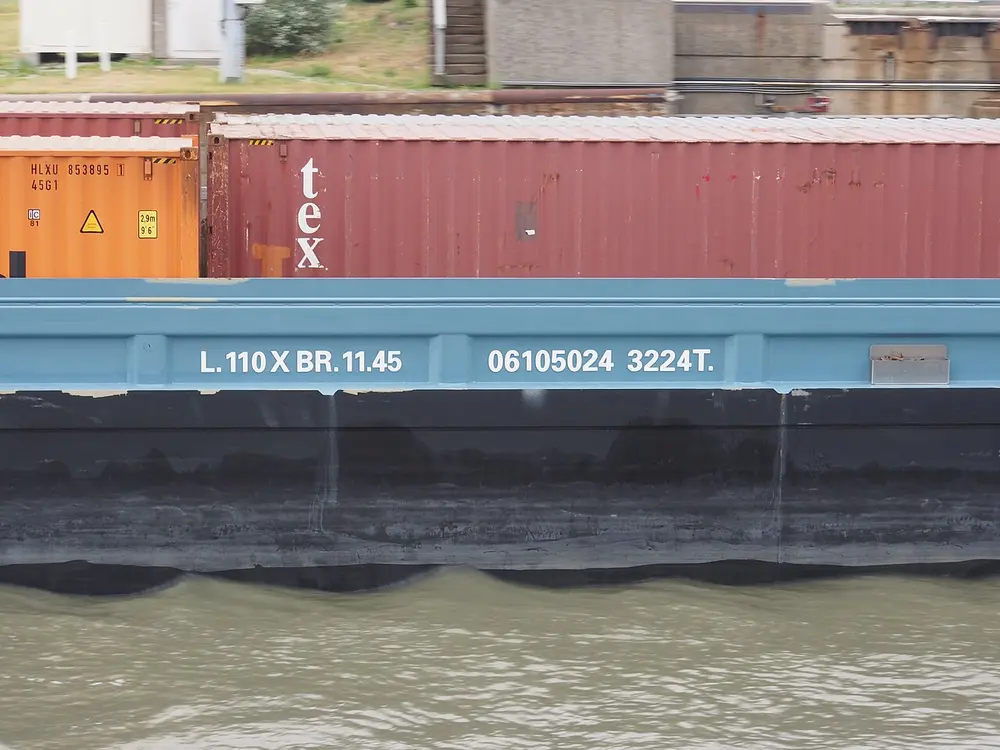
Skyline - ENI 06105024, Van Cauwelaertsluis, Port of Antwerp pic3. Photo: Alf van Beem / Wikimedia Commons, CC0.
A flat course with nowhere to hide
Thirty-five metres of climbing over a marathon is almost nothing. There is no hill to blame for a slow kilometre and no climb that forces a natural reset. The course will not slow you down, which means the pace you choose in the first ten kilometres is the pace you will have to live with later.
The urban layout is the only brake. Corners, turns and changes of surface break the rhythm briefly, and the field has to negotiate them together in the early stages. Take the turns smoothly, stay relaxed through the changes of direction and avoid accelerating hard out of each one. On a course this flat, the runner who wastes the least energy wins the day.
October in the port city
An October date in Antwerp means autumn conditions and a city back in full swing after the summer. The race is a late-season target rather than a spring opener, and the training block behind it usually runs through the warmest months. That can be an advantage: the hard work is done by the time the cooler racing weather arrives.
The port setting also gives race weekend a distinct flavour. The MAS museum and the Eilandje district sit near the water, the old centre is compact, and the Scheldt quays are a good place to walk after the race. The marathon is a city event rather than a resort race, and that is part of its character.
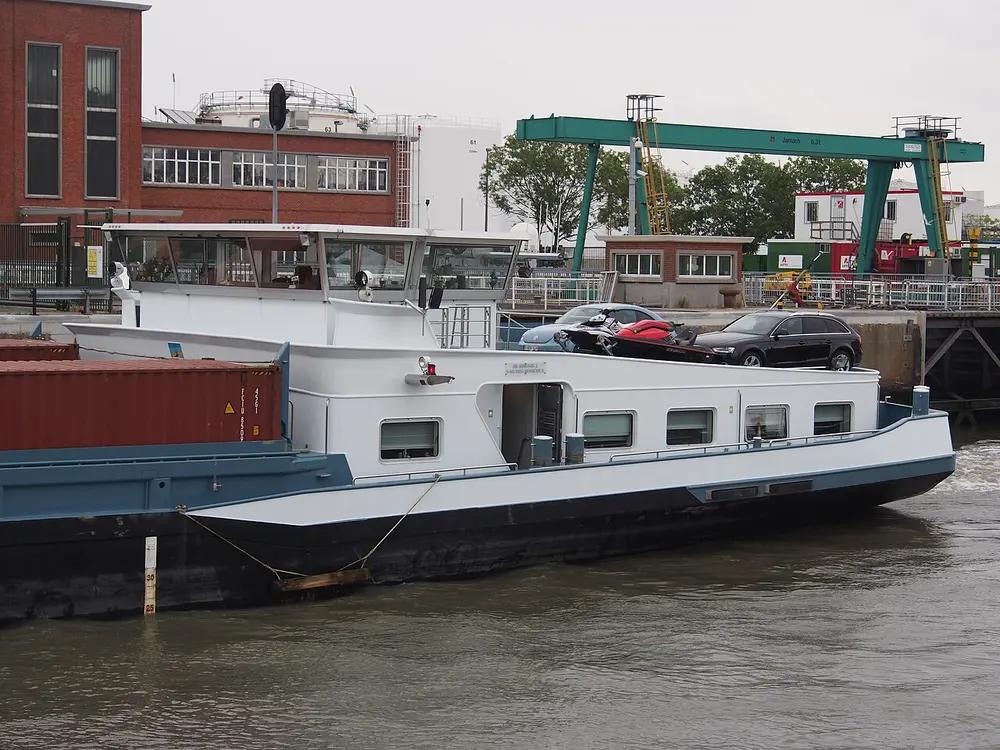
Skyline - ENI 06105024, Van Cauwelaertsluis, Port of Antwerp pic4. Photo: Alf van Beem / Wikimedia Commons, CC0.
Frequently asked questions
Answers to the questions runners ask before entering, drawn from this race's course guide and the directory's own data — the sources behind them are listed below.
When is the Antwerp Marathon?
The next edition is expected in October 2027. It is an autumn city race through the centre of Antwerp, with the harbour as its backdrop.
Is the Antwerp Marathon flat?
Yes. The course climbs about 35 metres in total, which is almost nothing over a marathon. There is no sustained ascent, and the changes of effort come from turning through city streets rather than from hills.
Is the Antwerp Marathon a good personal-best course?
The flat roads and low climbing make it a fair course for a fast time. A personal best still depends on pacing and conditions, but the route gives you very little terrain to fight against.
Where does the Antwerp Marathon run?
It runs through Antwerp, from the Scheldt quays past the Cathedral of Our Lady and through the diamond quarter. The harbour forms the backdrop for much of the route.
What are the main landmarks on the course?
The Scheldt quays, the Cathedral of Our Lady and the diamond quarter are the defining features. The harbour and its shipping give the race its port-city character.
What is the surface like?
The course uses city roads and quays throughout. There are regular turns and changes of direction, so the fastest running comes from staying relaxed through the corners rather than surging out of them.
More marathons in Europe
Sources for this page
What each source below is used for on this page, and where to check this race yourself.
- World Athletics — the label calendar and the road-race regulations. Used to check whether the race holds a World Athletics label, and its elite competition details.
- AIMS — the international course-measurement standard behind the 42.195 km distance, and the AIMS race calendar.
- The organizer's own publications — course maps, race handbooks and published results. The date, course character and climbing on this page are compiled from them and re-checked each season.
Where do these facts come from?
Dates, course type, climbing and time limits are compiled from the organizer's publications and re-checked each season; elevation is an estimate of total climbing rather than a survey figure. Always confirm race-day details with the organizer before making plans.
Last reviewed 27 October 2026