
Asunción Marathon
Asunción is one of South America's oldest cities, and its marathon feels like a local event rather than a capital-city production.
By Global Marathon Routes editorial team · Last reviewed 27 October 2026
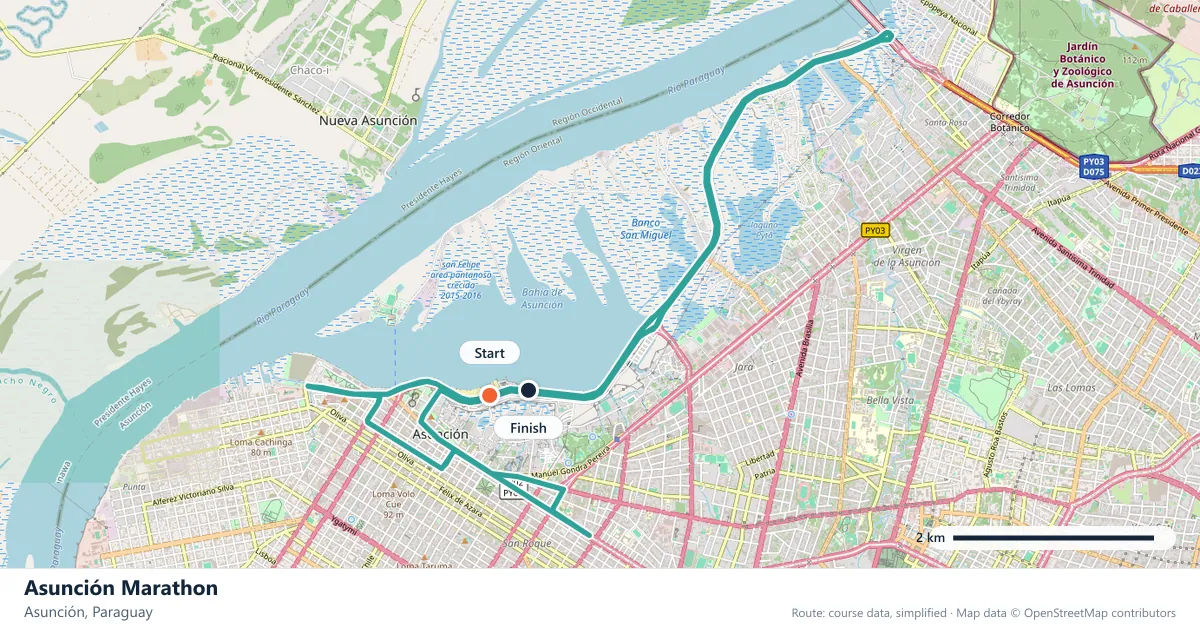
Where does the Asunción Marathon run?
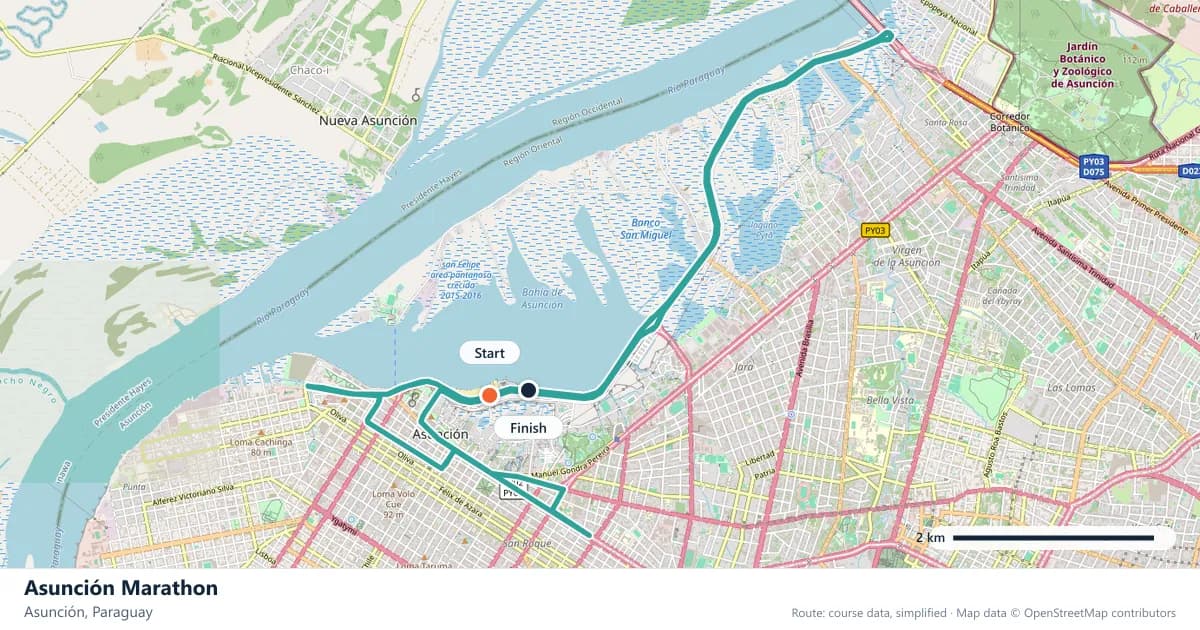
Interactive map
The trace follows the organizer's published course, simplified for the screen: the orange dot is the start, the dark dot the finish. Scroll to zoom, drag to pan.
What is the Asunción Marathon course like?
A southern-hemisphere winter marathon in Paraguay's riverside capital, running past the bay and through the city centre. Warm, flat and small enough to feel local.
- Next edition
- August 2027 (expected)
- Elevation gain
- 112 m
- Profile
- Undulating
- First run
- —
Course guide
Asunción is one of South America's oldest cities, and its marathon feels like a local event rather than a capital-city production. The race is held in the southern-hemisphere winter, passes the bay and threads through the city centre. The 2027 edition is expected in August.
The course is undulating on paper, with about 112 metres of climbing, but the rises are gentle and the overall character is flat. Warm conditions are the more likely challenge, and the race is small enough to feel intimate: a capital marathon with the atmosphere of a neighbourhood run.
That combination makes Asunción appealing for runners who dislike mass fields and manufactured spectacle. The setting is the city itself, with the river, the bay and the old centre providing the scenery, and the pace can be quick without the course ever becoming technical.
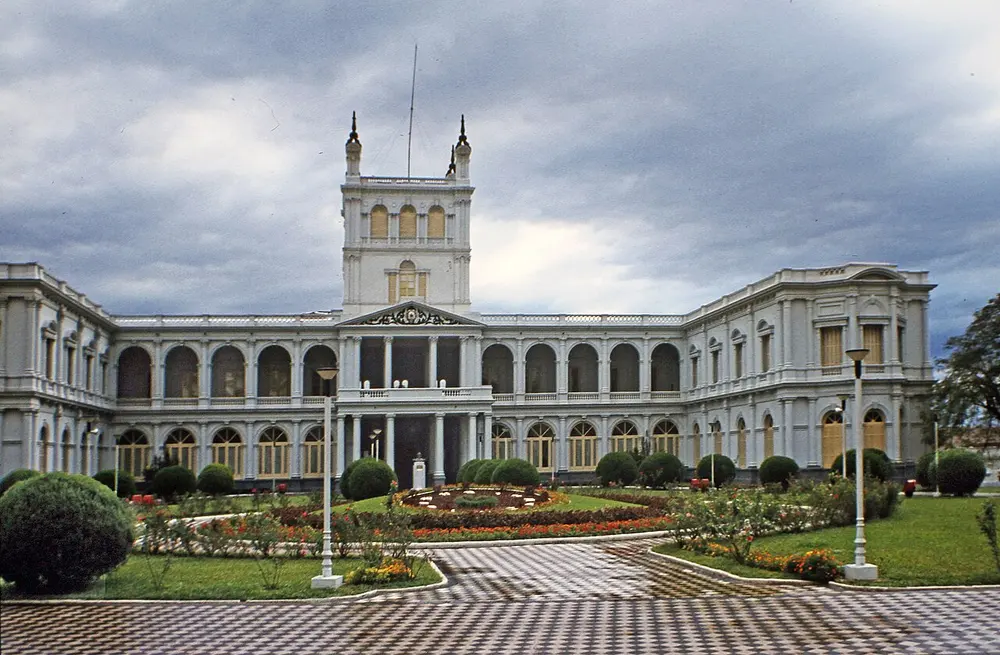
00 3819 Asunción - Paraguay (Südamerika). Photo: W. Bulach / Wikimedia Commons, CC BY-SA 4.0.
The course
The marathon runs past the bay and through the centre of Asunción, staying within the city rather than heading into open country. The bay section gives the route an open feel; the city-centre streets bring the turns and the tighter running. The character changes several times over 42.195 km without ever becoming severe.
With 112 metres of climbing, the ascents are short and shallow, and the course returns to level ground quickly. Runners should expect a rolling rhythm rather than one obstacle, and should pace by effort on the rises. The flat stretches are where the race is won or lost.
The river and the bay
Asunción sits on the eastern bank of the Río Paraguay, and the Bahía de Asunción gives the city a broad waterfront. The bay is the setting for the race's open section, with water and sky replacing the density of the centre. The riverside is also where the city shows its history, with the old port, the presidential palace and the cathedral close to the water.
The marathon uses that geography. The bay provides the long views; the centre provides the turns. The contrast is gentle rather than dramatic, which suits a race that is more about steady running than sightseeing.
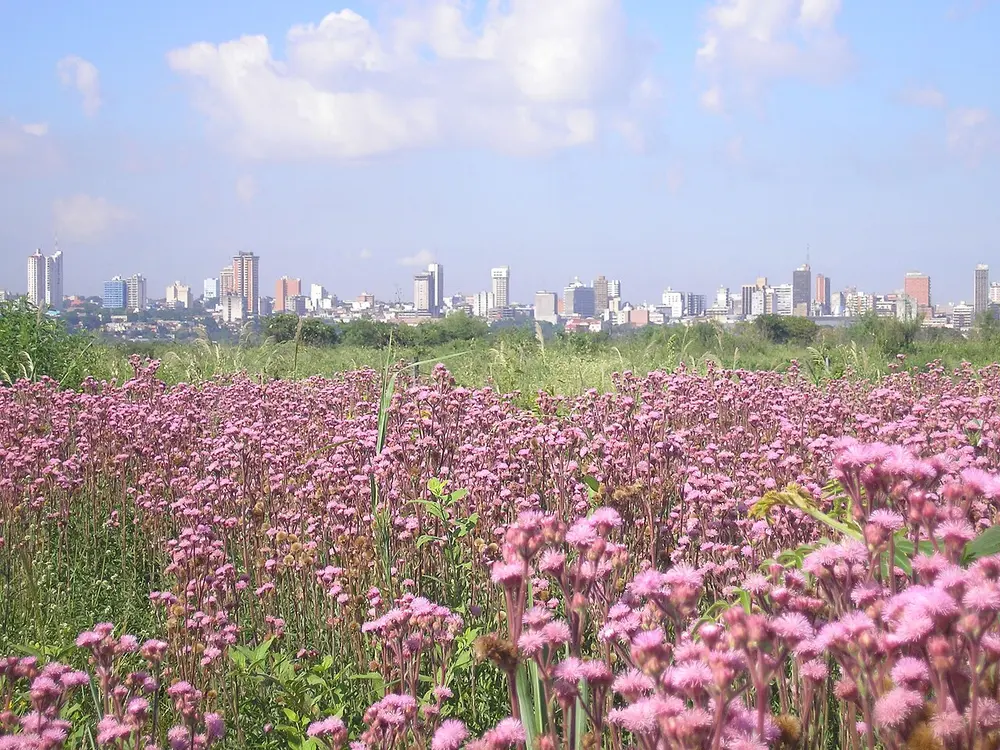
ASUNCION PARAGUAY PRIMAVERA. Photo: Felipe Antonio / Wikimedia Commons, CC BY-SA 3.0.
A winter race that stays warm
August is winter in Paraguay, but Asunción's climate is subtropical, so the season is relative. The race is a warm one, and runners should prepare for heat even though the calendar says winter. Hydration and an even effort matter more than the gentle profile suggests.
The winter date still helps. The city is spared the extremes of midsummer, and the mornings are more comfortable than they would be in December or January. The race is warm rather than cool, but the season gives it a manageable edge.
The small-race advantage
A small marathon has practical advantages. The field is less crowded, the start is calmer and the course feels like a route through a city rather than a procession of runners. Asunción's race is small enough to feel local, and that is part of its appeal.
The trade-off is atmosphere. There is less of the noise and spectacle that come with a big-city marathon, and the support is concentrated rather than constant. Runners who prefer a low-key event will see that as a benefit; those who need crowds should look elsewhere.
Pacing a gentle course
The 112 metres of climbing are spread thinly, so the course never forces a change of technique. The risk is the opposite of a hilly race: the pace can drift upward because nothing is slowing it down. A personal best is realistic here, but it needs discipline.
Run the first half at the speed you planned, use the bay section to settle and treat the city-centre turns as chances to reset rather than to surge. The course rewards even splits, and the warm conditions punish anyone who starts too quickly.
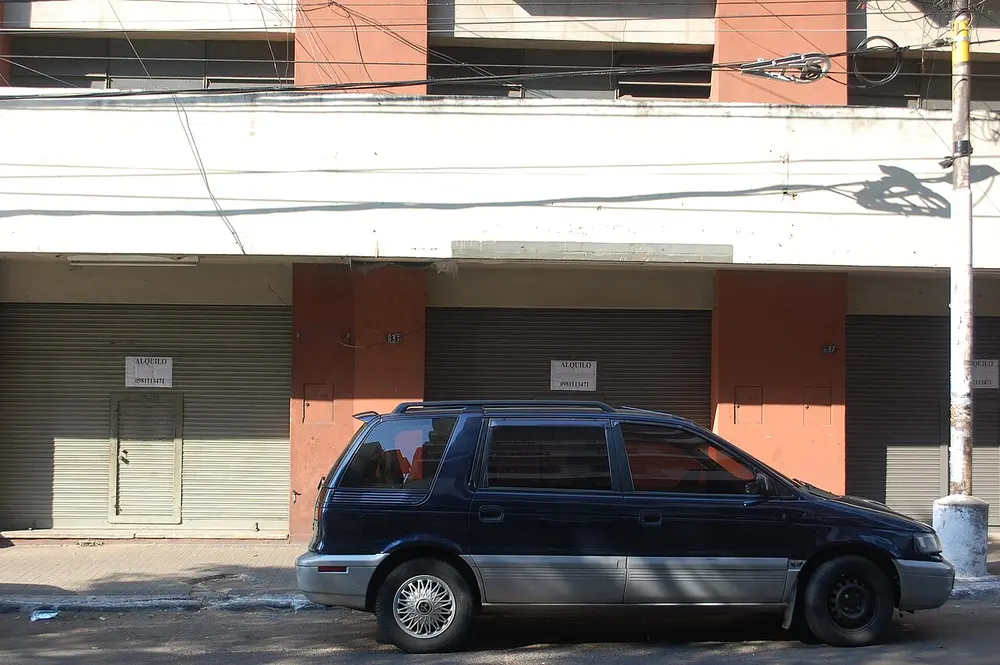
Catedral, Asuncion, Paraguay - panoramio (106). Photo: labCHA / Wikimedia Commons, CC BY 3.0.
Frequently asked questions
Answers to the questions runners ask before entering, drawn from this race's course guide and the directory's own data — the sources behind them are listed below.
When is the Asunción Marathon?
The 2027 edition is expected in August, in the southern-hemisphere winter. The exact date has not been confirmed.
Is the Asunción Marathon flat?
It is broadly flat, with about 112 metres of climbing. The profile is undulating, but the rises are short and shallow, so the course feels rolling rather than hilly.
Is the Asunción Marathon good for a personal best?
It is a personal-best course. The gentle profile and the flat stretches support fast running, provided the warm conditions are respected and the early pace is controlled.
Is the Asunción Marathon suitable for a first marathon?
The race is not specifically aimed at first-timers. The warmth is the main extra demand, and a debutant should be prepared for a hot day rather than a cool winter one.
Where is the Asunción Marathon run?
It runs in Asunción, Paraguay, past the bay and through the city centre.
Why is the race held in August?
August is winter in Paraguay, when conditions are more manageable than in midsummer. The race is still warm, but the season gives it a cooler edge than the summer months.
What is the atmosphere like?
The event is small enough to feel local, with a calmer start and a route through the city rather than a mass-field spectacle. It suits runners who prefer an intimate race.
More marathons in Americas
Sources for this page
What each source below is used for on this page, and where to check this race yourself.
- World Athletics — the label calendar and the road-race regulations. Used to check whether the race holds a World Athletics label, and its elite competition details.
- AIMS — the international course-measurement standard behind the 42.195 km distance, and the AIMS race calendar.
- The organizer's own publications — course maps, race handbooks and published results. The date, course character and climbing on this page are compiled from them and re-checked each season.
Where do these facts come from?
Dates, course type, climbing and time limits are compiled from the organizer's publications and re-checked each season; elevation is an estimate of total climbing rather than a survey figure. Always confirm race-day details with the organizer before making plans.
Last reviewed 27 October 2026