
Perth Marathon
Perth is a city built around a river, and the marathon uses that geography. The 2026 edition was held on 11 October, following the Swan River past the city and the university on a course that climbs…
By Global Marathon Routes editorial team · Last reviewed 27 October 2026
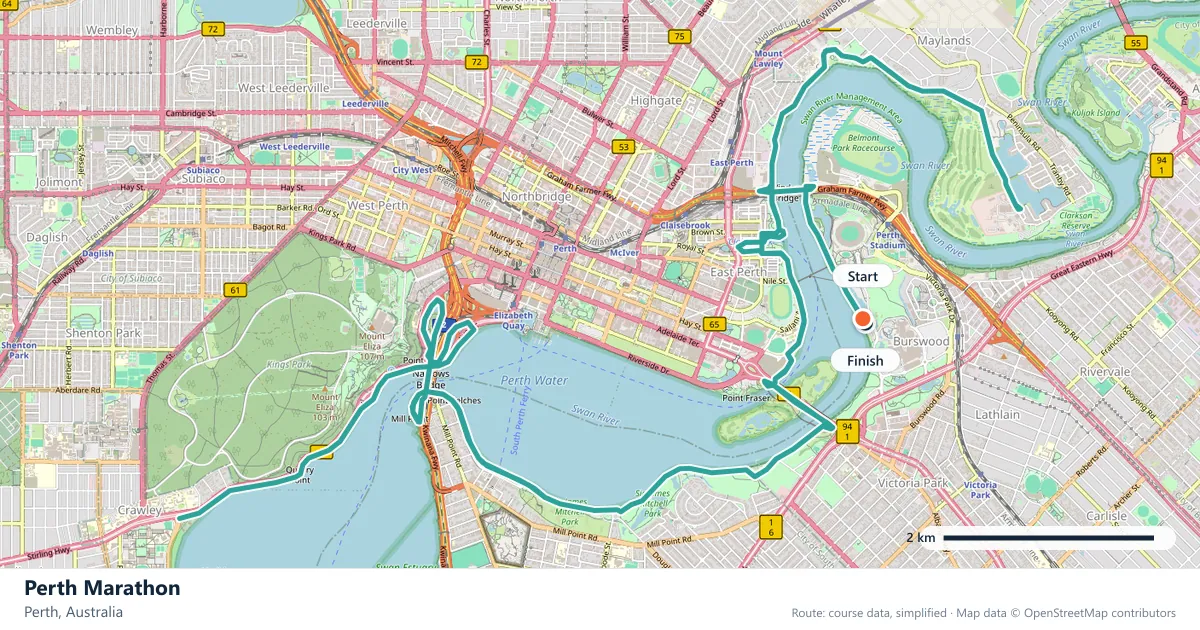
Where does the Perth Marathon run?
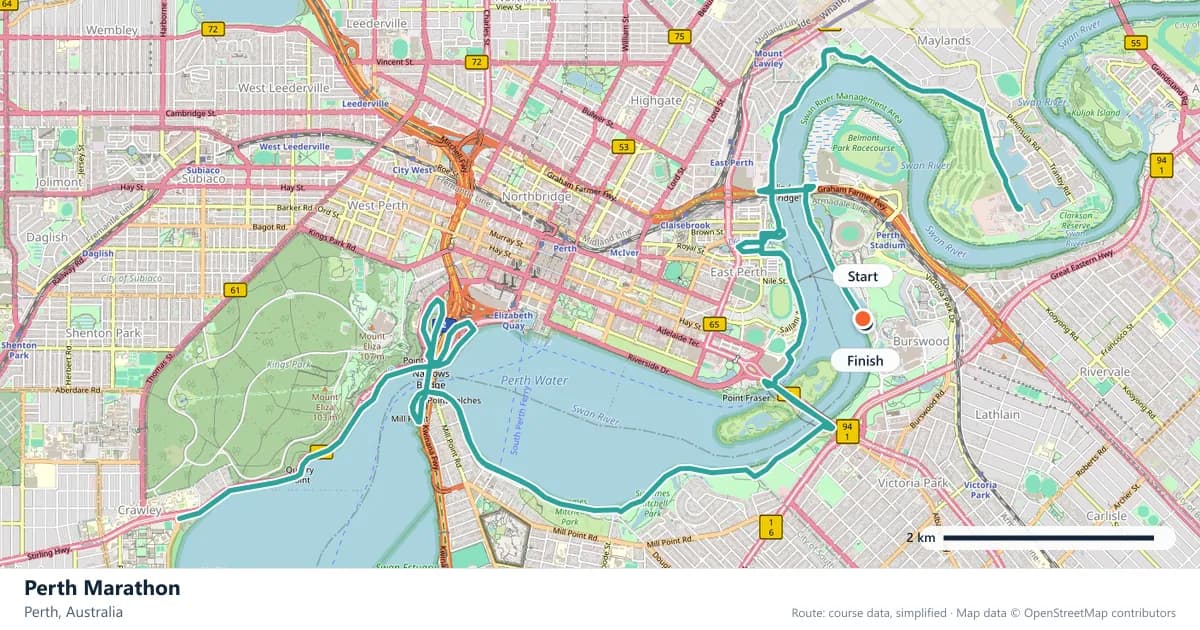
Interactive map
The trace follows the organizer's published course, simplified for the screen: the orange dot is the start, the dark dot the finish. Scroll to zoom, drag to pan.
What is the Perth Marathon course like?
A spring marathon along the Swan River in Western Australia, looping past the city and the university. Flat, fast and usually run in bright, dry conditions.
- Next edition
- October 2027 (expected)
- Elevation gain
- 83 m
- Profile
- Flat
- First run
- —
Course guide
Perth is a city built around a river, and the marathon uses that geography. The 2026 edition was held on 11 October, following the Swan River past the city and the university on a course that climbs only about 83 m. It is a spring race, usually bright and dry, and one of Australia's quicker marathon routes.
The loop format keeps the race compact and easy to follow. The river provides a constant reference point, the skyline shifts as the course moves around the water, and the flat ground makes the day more about rhythm than strength. For a personal-best attempt, the profile is close to ideal.
That does not make the race easy. A flat course with bright spring weather can lull runners into a pace that is too quick for the distance, and the exposed riverside sections offer little shelter when the sun is out. Perth rewards patience as much as speed.
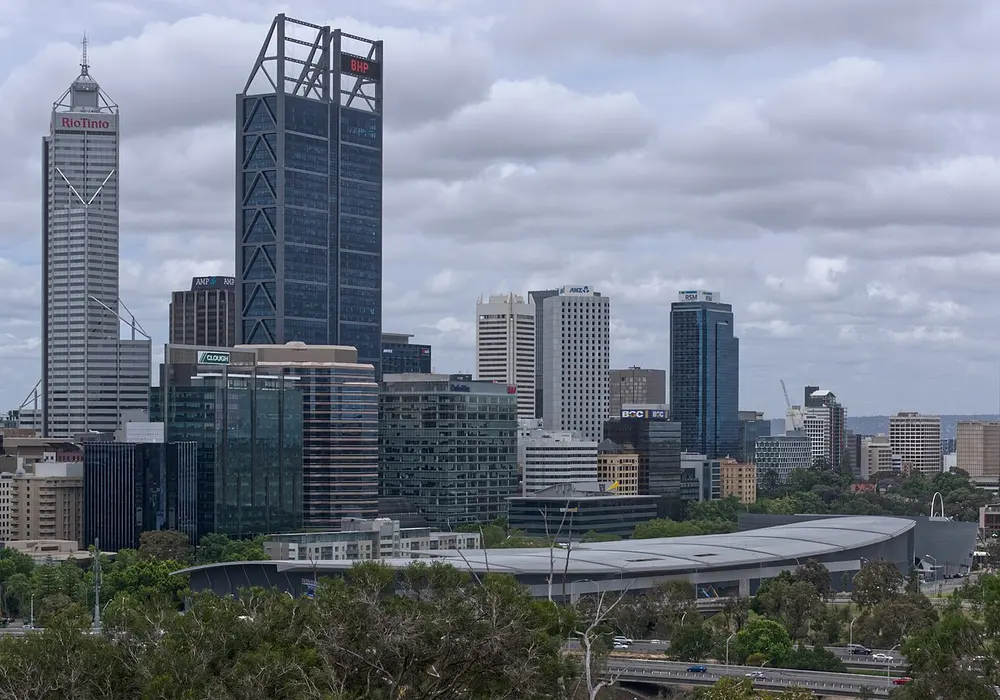
Cloudy day in Perth, WA, 2019 Oct 30 (IMGP7603a). Photo: Alexey V. Kurochkin / Wikimedia Commons, CC BY-SA 4.0.
The course
The route is a loop built around the Swan River, passing the city and the university before returning to the start area. The river provides a constant reference point, and the flat ground means the course is more about rhythm than strength.
At about 83 m of gain, the climbing is negligible. There is no sustained ascent and no point where the course forces a change of effort. The loop format keeps the field together for longer, and the flat profile makes it easy to hold a steady pace once the early congestion clears.
The course stays close to the water for much of the way, with the city skyline visible across the river and the university grounds forming one of the landmarks on the route. It is an urban marathon, but the river gives it a sense of space that a city-centre loop would lack.
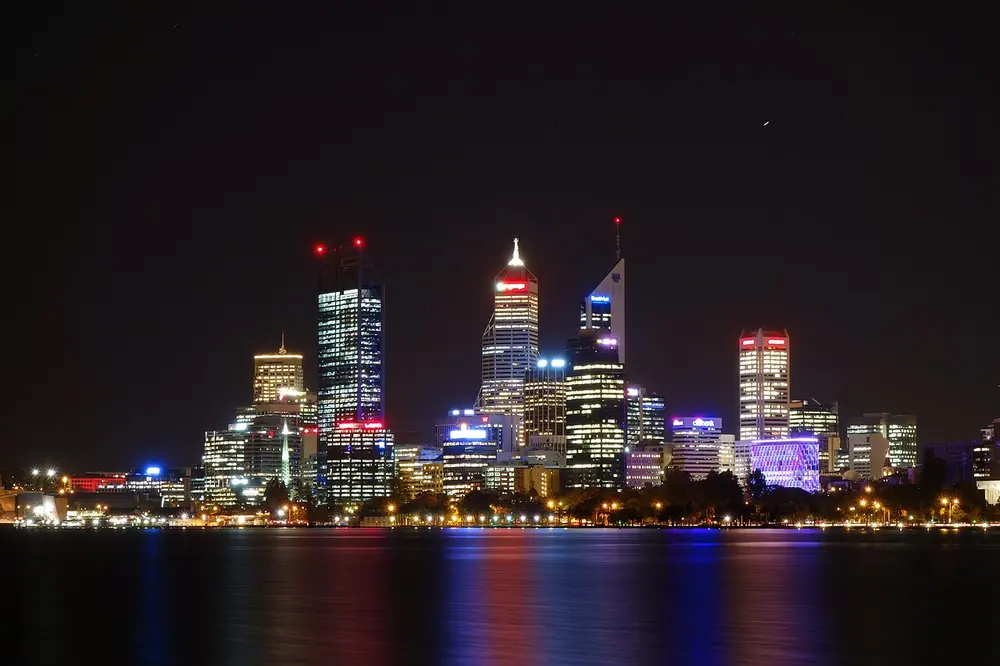
Perth Skyline 2012. Photo: Yourusernamewillbepublic2 / Wikimedia Commons, CC0.
The Swan River loop
The Swan River is the organising feature of the race. It winds through Perth, widens near the city and provides the course with a natural circuit. Runners cross it, run beside it and see it from different angles as the marathon progresses.
The river also shapes the race's atmosphere. The waterfront is open and scenic, with the skyline on one side and the water on the other, and the course feels less like a city marathon than a run through a large waterside park. That is part of the appeal for runners who want a fast course without a sterile industrial loop.
The loop has practical advantages. It is easy to follow, the field stays relatively contained, and the return to the start area is straightforward. The disadvantage is repetition: the second half passes through familiar ground, and the scenery that distracted you early can become background later.
A bright, dry October day
October is spring in Perth, and the weather is usually bright and dry. The mornings can be cool, the sky is often clear, and the sun becomes stronger as the race goes on. It is close to ideal running weather, provided the runner respects the exposure.
The dry air is a feature of the region. Perth has a Mediterranean climate, with hot, dry summers and mild, wet winters, and October sits in the transition between the seasons. Race morning can feel fresh, but the sun on the open riverside sections can raise the effort in the second half.
Runners should plan for sun protection and fluid intake even though the temperature is not extreme. The course's flatness makes it easy to forget that the body is working hard, and the bright conditions can add to the load without the obvious cue of heat.
Flat and fast
The 83 m of climbing is a negligible total for a marathon, and the flat loop gives a well-prepared runner a fair chance to use it.
Fast running on a flat course depends on even pacing. There are no hills to force a natural adjustment, so the runner has to supply the discipline. Going out too quickly is the main risk, especially with fresh legs and a scenic river to distract you.
The reward is a course where a well-paced runner can hold form to the finish. The loop returns to the start area, the ground stays flat, and the last kilometres are as runnable as the first. Perth is a race where the clock is decided by patience.
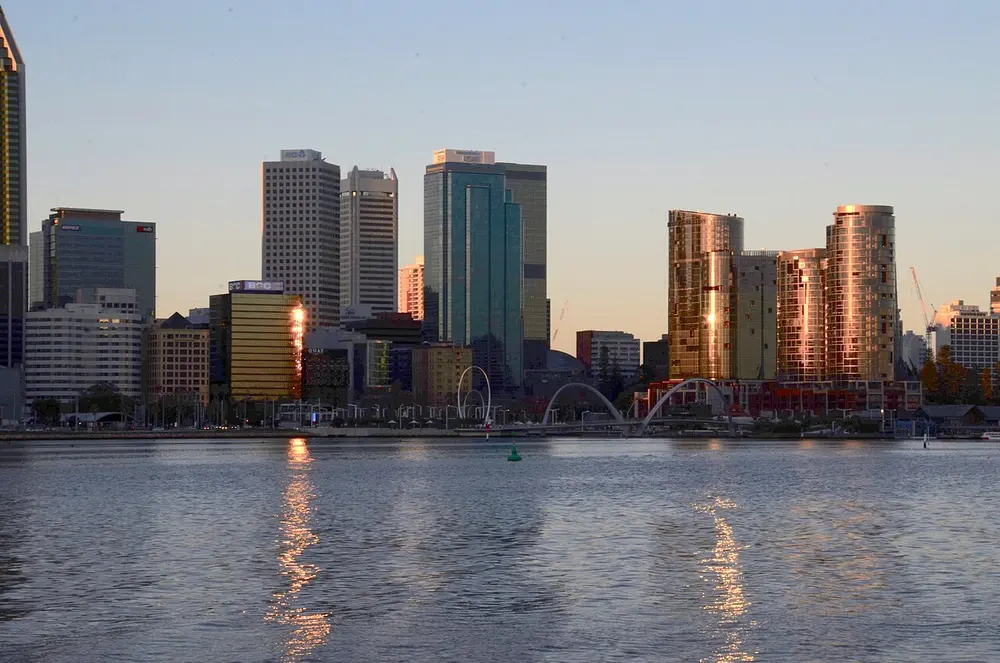
Central Perth skyline from south perth at sunset. Photo: JarrahTree / Wikimedia Commons, CC BY 2.5 au.
Protecting an even pace
- The spring sun. The race is usually bright and dry, so sun protection and fluid intake matter even though the course is flat.
- Fast early pace. A flat loop with fresh legs invites a quick start; the second half will reward patience.
- The river loop. The course is compact and easy to follow, but the repeated scenery can make the middle miles blur.
- The flat-course trap. With so little climbing, the race is a test of even pacing and fuelling rather than strength.
Frequently asked questions
Answers to the questions runners ask before entering, drawn from this race's course guide and the directory's own data — the sources behind them are listed below.
When was the Perth Marathon in 2026?
The 2026 edition was held on 11 October 2026.
Is the Perth Marathon a flat course?
Yes. The course climbs only about 83 m over 42.195 km, with no sustained ascent. The loop along the Swan River is one of the flattest marathon routes in Australia.
Is the Perth Marathon good for a personal best?
The race is suited to fast times. The flat profile, the compact loop and the usually bright, dry spring weather all support a fast, even-paced race.
Is the Perth Marathon a good first marathon?
The race is not specifically a first-marathon course, although the loop is straightforward. Its fast reputation means most runners arrive with a time in mind.
Where does the Perth Marathon run?
It runs in Perth, Western Australia, on a loop that follows the Swan River past the city and the university. The course stays close to the river for much of the way.
What is the weather like at the Perth Marathon?
October is spring in Perth, and the race is usually bright and dry. Mornings can be cool, but the sun strengthens through the morning, so plan for exposure as well as comfortable running conditions.
More marathons in Australia
More marathons in Oceania
Sources for this page
What each source below is used for on this page, and where to check this race yourself.
- World Athletics — the label calendar and the road-race regulations. Used to check whether the race holds a World Athletics label, and its elite competition details.
- AIMS — the international course-measurement standard behind the 42.195 km distance, and the AIMS race calendar.
- The organizer's own publications — course maps, race handbooks and published results. The date, course character and climbing on this page are compiled from them and re-checked each season.
Where do these facts come from?
Dates, course type, climbing and time limits are compiled from the organizer's publications and re-checked each season; elevation is an estimate of total climbing rather than a survey figure. Always confirm race-day details with the organizer before making plans.
Last reviewed 27 October 2026