
Wellington Marathon
Wellington is a city that takes its weather seriously, and the marathon fits the place: mid-winter, beside the harbour, out and back on a course that is flat and sheltered but rarely warm.
By Global Marathon Routes editorial team · Last reviewed 27 October 2026
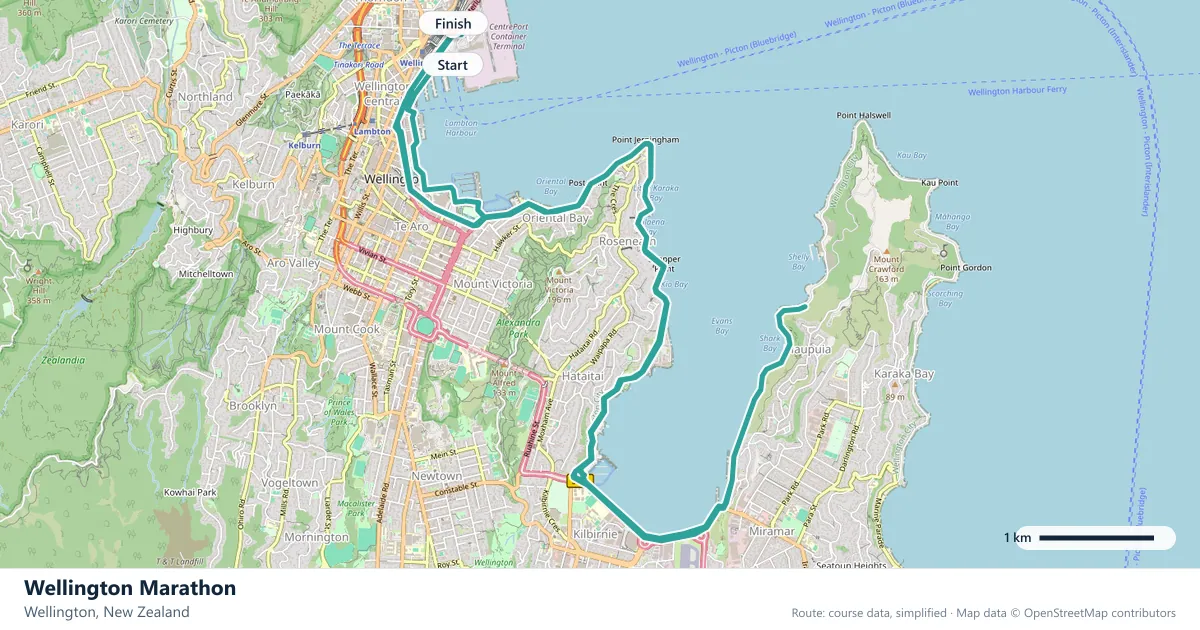
Where does the Wellington Marathon run?
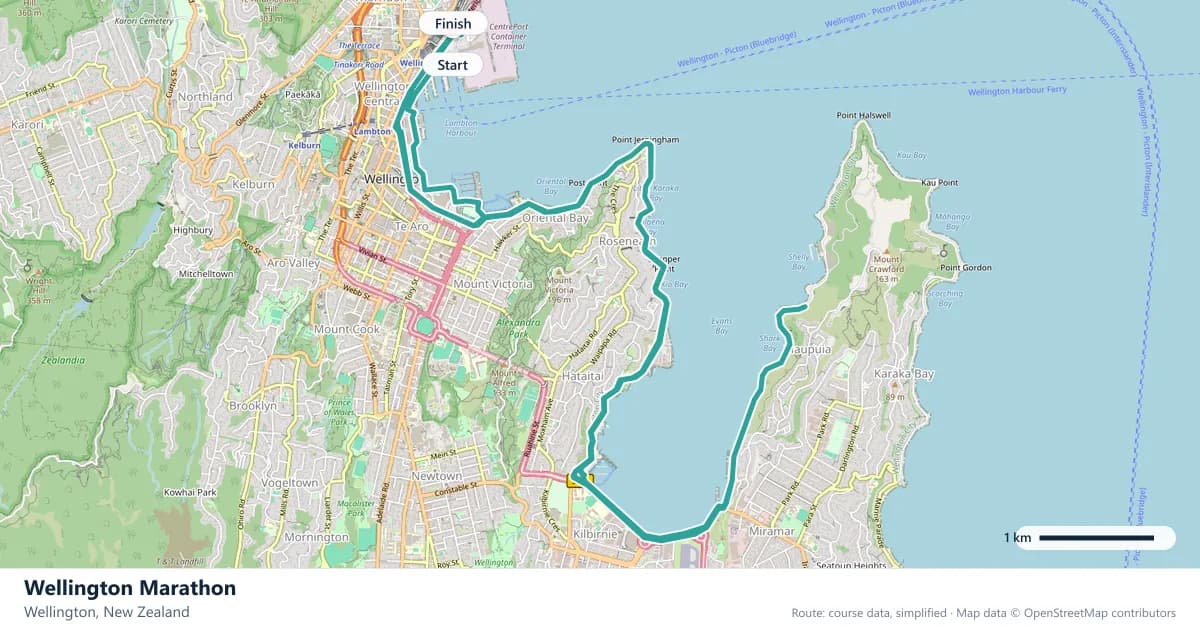
Interactive map
The trace follows the organizer's published course, simplified for the screen: the orange dot is the start, the dark dot the finish. Scroll to zoom, drag to pan.
What is the Wellington Marathon course like?
A mid-winter marathon along Wellington's harbour waterfront, out and back on a flat, sheltered course. Small, quick and usually cold and windy.
- Next edition
- June 2027 (expected)
- Elevation gain
- 39 m
- Profile
- Flat
- First run
- —
Course guide
Wellington is a city that takes its weather seriously, and the marathon fits the place: mid-winter, beside the harbour, out and back on a course that is flat and sheltered but rarely warm. The date is June 2027 (expected), and the race is small, quick and honest about the season.
The course climbs only about 39 m, so the profile is about as flat as a marathon gets. That makes it a genuine personal-best opportunity, provided the runner can handle the cold and the wind that give Wellington its reputation. The harbour is the setting, the waterfront is the route, and the city is compact enough that the whole day feels contained.
This is not a mass-participation spectacle in the manner of a major. It is a smaller, faster race with a straightforward course and a strong local character. Runners who want a quiet, efficient marathon in a city that knows how to deal with wind will find a lot to like.
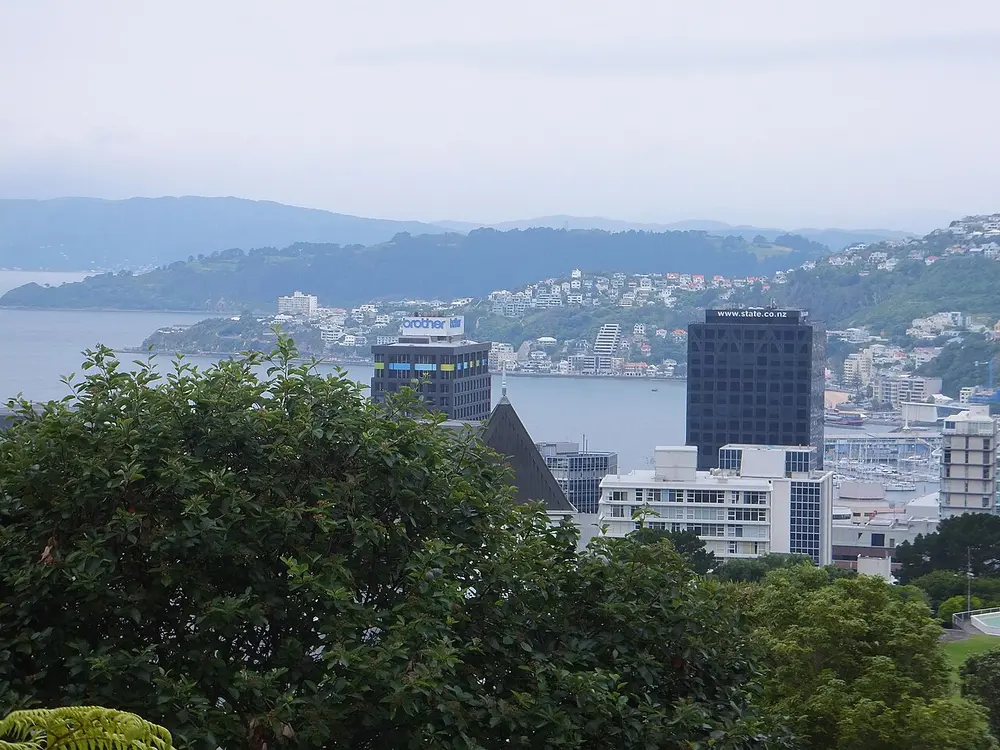
Wellington Skyline from hill. Photo: Gruyere / Wikimedia Commons, CC BY-SA 3.0.
The course
The marathon follows the harbour waterfront, heading out from the city and returning along the same stretch. The out-and-back format keeps the route simple, and the waterfront setting gives runners a clear view of the harbour for most of the race.
The profile is flat, with about 39 m of gain, and the course is described as sheltered despite Wellington's reputation for wind. That combination — flat ground, a compact route and a small field — makes it a course for steady pacing rather than tactical racing.
The course stays close to the harbour, with the water on one side and the city on the other. The out-and-back means runners see the rest of the field, which adds atmosphere on a winter morning, and the return leg is on familiar ground.
The harbour waterfront
Wellington's waterfront is the social and scenic heart of the city, a long strip of paths, parks and public space along the harbour. The marathon uses it as the spine of the course, so the race is never far from the water.
The waterfront is also the reason the course is sheltered. The city sits around the harbour, and the route is protected from the worst of the wind by the terrain and the buildings. That does not make it calm, but it makes the race more runnable than the city's reputation might suggest.
The harbour gives the course its views. The water, the hills and the city skyline are constant companions, and the route is scenic without being distracting. On a cold winter morning, the waterfront can be beautiful in a stark, pared-back way.

Wellington City Night. Photo: Donovan Govan. / Wikimedia Commons, CC BY-SA 3.0.
A June start
June is mid-winter in Wellington, and the start is the hardest part of the day. The wait before the race can be cold, especially near the water, and runners should plan to stay warm until the last possible moment.
Once the race begins, the cold becomes manageable. The body warms up quickly, and the flat course allows a steady effort that generates heat. Runners should still be prepared for wind and rain, which can arrive at any point and make the waterfront feel considerably colder.
The winter date is part of the race's character. It is not a warm-weather destination marathon; it is a city race in a season that rewards preparation. Runners who dress in layers and have a plan for the start will be comfortable; those who treat it like a summer race will not.
The out-and-back
The out-and-back format is simple and honest. Runners head out along the waterfront, turn and come back, with the same views in reverse. There is no complex navigation and no chance of getting lost, which makes the race easy to manage.
The format also has a psychological cost. The return leg retraces the first half, and the familiar scenery can feel repetitive when the legs are tired. Runners who break the race into sections, using the turn and the landmarks as markers, tend to cope better.
The out-and-back is also a social experience. Because the field is small and the route is shared, runners see each other coming and going, and the encouragement is part of the atmosphere. On a winter morning, that company matters.

Parliament House, Wellington, New Zealand (2010). Photo: Pierre André Leclercq / Wikimedia Commons, CC BY-SA 4.0.
Cold-weather pacing
- The cold. The race is held in mid-winter, so the wait before the start can be the hardest part of the day.
- Wellington wind. The city is usually windy, even if the waterfront course is sheltered. Prepare for moving air.
- The out-and-back. The return leg is on familiar ground, which helps navigation but can feel repetitive when the legs are tired.
- Flat-course pacing. With so little climbing, the race rewards even splits and penalises a fast first half.
- The small field. There is less company in the middle of the pack, so the race depends more on your own rhythm.
Frequently asked questions
Answers to the questions runners ask before entering, drawn from this race's course guide and the directory's own data — the sources behind them are listed below.
When is the Wellington Marathon in 2027?
The 2027 edition is expected in June. The exact date is not yet confirmed, so check the organiser's calendar before booking.
Is the Wellington Marathon a flat course?
Yes. The course climbs only about 39 m in total, and the waterfront route is flat and sheltered. It is one of the flattest marathons in New Zealand.
Is the Wellington Marathon good for a personal best?
The race is suited to fast times. The flat profile, the compact out-and-back route and the small field all support an even pace, though the cold and wind need to be managed.
Is the Wellington Marathon a good first marathon?
The race is not specifically a first-marathon course, although the flat out-and-back is simple. The cold and the small field make it a different experience from a big-city debut.
Where does the Wellington Marathon run?
It runs along Wellington's harbour waterfront on an out-and-back course. The route stays close to the water, with the city on one side and the harbour on the other.
What is the weather like at the Wellington Marathon?
June is mid-winter, so the race is usually cold and can be windy. The waterfront course is sheltered compared with the rest of the city, but runners should still prepare for wind and rain.
More marathons in New Zealand
More marathons in Oceania
Sources for this page
What each source below is used for on this page, and where to check this race yourself.
- World Athletics — the label calendar and the road-race regulations. Used to check whether the race holds a World Athletics label, and its elite competition details.
- AIMS — the international course-measurement standard behind the 42.195 km distance, and the AIMS race calendar.
- The organizer's own publications — course maps, race handbooks and published results. The date, course character and climbing on this page are compiled from them and re-checked each season.
Where do these facts come from?
Dates, course type, climbing and time limits are compiled from the organizer's publications and re-checked each season; elevation is an estimate of total climbing rather than a survey figure. Always confirm race-day details with the organizer before making plans.
Last reviewed 27 October 2026