
Auckland Marathon
Auckland's marathon is defined by a crossing. The Harbour Bridge carries the race over the water, with the city on one side and the Hauraki Gulf on the other, and for a few minutes the runners have…
By Global Marathon Routes editorial team · Last reviewed 27 October 2026
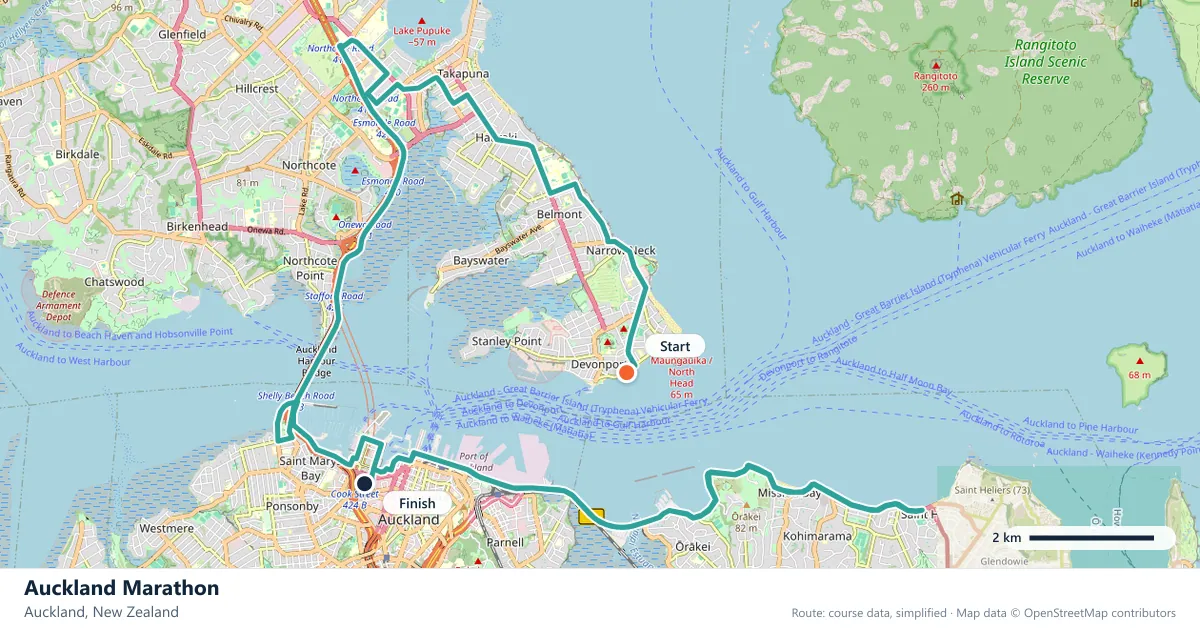
Where does the Auckland Marathon run?
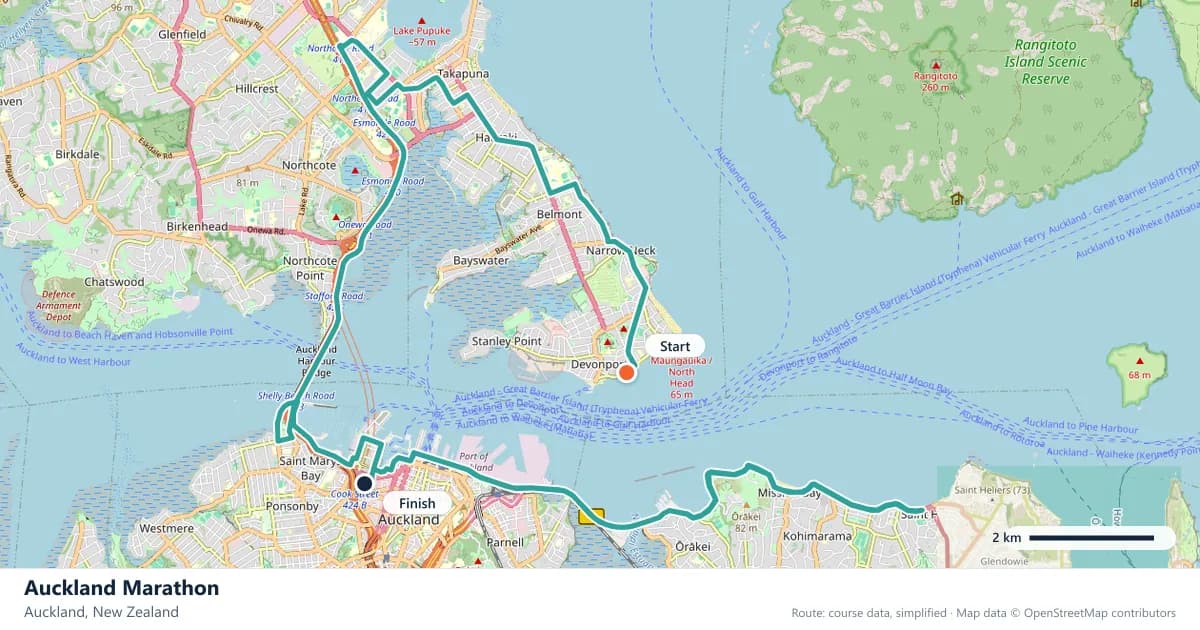
Interactive map
The trace follows the organizer's published course, simplified for the screen: the orange dot is the start, the dark dot the finish. Scroll to zoom, drag to pan.
What is the Auckland Marathon course like?
Crosses the Auckland Harbour Bridge and works through the city's volcanic hills, with the Hauraki Gulf alongside for much of the way. Rolling and exposed to the weather.
- Next edition
- 01 November 2026
- Elevation gain
- 353 m
- Profile
- Hilly
- First run
- —
Course guide
Auckland's marathon is defined by a crossing. The Harbour Bridge carries the race over the water, with the city on one side and the Hauraki Gulf on the other, and for a few minutes the runners have one of the great urban views of the southern hemisphere. The bridge is the moment most runners remember.
The 2026 edition is set for 1 November 2026. The course is hilly, with about 353 m of climbing, and it works through the city's volcanic hills after the bridge. The gulf stays alongside for much of the way, and the exposure to the weather is part of the race. This is a rolling, coastal marathon rather than a flat city loop.
It is not a course that promises fast times. The hills, the wind and the possibility of rain all make the day less predictable than a sheltered inland race. What it offers instead is a route that shows off Auckland's geography at close range, with the harbour as the constant.
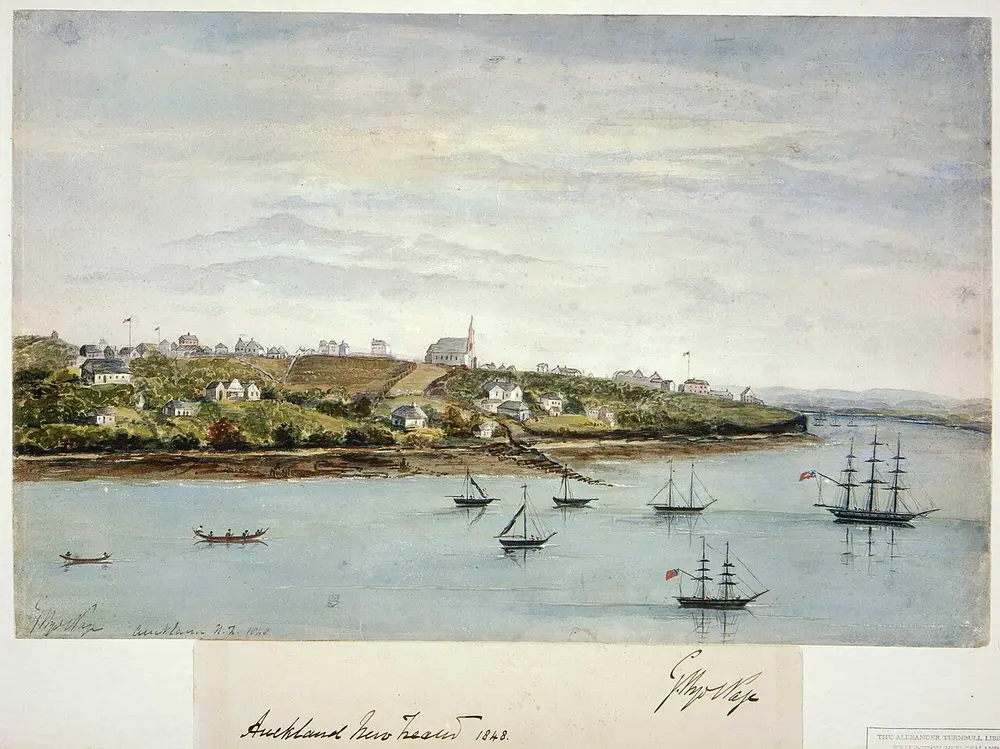
Auckland, New Zealand. 1848. Photo: Page, George Hyde / Wikimedia Commons, Public domain.
The course
The Harbour Bridge is the signature of the race. Crossing it puts the city and the gulf on display at once, and it gives the first part of the marathon a clear landmark to aim for. Beyond the bridge, the route works through Auckland's volcanic hills, which are short and frequent rather than long and severe.
The total climbing is about 353 m. That is not a mountain course, but it is enough to make the legs work, and the exposure to the weather adds another variable. With the gulf alongside for much of the way, wind and rain can arrive without much warning, so the race is as much a test of conditions as of fitness.
The course stays within Auckland, moving between the harbour, the hills and the city's streets. It is an urban marathon with a coastal character, and the changes of scene are part of what makes it memorable.
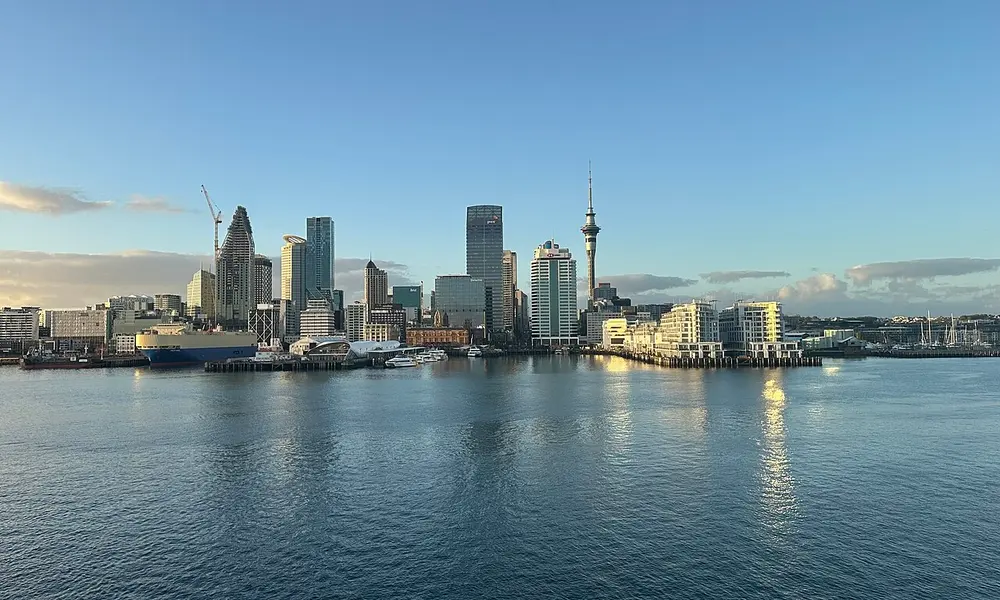
Auckland, New Zealand 2025. Photo: Richard N Horne / Wikimedia Commons, CC BY 4.0.
Crossing the harbour
The Harbour Bridge is not just a landmark; it is a change of perspective. The race leaves the city behind, climbs onto the bridge and suddenly has water on both sides. The gulf opens up, the skyline recedes, and the marathon feels like a crossing rather than a loop.
The bridge is also exposed. Wind can be strong on the crossing, and runners should enjoy the view without losing their rhythm. They should also be prepared for the conditions to feel different on the bridge than on the streets before it.
The crossing sets up the rest of the race. After the bridge, the course returns to land and works through the hills, and the memory of the harbour carries the runners through the tougher sections. It is the image that stays with you when the legs are tired.
The volcanic hills
Auckland is built on a volcanic field, and the city's hills are a defining part of its geography. The marathon uses them, so the course rolls through short, frequent climbs rather than one long ascent. The total is about 353 m, but the effect is cumulative.
The hills are not severe enough to require walking, but they are frequent enough to make the race feel harder than the elevation figure suggests. Each rise interrupts the rhythm, and the descents are not always long enough to recover. Runners who have trained on rolling ground will recognise the pattern.
The volcanic hills also give the course its views. From the higher ground, the harbour and the city open up, and the gulf provides a horizon that changes with the route. The scenery is a reward, but it does not reduce the effort.
Weather off the gulf
The Hauraki Gulf exposes the course to the weather. Wind can arrive from the water, rain can move through quickly, and the conditions can change between the city and the coast. Runners should prepare for a range of weather rather than a single forecast.
The exposure is most noticeable on the bridge and the coastal sections, where there is little shelter. A headwind can make a flat stretch feel like a climb, and rain can make the road slippery. The race rewards runners who dress sensibly and stay relaxed when the weather turns.
November is late spring in Auckland, so the day is usually mild, but the gulf can produce wind and showers at any time. The weather is part of the challenge, not an interruption to it.
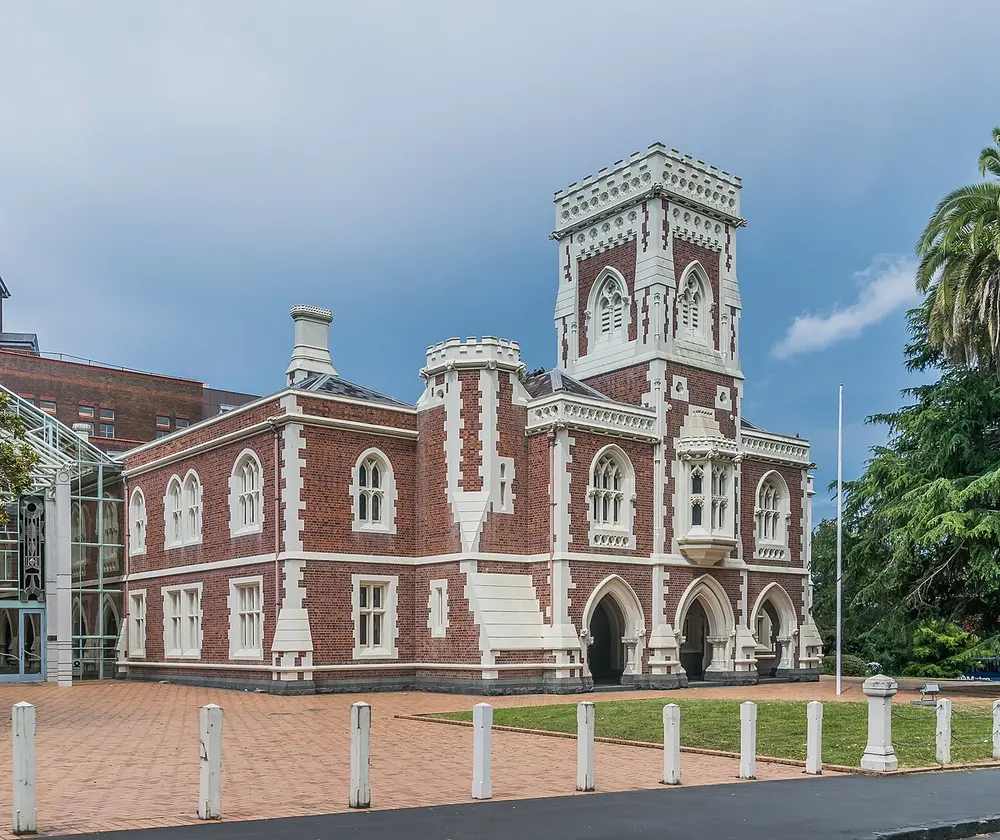
Auckland High Court. Photo: Krzysztof Golik / Wikimedia Commons, CC BY-SA 4.0.
Reading the conditions
- Weather exposure. The course is exposed, and conditions can change through the morning. Plan for wind and rain as well as sun.
- The Harbour Bridge. The crossing is the highlight of the route and a rare chance to run over a major harbour bridge. Enjoy it without racing it.
- Repeated climbs. The volcanic hills come in short rises, and together they add up to about 353 m of climbing.
- Early pacing. The excitement of the bridge can push the pace in the first hour. Settle into your own rhythm before the hills arrive.
- The gulf wind. Coastal sections can be windy, especially on the bridge and the open waterfront stretches.
Frequently asked questions
Answers to the questions runners ask before entering, drawn from this race's course guide and the directory's own data — the sources behind them are listed below.
When is the Auckland Marathon in 2026?
The 2026 edition is set for 1 November.
Is the Auckland Marathon a flat course?
No. The course climbs about 353 m, with short, frequent hills through Auckland's volcanic field. The Harbour Bridge and the coastal sections add exposure to the weather.
Is the Auckland Marathon a good personal-best race?
The climbing and the exposure to weather both make fast times harder. The course is better suited to runners who value the route and the harbour crossing than to a pure time trial.
Is the Auckland Marathon a good first marathon?
It is a demanding introduction. The distance is standard and the route is well defined, but the hills and the weather make it tougher than a flat city race. A first-timer should train on rolling ground.
Where does the Auckland Marathon run?
It crosses the Harbour Bridge and works through the city's volcanic hills, with the Hauraki Gulf alongside for much of the way. The route stays within Auckland for the full distance.
More marathons in New Zealand
More marathons in Oceania
Sources for this page
What each source below is used for on this page, and where to check this race yourself.
- World Athletics — the label calendar and the road-race regulations. Used to check whether the race holds a World Athletics label, and its elite competition details.
- AIMS — the international course-measurement standard behind the 42.195 km distance, and the AIMS race calendar.
- The organizer's own publications — course maps, race handbooks and published results. The date, course character and climbing on this page are compiled from them and re-checked each season.
Where do these facts come from?
Dates, course type, climbing and time limits are compiled from the organizer's publications and re-checked each season; elevation is an estimate of total climbing rather than a survey figure. Always confirm race-day details with the organizer before making plans.
Last reviewed 27 October 2026