
Queenstown Marathon
Queenstown's marathon is a race through a landscape rather than a city. Lake Wakatipu lies below the course, the Remarkables rise above it, and the route uses trails and roads through the Southern…
By Global Marathon Routes editorial team · Last reviewed 27 October 2026
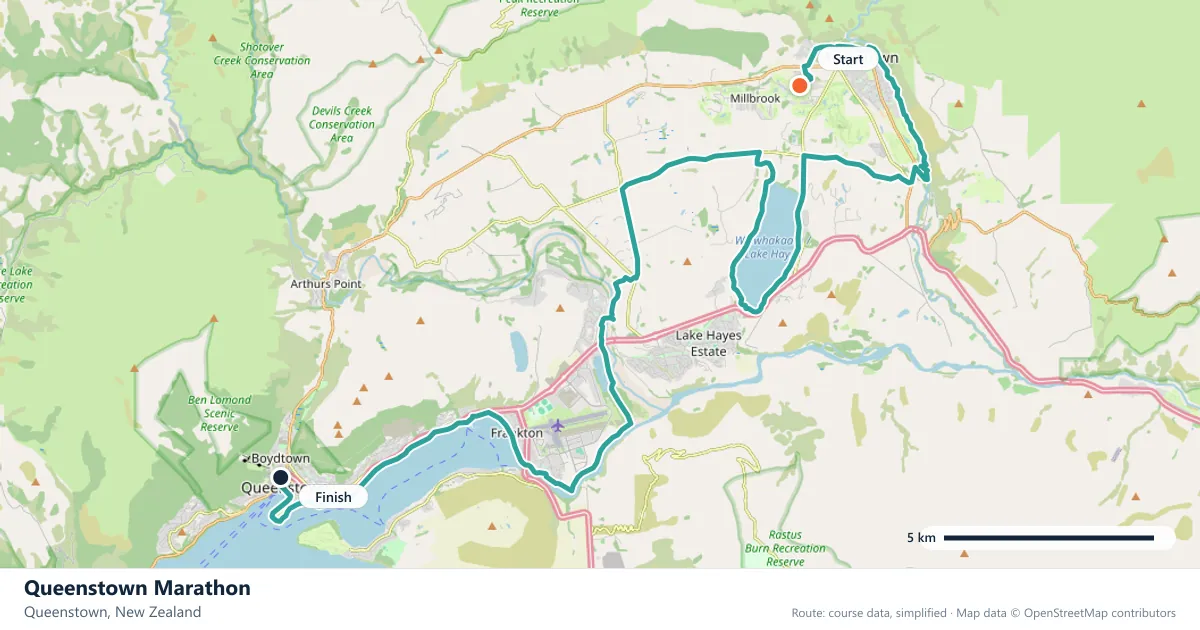
Where does the Queenstown Marathon run?
Interactive map
The trace follows the organizer's published course, simplified for the screen: the orange dot is the start, the dark dot the finish. Scroll to zoom, drag to pan.
What is the Queenstown Marathon course like?
A November marathon through the Southern Alps, following the trails and roads around Lake Wakatipu with the Remarkables above. Scenic, rolling and weather-dependent.
- Next edition
- 14 November 2026
- Elevation gain
- 322 m
- Profile
- Hilly
- First run
- —
Course guide
Queenstown's marathon is a race through a landscape rather than a city. Lake Wakatipu lies below the course, the Remarkables rise above it, and the route uses trails and roads through the Southern Alps. The scenery is the reason people travel here; the rolling terrain and the weather are what they remember.
The 2026 edition is set for 14 November 2026. The course is hilly, with about 322 m of climbing, and it moves with the land around the lake rather than following a grid. November is late spring in the southern hemisphere, but mountain weather can still change quickly, and the race is genuinely weather-dependent.
That makes it a different proposition from a flat city marathon. There is no stadium finish and no long waterfront promenade; there is a mountain town, a lake and a course that asks you to run with the terrain. Runners who come for the scenery get it, along with a real test.
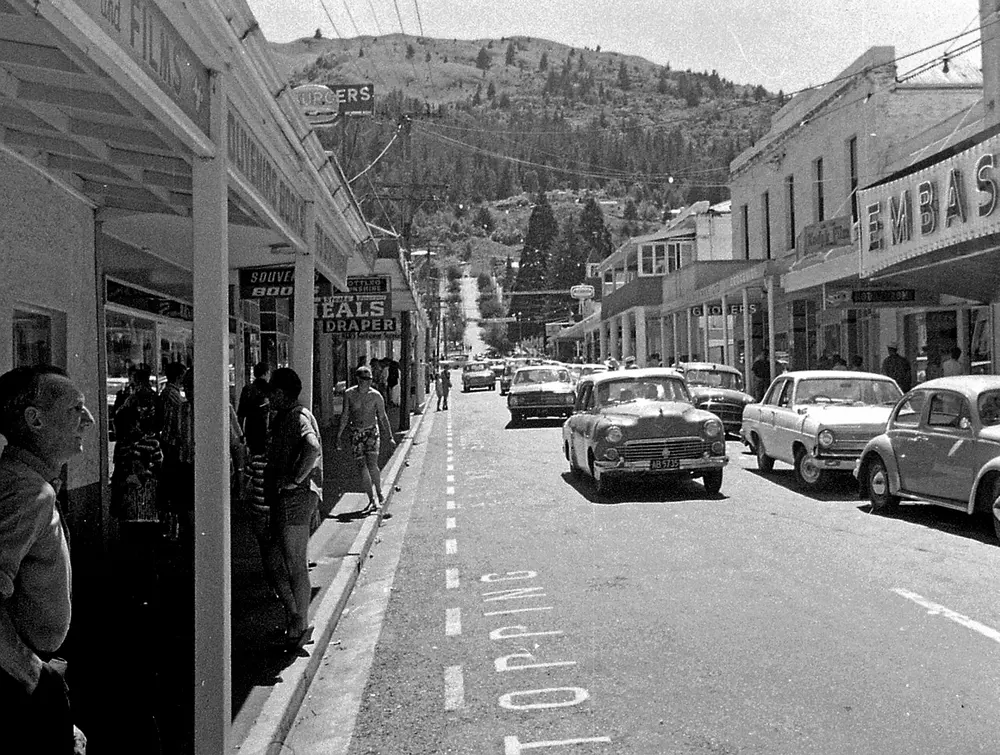
129 Queenstown New Zealand 1967. Photo: wilford peloquin / Wikimedia Commons, CC BY 2.0.
The course
The route follows trails and roads around Lake Wakatipu, with the Remarkables providing the skyline. It is a mountain-town marathon rather than a city race: the surroundings are open, the views are long, and the course moves with the land rather than around a grid.
The climbing totals about 322 m, which is enough to earn the hilly description. The rises are spread around the lake, and the mixed surfaces mean the course demands more attention than a pure road race. Trail sections can be uneven and slower underfoot, especially when the ground is wet.
The course does not have a single defining climb. Instead, it rolls through the landscape, with the lake and the mountains providing the landmarks. Runners who expect a fast road course should adjust their expectations; this is a scenic marathon with a real profile.
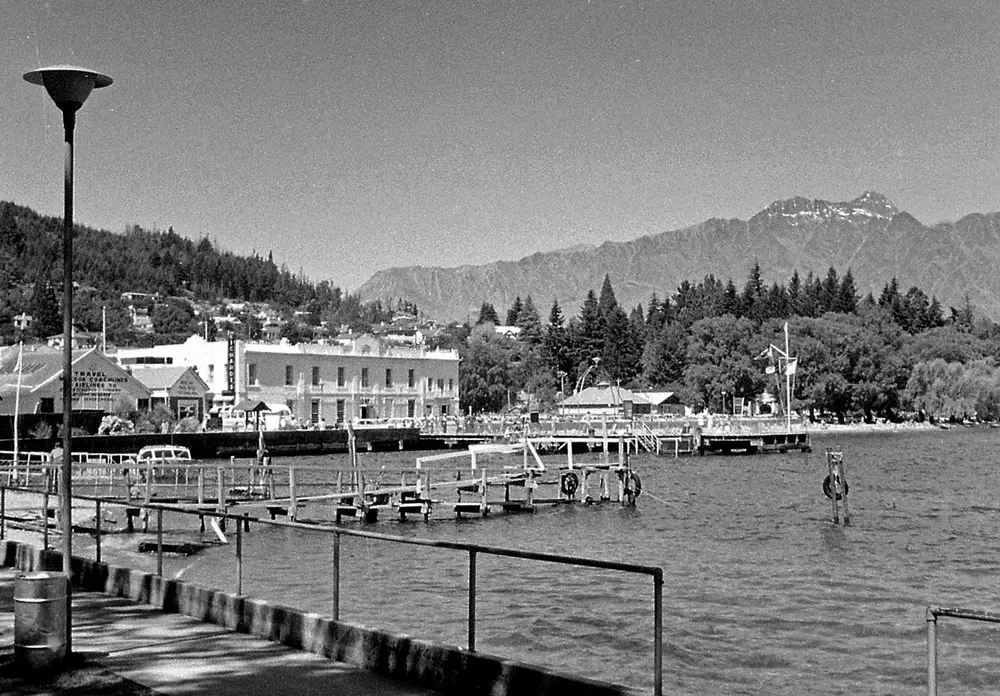
132 Queenstown New Zealand 1967. Photo: wilford peloquin / Wikimedia Commons, CC BY 2.0.
Lake Wakatipu
Lake Wakatipu is the organising feature of the race. It is a long, deep lake set among mountains, and the marathon follows its shores for much of the way. The water provides a constant reference point, and the views across it change as the route moves around the basin.
The lake also shapes the course's character. The shoreline is not flat, so the route rises and falls as it follows the water. The result is a marathon that feels like a journey around the lake rather than a loop through a town.
For runners, the lake is both a distraction and a comfort. It is beautiful enough to take your mind off the effort, but it also reminds you how much distance is left. The best approach is to use the views as a reward at the moments when you need them, rather than spending the whole race looking sideways.
The Remarkables
The Remarkables are the mountain range that dominates the skyline above Queenstown. Their name is apt: the jagged profile is unmistakable, and they provide the backdrop for much of the race. In November, the higher peaks may still carry snow, which adds to the drama.
The mountains also determine the weather. They can block cloud, channel wind and create conditions that change quickly. A sunny morning in town can become a cold, windy stretch on the course, and runners should be prepared for that.
The Remarkables are not climbed by the marathon, but they are ever-present. They give the race a scale that a city marathon cannot match, and they make the course feel like an adventure even when the running is hard.
Mountain weather
Queenstown's weather is the wildcard of the race. The town sits in a valley among mountains, and conditions can differ from one part of the course to another. The race is described as weather-dependent, and that is the right way to approach it.
Runners should carry layers and be ready to adjust their plan. A warm start does not guarantee a warm finish, and rain or wind can arrive without much warning. The course's exposed sections, especially around the lake, offer little shelter.
The weather is also part of the appeal. A clear November day in the Southern Alps is spectacular, and the race is designed to show off the landscape. Runners who accept the variability and prepare for it will enjoy the day more than those hoping for perfect conditions.
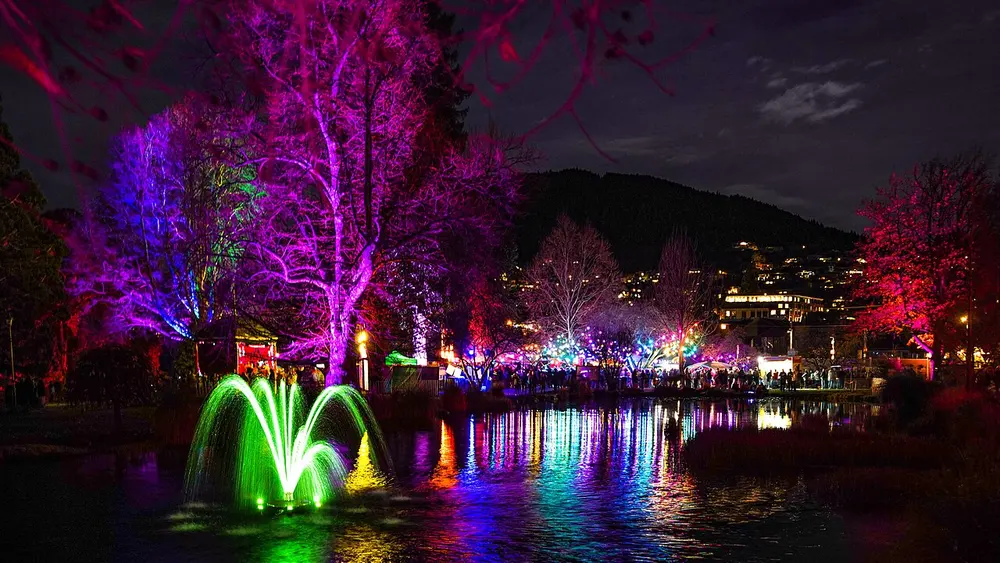
LUMA Southern Light Project Queenstown, New Zealand. Photo: Ivan Popov / Wikimedia Commons, CC BY-SA 4.0.
The scenic distraction
- The weather. The race is weather-dependent, and mountain conditions can shift. Carry layers and be ready to adjust.
- The mixed surfaces. The route uses trails as well as roads, so expect more time on uneven ground than in a pure road marathon.
- The rolling climbs. About 322 m of climbing is spread around the lake, and the repeated rises reward conservative pacing.
- The scenery. The Remarkables and Lake Wakatipu are spectacular, but they can distract from fuelling and pace discipline.
- The exposure. Open sections around the lake offer little shelter when the wind or rain arrives.
Frequently asked questions
Answers to the questions runners ask before entering, drawn from this race's course guide and the directory's own data — the sources behind them are listed below.
When is the Queenstown Marathon in 2026?
The 2026 edition is set for 14 November.
Is the Queenstown Marathon a flat course?
No. It is hilly, with about 322 m of climbing, and the route rolls around Lake Wakatipu on a mix of trails and roads. It is a more varied course than a standard city marathon.
Is the Queenstown Marathon a good personal-best race?
The rolling terrain, the mixed surfaces and the weather all make fast times less likely. The race is better approached as a scenic challenge than as a time trial.
Is the Queenstown Marathon a good first marathon?
It is a demanding introduction. The distance is standard, but the hills, the trails and the mountain weather add up to a tougher debut than a flat city race.
Where does the Queenstown Marathon run?
It runs around Lake Wakatipu beneath the Remarkables, using trails and roads through the Southern Alps. The course stays in the Queenstown area for the full distance.
What is the landscape like at the Queenstown Marathon?
The route follows the lake shore with the Remarkables above and the Southern Alps around it. The views are the defining feature, but the terrain is rolling and the weather can change quickly.
More marathons in New Zealand
More marathons in Oceania
Sources for this page
What each source below is used for on this page, and where to check this race yourself.
- World Athletics — the label calendar and the road-race regulations. Used to check whether the race holds a World Athletics label, and its elite competition details.
- AIMS — the international course-measurement standard behind the 42.195 km distance, and the AIMS race calendar.
- The organizer's own publications — course maps, race handbooks and published results. The date, course character and climbing on this page are compiled from them and re-checked each season.
Where do these facts come from?
Dates, course type, climbing and time limits are compiled from the organizer's publications and re-checked each season; elevation is an estimate of total climbing rather than a survey figure. Always confirm race-day details with the organizer before making plans.
Last reviewed 27 October 2026